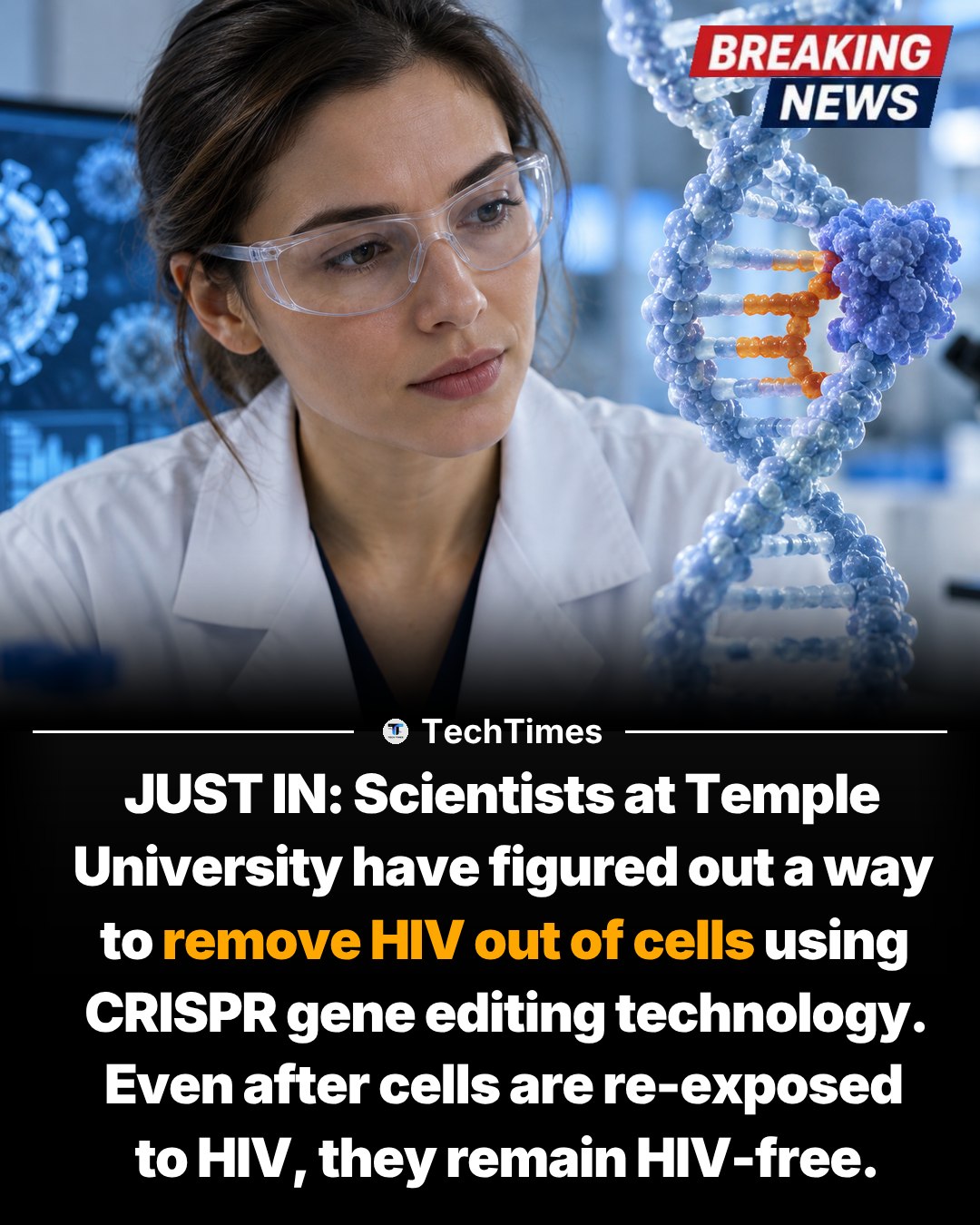
If you've kept tabs on science news, you likely know CRISPR gene editing is a hot topic. What makes the recent breakthrough at Temple University notable is that this breakthrough holds the promise to rid HIV from human cells.
Gene editing: a secret weapon in the HIV epidemic
CRISPR gene editing has been known to correct genetic disorders. Scientists are targeting HIV, a virus that can lay dormant in our cells. HIV can return after treatment, a serious concern for developing a permanent cure. This latest breakthrough by scientists at Temple University promises to eliminate the virus entirely from cells. Gene editing is one of the most precise and powerful tools ever developed. CRISPR actively searches for and edits specific segments of a human’s DNA, and advanced capabilities are being developed to make changes to RNA as well. Such methods are used to correct genetic diseases. This breakthrough focuses on the CCR5 receptor, which HIV uses to enter cells. CRISPR technology targets and disrupts the CCR5 gene, thus preventing HIV from entering healthy cells. The cells remain HIV-free, even after being re-exposed to the virus.
A long battle with HIV
HIV has been a worldwide health challenge for over 40 years, with the first case reported in 1981. Developing an effective cure for HIV is a pivotal step in addressing current problems. The World Health Organization (WHO) (WHO) reported 1.2 million people were diagnosed with HIV in 2023. Although there are effective treatments to manage HIV infection, a permanent cure has remained elusive. CRISPR gene editing is the first real hope for a cure since the discovery of HIV. Traditional treatments can only manage the virus, requiring lifelong adherence to medication to keep it under control. The Temple University breakthrough could be the solution the world has been waiting for. Previous attempts at genetic editing to cure HIV faced challenges. Some early attempts resulted in inefficiencies or unintended off-target effects that led to failures. The precision of CRISPR technology addresses these issues, preventing HIV from entering healthy cells.
The CRISPR mechanism
CRISPR gene editing technology targets and disrupts the CCR5 gene. The CCR5 gene plays a pivotal role in the development of AIDS. By disrupting the CCR5 gene, the scientists effectively prevent the virus from entering healthy cells and causing further infection. There are several important components to the CRISPR mechanism.
DNA-targeting capabilities
The precision of CRISPR technology allows it to eliminate the CCR5 gene from our cells. Disabling the CCR5 receptor prevents HIV from using it to enter human cells. The process involves finding the exact location of the CCR5 gene, cutting and editing it, and ensuring the cell is no longer susceptible to the virus.
Disabling viral entry
CRISPR targets the CCR5 receptor, a gateway for HIV to enter cells. Tampering with this gene means HIV can no longer enter healthy cells. The entry point is simply no longer available, effectively disabling the virus. This is the main reason why the cells remain free from HIV even after re-exposure.
Mastery of the genetic code
Scientists at Temple University have mastered the genetic code to such an extent that they have developed a system that eliminates HIV from human cells forever. They successfully made it impossible for the CCR5 receptor to produce its protein. This ensures that the 'door' to which HIV has to pass by gets locked forever.
This could revolutionize HIV treatment
CRISPR has already been used to treat a variety of diseases and conditions. Its application to HIV treatment could be revolutionary. This technology allows for precise and efficient genetic editing, making it a powerful tool in the fight against HIV.
Comparison to previous treatments
Previous treatments for HIV and AIDS include a combination of medications called antiretroviral therapy (ART). ART can control the virus and prevent it from spreading, but it cannot cure the infection. Gene editing, on the other hand, holds the promise of a permanent solution. It’s essential to compare CRISPR technology to previous treatments. Traditional treatments can only manage the virus, requiring lifelong adherence to medication to keep it under control. CRISPR gene editing, however, could offer a more permanent solution.
Facing the consequences of CRISPR editing
The implications of this breakthrough are profound. The ability to remove HIV from cells, ensuring they remain HIV-free even after re-exposure, is a major development. This breakthrough could significantly impact the global approach to HIV and AIDS treatment. The most remarkable part about this research is that it continuously demonstrates the enormous potential of CRISPR technology. This tool can unlock new paths to overcome genetic disease. The potential of genetic editing extends far beyond HIV.
What’s next for HIV and CRISPR?
CRISPR could be the game changer in the quest for eradicating HIV.
- Understanding the details: Learn about how CRISPR technology works and its role in fighting HIV. You cannot trust everything online; ensure your sources are verified.
- Awareness: Make it a point to raise awareness about the disease and its impact on people around the world. Science is all about knowledge and understanding.
- Testing: Be a part of initiatives that test this technology.
- Research: Try to better understand the details behind the research. This will not only keep you informed but also up to date.
The implications of this breakthrough are profound. The ability to remove HIV from cells, ensuring they remain HIV-free even after re-exposure, is a major development. This breakthrough could significantly impact the global approach to HIV and AIDS treatment. The most remarkable part about this research is that it continuously demonstrates the enormous potential of CRISPR technology. This tool can unlock new paths to overcome genetic disease. The potential of genetic editing extends far beyond HIV, offering hope for the future.
Questions readers ask
What is the CCR5 receptor and why is it important in the fight against HIV?
The CCR5 receptor is a protein on the surface of certain cells that HIV uses to enter and infect them. It's important because by targeting and disrupting the CCR5 gene, scientists can prevent HIV from entering healthy cells, potentially eliminating the virus entirely. The Temple University breakthrough focuses on this mechanism to keep cells HIV-free.
How does CRISPR gene editing work to target HIV?
CRISPR gene editing works by using a tool that can recognize and cut specific segments of DNA. In the case of HIV, CRISPR is designed to find and disrupt the CCR5 gene, which HIV uses to enter cells. By editing this gene, CRISPR makes the cells resistant to HIV infection, even if they are exposed to the virus again.
What makes the Temple University breakthrough significant in the context of previous HIV treatments?
The Temple University breakthrough is significant because it offers a potential permanent cure for HIV, unlike traditional treatments that only manage the virus. Previous attempts at genetic editing faced challenges, but the precision of CRISPR technology addresses these issues, providing a more effective solution.
Can this CRISPR-based approach be used to treat other viruses besides HIV?
While the current breakthrough is specifically targeted at HIV, the underlying CRISPR technology has the potential to be adapted for other viruses. CRISPR's precision in gene editing makes it a versatile tool that could be used to target and disable other viral entry points, although much more research would be needed to apply it to different viruses.
How does the disruption of the CCR5 gene affect the body beyond HIV prevention?
Disrupting the CCR5 gene primarily affects the body by preventing HIV from entering cells, which is crucial for HIV prevention. However, the CCR5 receptor is also involved in the immune system's response to certain infections. Therefore, disrupting it might have implications for how the body responds to other pathogens, although this aspect requires further research.
What are the potential risks or drawbacks of using CRISPR for HIV treatment?
One of the main risks with CRISPR is the potential for unintended off-target effects, where the gene-editing tool might accidentally alter other parts of the genome. However, the precision of CRISPR technology has significantly reduced these risks. Additionally, disrupting the CCR5 gene might have unknown long-term effects on the immune system, which is an area that needs further investigation.
When might this CRISPR-based HIV treatment be available to the public?
The timeline for public availability of this CRISPR-based HIV treatment is uncertain and depends on several factors, including clinical trials, regulatory approvals, and further research. While the breakthrough is promising, it will take time to ensure the treatment is safe and effective for widespread use. Clinical trials are the next crucial step in determining when this treatment might become available to patients.
Related deep dives
Similar reads based on topic and creator.




Recent articles
Fresh deep dives from the latest Reels we unpacked.




Comments
Be the first to comment.