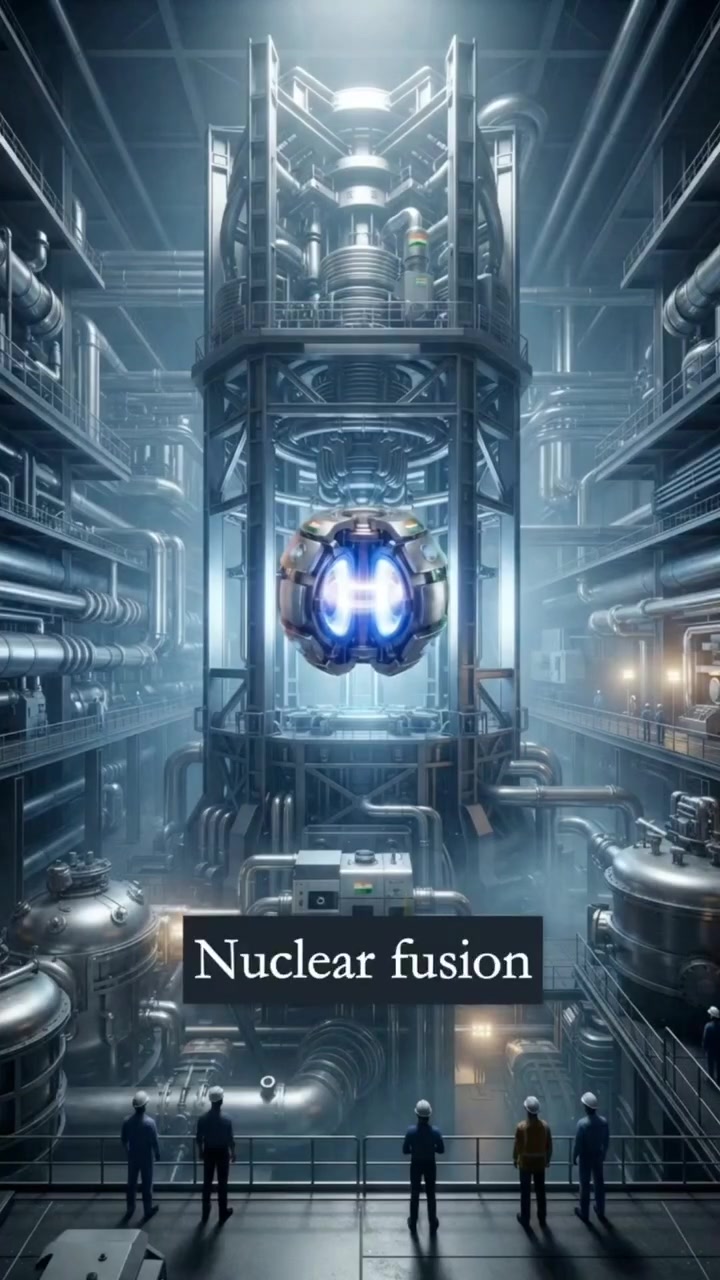
The miniaturization quest of nuclear fusion
In the quest for clean, limitless energy, nuclear fusion remains the holy grail. Unlike fusion’s close cousin, nuclear fission, fusion does not come with the baggage of radioactive waste. However, traditional fusion reactors are mired in the same two problems: massive size and a colossal price tag. The smallest reactors on the drawing boards are the size of a tennis court and come with a multi-billion-dollar price. Now, a compact fusion reactor is in the making by an Indian startup Pranos Fusion, aiming to shrink both the reactor and the price tag, opening a new frontier of compact energy.
How Compact Fusion Reactors Work
Nuclear fusion introduces two fundamental problems: controlling plasma hotter than the sun and preventing the reactor from melting. Pranos Fusion, is attempting to solve this in a fresh and compact way. The core of their design is a spherical tokamak which holds the plasma in a cord-apple-shaped magnetic bottle. The whole process starts with the digital twin. Before any physical building, Pranos simulates the entire reactor's physics using a digital replica. Then engineers wrap the reactor in advanced, high-temperature superconducting magnets. In this way, they squeeze the plasma into a smaller space, avoiding a meltdown. The engineering journey of nuclear fusion isn't just a matter of physics. It also involves a complete fusion supply chain. Pranos Fusion aims for first plasma by 2026, and hopes to follow this milestone with the first fusion-generated electricity to go to the grid.
The Heavy Hitters Backing Compact Fusion
The founders of Pranos Fusion are Dr. Sharia Kaushal and Roshan George. They have secured $7 million in funding, which bridges the gap between deep computational physics and software-driven hardware design. Unlike traditional fundings, Pranos Fusion is backed by first-rate technology and science. The journey of nuclear fusion isn't just about building reactors and plasma, but also involves releasing grid electricity. Powerful instruments like magnets and compact hardware are essential for containing the plasma. However, the vision for nuclear fusion isn't just about the best physics, but about the efficient, scalable engineering.
The Magnetic Maze Inside The Reactor
Powerful magnets are the unsung heroes of the fusion world. These instruments act as the containment vessel, preventing the hot plasma from melting the reactor. Pranos Fusion uses advanced, high-temperature superconducting magnets to squeeze the plasma into a smaller space. Importantly, these magnets play a crucial role in making nuclear fusion practical. They enable the reactor to operate at a higher temperature, increasing its efficiency. By using superconducting magnets, Pranos Fusion can reduce the size and cost of the reactor.
The Digital Twin Before The Building Begins
The journey of nuclear fusion isn't just about building reactors and plasma, but also involves releasing grid electricity. Powerful instruments like magnets and compact hardware are essential for containing the plasma. There's not just one way to reach this compact fusion, but Prunos Fusion has certainly found an efficient one. The digital twin of the nuclear fusion reactor provides a comprehensive simulation. It helps engineers understand the reactor's physics, identify potential issues, and optimize its design. This approach enables Pranos Fusion to build a more efficient, cost-effective, and reliable reactor.
How to Build an Entire Fusion Supply Chain
Nuclear fusion reactors require a complex manufacturing ecosystem. Companies must have access to a variety of materials, manufacturing processes, and expertise. The efficient scaling of energy requires not just plasma, but the optimal design of the manufacturing ecosystem. Pruno Fusion follows the guidelines of successful, scalable engineering. They are building an entire fusion supply chain, ensuring that they can meet the demand for compact fusion reactors. Their target is first plasma by 2026, but this is just the beginning.
Firing up a compact fusion reactor
For the enthusiasts of the engineering and science sectors, getting hands-on experience with nuclear fusion might be too far-fetched. However, there are still many ways to learn about the technology.
- Join the Online Community: Organizations like the Fusion Energy Association offer online forums and discussion groups where you can learn from experts and connect with other enthusiasts.
- Engage with Local Educational Institutions: Many universities and research institutions have fusion energy programs. Reach out to see if there are opportunities for workshops, lectures, or even hands-on projects.
Questions readers ask
What makes Pranos Fusion's approach to nuclear fusion unique compared to traditional designs?
Pranos Fusion is unique because it's developing a compact nuclear fusion reactor that's the size of a truck, unlike traditional reactors that can be as large as a tennis court. They're using a spherical tokamak design and advanced, high-temperature superconducting magnets to contain the plasma, which allows for a smaller, more efficient reactor.
How does Pranos Fusion plan to generate electricity from their compact fusion reactor?
Pranos Fusion aims to achieve first plasma by 2026, which is a crucial step towards generating electricity. Their goal is to follow this milestone by producing fusion-generated electricity that can be sent to the grid, making nuclear fusion a practical and scalable energy source.
What is the significance of the digital twin in Pranos Fusion's development process?
The digital twin is a virtual replica of the reactor that Pranos Fusion uses to simulate the entire reactor's physics before any physical building begins. This allows them to optimize the design and ensure that the reactor will function as intended, reducing the risk of costly errors and delays.
What role do high-temperature superconducting magnets play in Pranos Fusion's reactor design?
High-temperature superconducting magnets are crucial for containing the hot plasma within the reactor. They enable the reactor to operate at higher temperatures, increasing its efficiency. By using these magnets, Pranos Fusion can reduce the size and cost of the reactor, making nuclear fusion more practical and accessible.
Can Pranos Fusion’s compact design really make nuclear fusion more affordable?
Yes, that’s the goal. By using a more compact design and advanced materials, Pranos Fusion aims to significantly reduce the cost of nuclear fusion reactors. Traditional reactors come with a multi-billion-dollar price tag, but Pranos Fusion’s approach could make nuclear fusion more economical and accessible.
What is the spherical tokamak design, and how does it help in making the reactor smaller?
The spherical tokamak is a type of fusion reactor design that holds the plasma in a cord-apple-shaped magnetic bottle. This design allows for a more compact containment of the plasma, which is essential for reducing the overall size of the reactor. By using this design, Pranos Fusion can create a reactor that's much smaller than traditional designs.
Related deep dives
Similar reads based on topic and creator.


Recent articles
Fresh deep dives from the latest Reels we unpacked.



Comments
Be the first to comment.