What a solar-powered satellite can do for solar farms and the lost
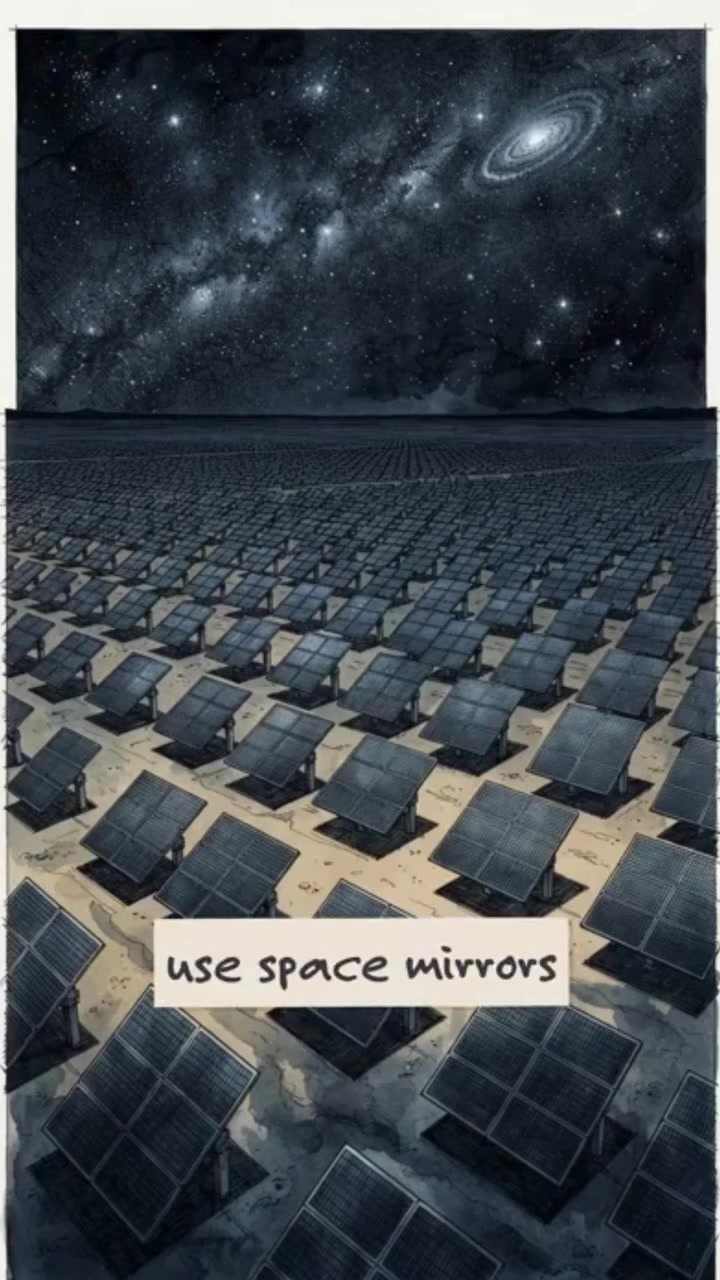
Remember that old emergency lantern you left rusting in the basement? Reflect Orbital is designing something a bit more advanced. The company's satellite, Eärendil-1, is built to reflect sunlight onto the Earth's surface, creating concentrated beams of light that can reach precise locations even at night. 260,000 requests for sunlight were submitted before its launch. Capturing the sunlight that misses our planet and bouncing it back down to specific spots on demand, Eärendil-1 could make solar farms generate power even at midnight, disaster relief zones light instantly, and search-and-rescue teams that don't need headlamps.
The race between night and sunshine
The terminator line, is the boundary where daylight ends and Earth’s shadow begins. The point is that night on Earth is not a switch, it comes and goes like a shadow. It starts at the terminator line. This line, the terminator, is why critical operations like solar farms and emergency rescues are ultimately trapped by the Earth's natural rotation, like a hiker lost in a freezing mountain range at midnight. The satellite uses a massive, tennis court-sized reflective sail tilted by internal spinning motors. These motors precisely control the mirror to bounce the sunlight onto a 5-kilometer-wide beam directed at a specific ground target. Additional brightness can be achieved by overlapping beams from multiple satellites onto the exact same spot. A lost hiker suddenly sees their dark mountain lit up with the brightness of a full moon as the rescue team approaches.
Orbiting the terminator
Projected satellite dynamics
The satellite orbits 600 kilometers above the terminator line, the boundary where the sun and the dark Earth meet, allowing for an uninterrupted line of sight. It orbits directly above this line, creating an opportunity to hit a precise target on the ground without scattering light.
The 18-meter Mylar mirror
The satellite uses an 18-meter Mylar mirror, folded into an origami shape to fit inside a rocket. This mirror is designed to work with a massive mirror surface packed with the ability to catch the sun's rays and redirect them.
Beaming sunlight on demand
The challenge of precision
The core challenge is hitting a precise target from 600 kilometers up without scattering light. The satellite uses internal spinning motors to tilt the reflective mirror, catching solar rays, and bouncing a 5-kilometer-wide beam. The reflect Orbital satellite is designed to increase the beams' brightness by commanding multiple independent satellites to overlap their beams onto the exact same spot.
Eärendil-1’s applications
The satellite is named after a Lord of the Rings character designed to shine as an "evening star." This means Eärendil-1 could light up specific locations for solar farms generating power at midnight, disaster relief zones lit instantly, and search-and-rescue teams guiding without needing headlamps.
The ethical future brought by Eärendil-1
There are two sides to everything. The project faces a significant backlash from astronomers. They are filing petitions with the FCC and warning that a sky full of mirrors will shield our view of the stars and ruin the night forever. It's a polarized debate between what is possible and what should be done. Although we are learning to program the sun—Eärendil-1 represents the choice we need to make between industrial advancement and the preservation of the night sky. Astronomy and the sky can still be preserved. These two aspects can coexist as long as Reflect Orbital takes their concerns into account.
Questions readers ask
Can Eärendil-1 really make solar farms generate power at night?
Yes, that's one of the key goals. By reflecting sunlight onto solar farms, Eärendil-1 can extend their operational hours well into the night, potentially doubling their power generation capacity. It's designed to beam sunlight precisely onto these farms, even when it's midnight on the ground.
How does Eärendil-1 manage to hit such precise targets from space?
Eärendil-1 uses a combination of high-tech mirrors and spinning motors to achieve this precision. The 18-meter Mylar mirror is carefully tilted to catch and redirect sunlight, creating a 5-kilometer-wide beam that can be directed at specific ground targets. Multiple satellites can even overlap their beams to increase brightness.
What happens if multiple satellites are used to illuminate a single spot?
When multiple Reflect Orbital satellites are used to illuminate a single spot, their beams can overlap to create even more brightness. This can be crucial for rescue missions or disaster relief, where intense light can be a matter of life and death.
What are some of the challenges Eärendil-1 faces?
One of the main challenges is ensuring that the sunlight is directed precisely and without scattering. Additionally, there's significant backlash from astronomers who are concerned about the impact of the satellite's light on their observations and research. This is a growing concern that could impact the satellite's operations.
How does Eärendil-1 get its name?
Eärendil-1 is named after a character from J.R.R. Tolkien's Lord of the Rings. In the stories, Eärendil is known as the Evening Star, which fits well with the satellite's mission to provide light even after the sun has set.
What is the terminator line, and why is it important for Eärendil-1's mission?
The terminator line is the boundary where daylight ends and Earth’s shadow begins. Eärendil-1 orbits 600 kilometers above this line, allowing it to have an uninterrupted line of sight to specific targets on the ground. This positioning is crucial for directing sunlight precisely where it's needed, even as the Earth rotates.
Related deep dives
Similar reads based on topic and creator.




Recent articles
Fresh deep dives from the latest Reels we unpacked.




Comments
Be the first to comment.