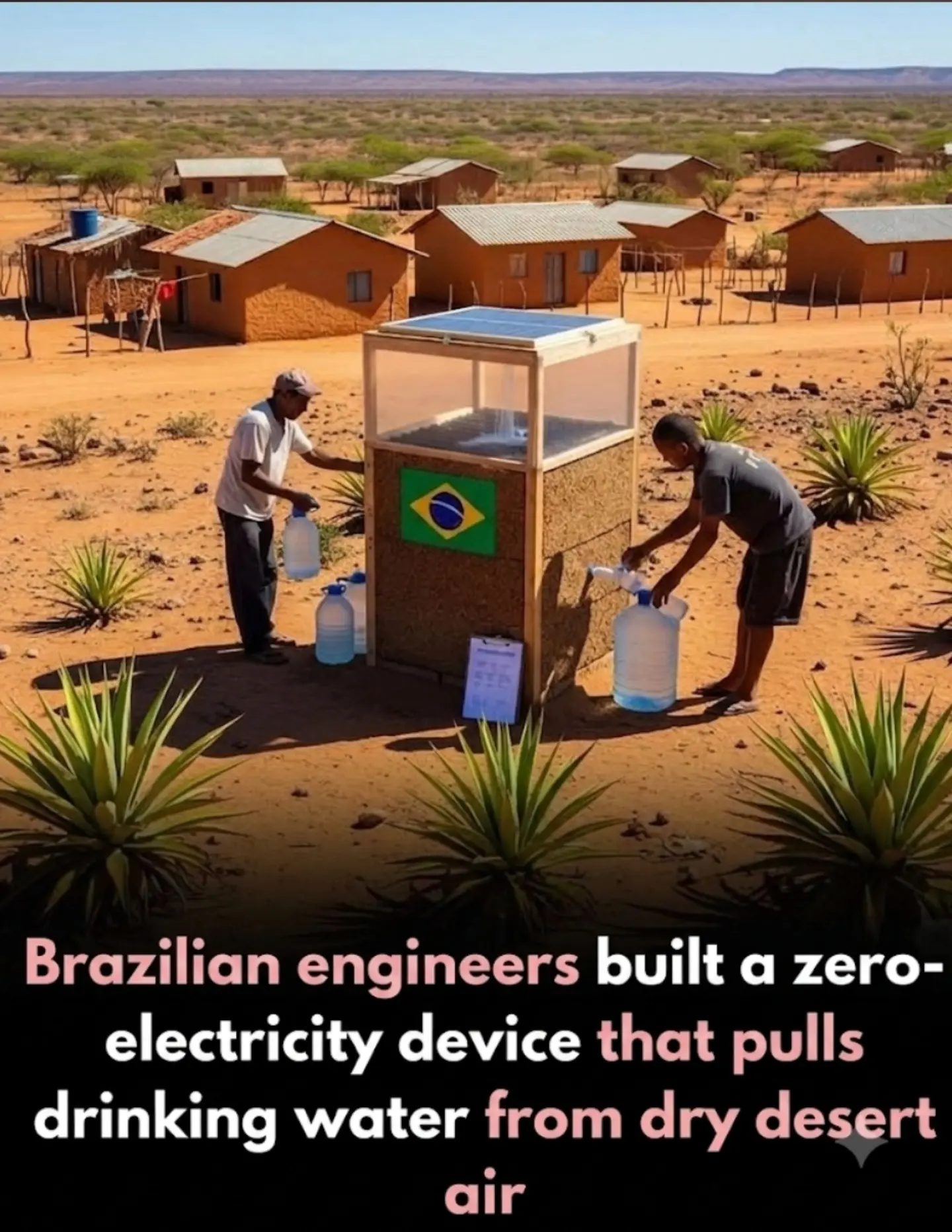
Water Harvesting Devices: Combating Water Scarcity in Arid Regions
Water scarcity is a pressing issue in many arid regions around the world. One innovative solution gaining traction is passive atmospheric water harvesting (AWH), a technology designed to extract drinkable water directly from the air. This concept leverages highly hygroscopic materials that can capture moisture from low-humidity environments, offering a sustainable and decentralized approach to water collection.
Context / Why This Matters
In arid regions, access to clean water is often limited, making it a critical resource for survival. Traditional water sources, such as rivers and wells, may not be reliable in these environments. This is where AWH devices come into play, providing a reliable and sustainable source of water without relying on external power grids. The technology is particularly relevant in regions where electricity is scarce or unreliable, making it a game-changer for communities facing severe water scarcity.
The Science Behind Atmospheric Water Harvesting
Highly Hygroscopic Materials
The foundation of AWH devices lies in the use of highly hygroscopic materials. These materials have a strong affinity for water molecules and can absorb moisture from the air even in low-humidity conditions. Some of the commonly used materials include:
- Engineered hydrogels: These are polymers that can absorb and retain large amounts of water.
- Zeolites: Natural or synthetic microporous aluminosilicate minerals that can trap water molecules within their porous structure.
- Metal-organic frameworks (MOFs): These are highly porous materials with a large surface area, making them highly effective at capturing moisture from the air.
The Passive Thermal Energy Process
The process of water harvesting is straightforward and passive. During the night, the hygroscopic materials naturally absorb moisture from the air. As the sun rises, the passive thermal energy from natural sunlight heats the material, releasing the trapped moisture as vapor. This vapor then condenses into clean, drinkable water, which can be collected and used. The entire process is powered by natural sunlight, eliminating the need for electricity and reducing operational costs.
Practical Applications and Benefits
Decentralized Water Supply
One of the key advantages of AWH devices is their ability to provide a decentralized water supply. Traditional water delivery systems often involve complex infrastructure and significant logistical challenges, particularly in remote or arid regions. AWH devices can be deployed in individual households or small communities, ensuring that everyone has access to clean water without the need for extensive infrastructure.
Reducing Carbon Footprint
By eliminating the need for electricity, AWH devices significantly reduce the carbon footprint associated with water collection. Traditional water treatment and distribution systems often rely on fossil fuels, contributing to greenhouse gas emissions. AWH devices offer a more sustainable alternative, harnessing natural energy sources to provide clean water.
Practical Tips for Implementing AWH Devices
Selection of Materials
Choosing the right hygroscopic material is crucial for the effectiveness of an AWH device. Each material has its unique properties and performance characteristics, so it is essential to select one that is best suited for the specific environmental conditions. For example, zeolites are known for their high water absorption capacity, making them ideal for regions with very low humidity.
Optimizing Solar Energy
To maximize water harvesting, it is important to optimize the device's exposure to solar energy. This can be achieved by positioning the device in an area with direct sunlight for most of the day. Additionally, using reflective surfaces or solar concentrators can help increase the device's efficiency by focusing more sunlight on the material.
Maintenance and Cleaning
Regular maintenance and cleaning of the AWH device are essential to ensure its long-term performance. Over time, dust and other particles can accumulate on the hygroscopic material, reducing its ability to absorb moisture. Regular cleaning and replacement of the material as needed can help maintain the device's efficiency.
Important Takeaways
- Sustainable Solution: AWH devices provide a sustainable and decentralized solution to water scarcity, particularly in arid regions.
- No Electricity Required: The technology leverages natural sunlight and highly hygroscopic materials, eliminating the need for external power sources.
- Eco-Friendly: By reducing reliance on traditional water delivery systems, AWH devices contribute to a lower carbon footprint.
- Versatile Applications: These devices can be used in various settings, from individual households to community-scale water supplies.
Conclusion
Water harvesting devices represent a significant advancement in the fight against water scarcity. By harnessing the power of natural sunlight and innovative hygroscopic materials, these devices offer a sustainable and efficient way to collect clean water from the air. As the technology continues to evolve, it holds the promise of transforming water access in arid regions, providing a reliable and environmentally friendly solution to one of the world's most pressing challenges.
Questions readers ask
What are highly hygroscopic materials and how do they aid in atmospheric water harvesting?
Highly hygroscopic materials are substances that readily absorb moisture from the air. In atmospheric water harvesting, these materials are used to capture water vapor from arid environments, even in low-humidity conditions. They enable the extraction of drinkable water by attracting and holding moisture, which can then be collected and condensed.
How does passive atmospheric water harvesting work?
Passive atmospheric water harvesting operates without the need for external power sources. It uses the natural properties of hygroscopic materials to absorb moisture from the air. As the materials become saturated, the collected water is then extracted through condensation, providing a continuous supply of drinkable water without relying on electricity.
What makes Brazilian innovations in water harvesting unique?
Brazilian innovations in water harvesting stand out due to their use of highly hygroscopic materials, making them particularly effective in arid areas. These innovations are designed to be decentralized and electricity-free, offering a sustainable solution to water scarcity in regions where traditional water sources are unreliable.
Can atmospheric water harvesting be used in rapidly drying regions?
Yes, atmospheric water harvesting is well-suited for rapidly drying regions. The technology relies on the natural moisture present in the air, which can be captured even in low-humidity environments. This makes AWH a viable solution for areas experiencing water shortages due to climate change or other factors.
What are the benefits of decentralized water harvesting systems?
Decentralized water harvesting systems like those used in passive AWH provide several benefits, including reduced dependence on centralized infrastructure, lower environmental impact, and improved water accessibility. These systems can be implemented in remote or rural areas, offering local communities a reliable source of drinkable water.
How does solar-powered water harvesting compare to passive atmospheric water harvesting?
Solar-powered water harvesting systems use solar energy to drive the water extraction process, while passive atmospheric water harvesting relies on natural moisture absorption. Solar systems can be more effective in areas with high humidity and strong sunlight, but they require electricity, making them less suitable for off-grid or decentralized applications. Passive AWH, on the other hand, operates without electricity, making it a more sustainable option in arid regions.
What are the main challenges in implementing atmospheric water harvesting in arid areas?
The primary challenges include ensuring the efficiency of the hygroscopic materials in very dry conditions and maintaining the system's durability in harsh environments. Additionally, the initial cost of setting up AWH devices and the need for regular maintenance can be barriers. However, ongoing innovations are addressing these issues, making AWH more accessible and effective.
Related deep dives
Similar reads based on topic and creator.



Recent articles
Fresh deep dives from the latest Reels we unpacked.




Comments
Be the first to comment.