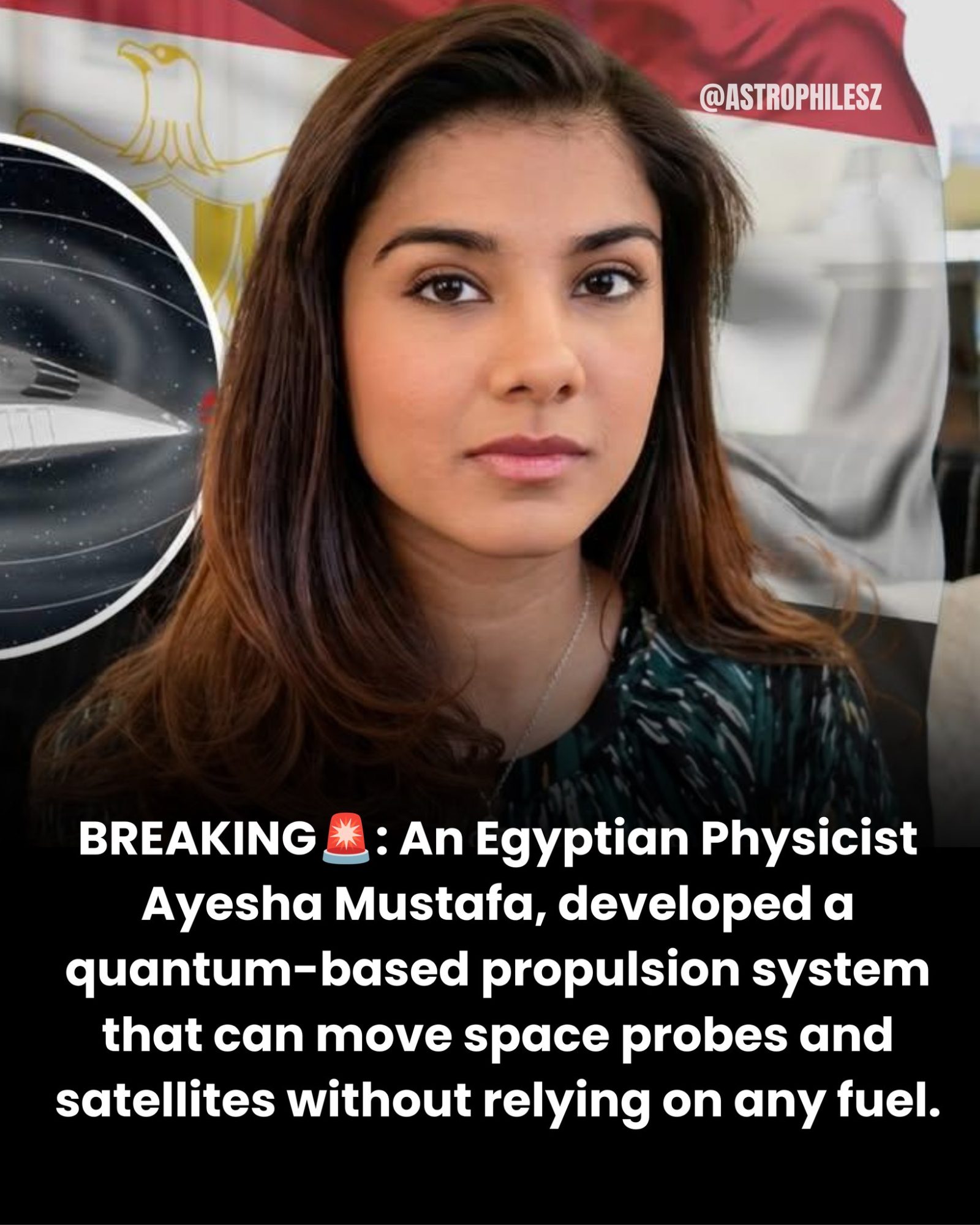
A Quantum Leap in Space Propulsion
Somewhere between the stars and the sky, the future of space travel is being redefined. Ayesha Mustafa, an Egyptian physicist, has developed a quantum-based propulsion system that could revolutionize how we move through space. By harnessing quantum mechanics, the system promises to propel spacecraft without the use of traditional fuel. This quantum leap into the cosmos underscores the vast potential of physics in shaping the future. Mustafa's innovation revolves around the idea of manipulating quantum fields to generate thrust. The concept appears to be rooted in the tangled complexities of quantum mechanics acting on a macroscopic scale. The advantage of this system lies in its elimination of the need for fuel, which currently poses a significant challenge in long-distance space travel.
The Promise of Fuel-Free Propulsion
Satellites and probes have been reliant on chemical rockets, which carry heavy fuel loads, limiting their range and efficiency. Mustafa's system, seemingly freely converting energy within itself to produce thrust, could change the interplay between fuel load and mission duration. Operating without fuel could also lead to smaller, lighter spacecraft — enabling more ambitious missions. This system might solve one of the most formidable obstacles in space exploration by making fuel more or less of a non-issue. Whatever the ultimate efficacy of this quantum propulsion, it could affect mission planning. Historically, the budget for fuel has been a pivotal factor. With no need for fuel, such propulsion could significantly reduce launch weight. Moreover, it might allow for more intricate maneuvers in orbit or even enable longer, more sophisticated missions with less need for refueling.
A New Era of Space Travel?
The implications of Mustafa's system reach far beyond mere efficiency, heralding a new era of space exploration where the only boundary is the limits of current quantum mechanics. The ability to move seamlessly through space without the constraints of fuel could facilitate unprecedented scientific discoveries and open new avenues for exploration. A world where space probes can venture further, satellites can stay in orbit longer, and missions can be endured with more precision becomes a tangible reality.
Related deep dives
Similar reads based on topic and creator.


Recent articles
Fresh deep dives from the latest Reels we unpacked.



Comments
Be the first to comment.