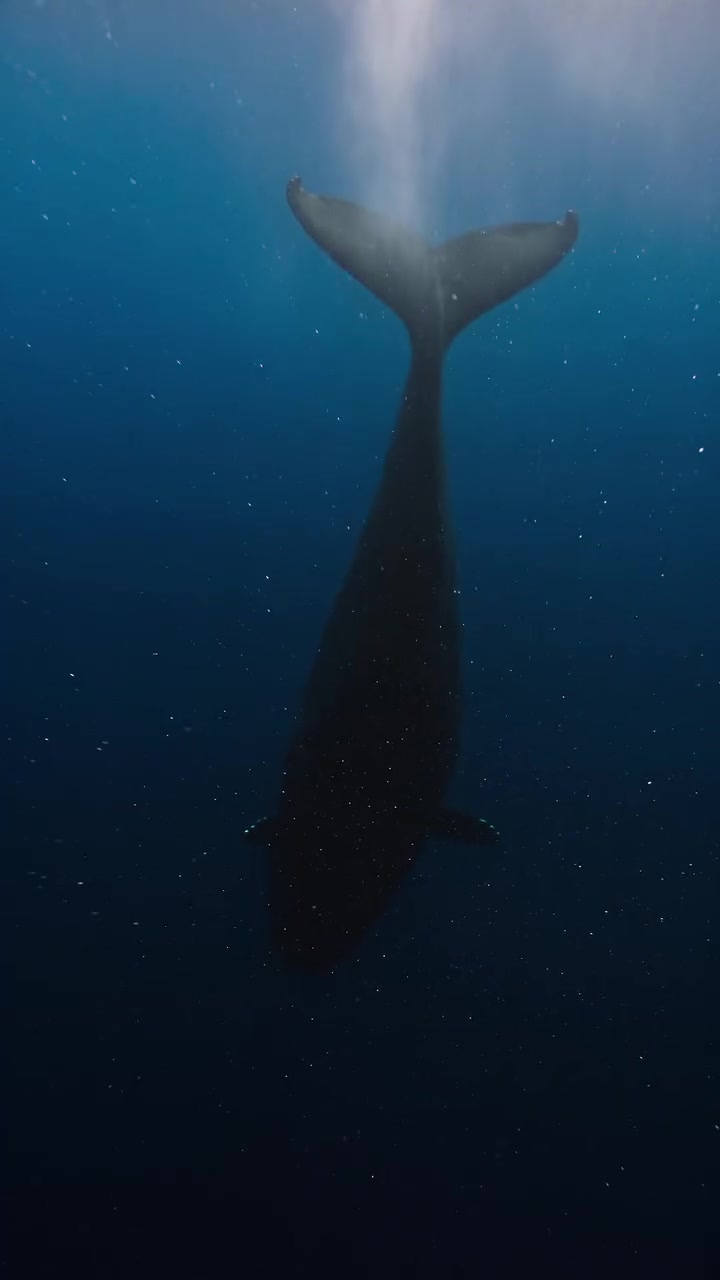
A whale sinking into the deep sea may have received its last breath, but it's about to feed more than two hundred animal species for 50 years. Yes — entire ecosystems beneath the ocean depend on the slow decomposition of these carcasses.
Feeding the deep: The phenomenon of whale falls
When a whale dies at the sea surface, its massive body descends to the seabed. Most die naturally from old age, feeding a vast array of consumers. It's the kind of feast that plays on a scale only possible in an ocean because the carcasses they leave behind aren't like your typical roadkill. First, scavengers arrive. Hagfish and sleeper sharks are the first to spot a corpse on the ocean floor. They start consuming muscle and fat. They quickly strip the body, leaving a skeleton picked bare. This alone can take several months. Then, the strangest guests come in. Bacteria arrive in earnest, breaking down the fat which remained on the bones. They begin to consume the blubber, slowly converting the blubber into nutrients. They biodegrade the whale's skeleton, creating nutrients available to marine life. After this stage, the body of the whale is so unstable that it is impossible to detect. However, this is precisely when life is given another chance. The massive bones still provide structural support for other organisms. This is when clams and tube worms move in. The whales become a long-term food source for hundreds of species that cannot otherwise be reached by sunlight. This living community is the barest product of soil chemistry, bone marrow, and the remnants of flesh. Without it, the deep sea would be a silent graveyard.
Oases in the desert of the deep
A whale carcass on the ocean floor resembles a bustling city. What starts as a scavenger feast becomes a vestige of life even after most of the flesh is gone. The whale bones serve as feeding grounds and can stay intact for fifty years before they disappear completely. Beneath the waves where there is little to no light, any new source of energy is a goldmine. This is what a whale skeleton offers. But the whale also has its own biologists. Unlike the human ones, which only measured the chemicals of the whale's body, their counterparts in the deep are living, breathing organisms that feed the carcass of the whale. Bacteria use the blubber to convert the oil inside of the whale into a perfect meal for these other organisms. The bacteria are also useful for the whales' underground rehabilitation. Bacteria are the best ones to get at the parts of the whale that remain. Their presence is responsible for the gradual breakdown of the bones. They find ways to consume the parts of the whale that are no longer of any use to the scavengers.
Sucker worms: Whale graveyard scavengers make ramen noodles out of bones
These worms have no mouths, and no stomach, and they eat bones. The worm eats by oozing enzymes to the bone surface, it gets transformed into a liquid. The liquid then flows into the worm, which provides it with food. The enzymes used by the worms are highly specialized and are used to convert the dense fat stored in the whale's skeleton. These enzymes are responsible for the decomposition of the skeleton. The worms use the chemicals they produce to eat the bones of the whale, which are normally quite fibrous and dense. They can be used to break down the lipids stored within the bones, which makes it possible to feed other marine species, all playing the important role of converting energy into a consumable form for these species. The worms are a crucial part of the cycle that helps feed the marine life in the deep sea. The presence of these worms relies on the whale carcasses as a habitat for them so they can perform their function.
The life-cycle of whale bones: Breaking down the food chain
As decomposers, worms and bacteria turn the whale's body into a series of polymers. The bacteria are more specialized and efficient, and they produce enzymes that will break down the bone matrix. This process is slower, but it allows the bones to become nutrient-enriched food. The worms specialized enzymes are broken down into smaller parts that can be absorbed by the worms that will feed on the bones. This process has a chemical reaction that splits the life-giving molecules and nutrients into simpler parts that can be absorbed by the worms. There are a variety of bacteria that can breakdown bone into amino acids. These bacteria eat the bones, and the amino acids produced are used by other deep-sea organisms. In addition, the bacteria break down the bones into their respective amino acids. These amino acids are then absorbed by deep-sea creatures such as the clams, tube worms, and other deep-sea worms. These bacteria are responsible for breaking down the bones, which in turn feed the deep-sea creatures.
How to find a whale fall
Not all whale carcasses reach the sea floor: some sink into the abyss very slowly. It can last up to 50 years, depending on what's eating the whale as it descends. Abigail Alling, who wrote the 2008 book "Whales, Carcass and the Deep Sea", estimated that perhaps 75% of whale carcasses could reach the sea floor before they're consumed. Underwater bubbles are also a good indicator of whale carcasses. A decomposing whale can release gases that produce bubbles underwater. However, it’s important to watch these bubbles, as they can form in a range of places from underwater volcanoes to areas with deep-sea vents. And sometimes the whale may not be at all how you’d imagine it.
The new number is pretty small
The author of a 2021 JGR Oceans article, Craig Smith, said that if whale populations were at 20% of their pre-whaling abundance, the density of whale carcasses on the seabed would be 40% less than it was in the past. Looking forward, bone-eating worms will have much less to feed on. Currently, an estimated 1% of the world’s oceans are home to fewer whales. Thousands of whales die every year, but thousands more are killed by fishermen or stranding on the coast. Smith said that the amount of whale carcasses on the seabed has decreased by 40% since pre-whaling times. This will likely continue to decrease, and there is a risk to the food chain.
Questions readers ask
What exactly is a 'whale fall' and how does it support so many species?
A 'whale fall' is the phenomenon where a whale carcass sinks to the ocean floor and sustains a diverse ecosystem for up to 50 years. It supports over 200 species by providing a massive food source for scavengers and bacteria, which then nourish other deep-sea creatures. The whale's body, in essence, becomes a long-term food source and habitat for many species.
How do bacteria play a role in the whale fall ecosystem?
Bacteria are crucial in the whale fall ecosystem. They break down the whale's blubber and convert it into nutrients that feed other marine life. They also help decompose the whale's bones, which can take decades, providing a continuous source of sustenance for deep-sea organisms.
What happens to the whale's body after the initial scavengers have finished?
After scavengers like hagfish and sharks have stripped the whale's body of most of its flesh, bacteria take over, breaking down the remaining fat and converting it into nutrients. This process can take years, and during this time, the whale's bones become a habitat for other organisms like clams and tube worms.
Can whale falls occur anywhere in the ocean?
Whale falls can occur in any part of the ocean where whales die and their carcasses sink to the seafloor. They are most commonly found in deep-sea environments, where the lack of sunlight makes any new source of energy a valuable resource for marine life. They are particularly impactful in areas where the ocean floor is vast and devoid of other food sources.
What makes whale falls unique compared to other sources of food in the deep sea?
Whale falls are unique because they provide a massive, concentrated source of food and nutrients in an environment where resources are typically scarce. Unlike smaller carcasses or organic matter, a whale fall can sustain a diverse ecosystem for decades, supporting species that wouldn't otherwise have access to such a rich food source.
How do the enzymes produced by sucker worms contribute to the whale fall ecosystem?
Sucker worms, which have no mouths or stomachs, use specialized enzymes to break down the whale's bones and convert them into a liquid form that they can absorb as food. These enzymes play a crucial role in the decomposition process, gradually breaking down the whale's skeleton and making the nutrients available to other organisms in the ecosystem.
Related deep dives
Similar reads based on topic and creator.
Recent articles
Fresh deep dives from the latest Reels we unpacked.
Comments
Be the first to comment.