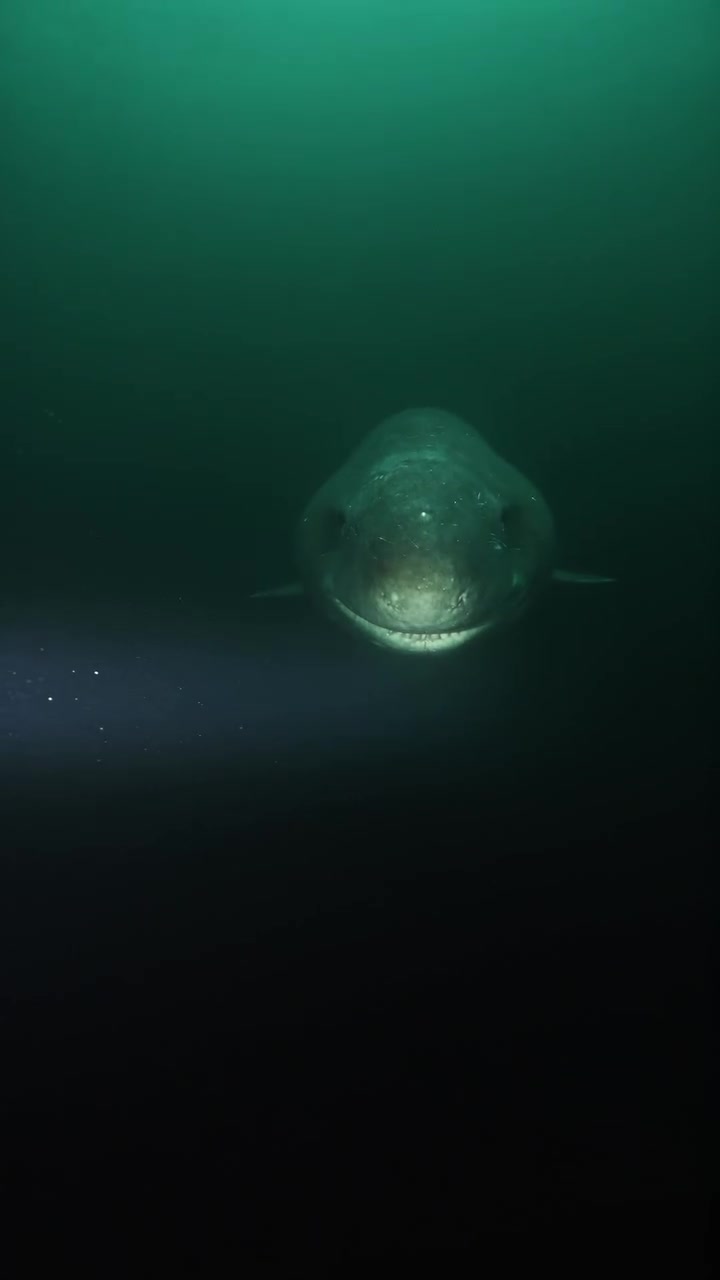
The Greenland Shark: Arctic's Real-Life Immortal
Lurking off the frigid coast of Greenland is the Greenland shark, a creature that does not just defy time; it outlives it. This elusive species, some of which were born before the USA, represents a unique marvel in the marine world. The shark grows at a glacial pace, adding just one centimeter to its length each year. This slow growth, paired with an equally slow metabolism, results in it moving at a sluggish pace—slower than a human walk. The Greenland shark’s extreme longevity opens doors to understanding longevity itself, carbon dating in particular. The Greenland shark is a phenomenon in itself. Not only does it live a kilometer below the arctic’s surface in near-freezing waters, it also holds a puzzling secret to its age in its eyes. The center of its eye lens contains carbon from the year of its birth, preserved like a snapshot. Researchers use this carbon to verify the shark’s age by checking for traces of Carbon 14. This rare technique involves testing for the spike in radiocarbon caused by nuclear tests in the 1950s, revealing that the oldest specimens predate the United States itself. This shark’s longevity has profound implications: as the oldest known vertebrate on the planet, the Greenland shark offers a unique lens into the Earth’s history. Its slow growth and metabolism suggest it might hold secrets about longevity and aging, offering insights that could potentially benefit human health research. More than just a remarkable biological phenomenon, this shark represents a living, breathing piece of history, carrying with it the memories of an era long past.
How the Greenland shark challenges human assumptions of life
In the context of a world where life expectancies are measured in decades, the Greenland shark’s longevity of hundreds of years challenges human assumptions of how long a life can last. Unlike humans, the Greenland shark’s extended lifespan is an absolute phenomenon given that it is not only the oldest known vertebrate but also the slowest growing and moving animal currently documented. The shark’s species' low metabolic rate correlates with its extreme longevity, revealing that neither its swim speed nor its food intake modify these exceptional characteristics. The Greenland shark's deep-sea habitat also contributes to its extended lifespan. Living in near-freezing waters a kilometer below the surface, the shark exists in an environment that is largely isolated from the external factors that might impact its growth and longevity. The freezing waters, which affect the shark’s metabolism and growth rate, thereby facilitate its slow pace of life, ensuring longevity.
The Living fossil
An ancient genetic legacy
Research into the Greenland shark reveals that it possesses a unique genetic makeup that allows it to withstand extreme environmental conditions. Studies have shown that the shark's genes are highly conserved, meaning they have changed very little over time. This genetic stability supports the shark's ability to thrive in the harsh, freezing waters off Greenland. The shark's slow metabolism and growth rate, paired with its genetic robustness, enable it to endure in an environment where other species would struggle to survive.
The deadly slow down
This sluggish pace means it is slower than you, swimming at a rate that is only one-tenth of a walking human. If ever encountered, the Greenland shark’s slow swimming speed combined with its enormous body size could be alarming but considering its diet (small fish and marine invertebrates), it's not the predator terror that one might assume. This speed is a considerable advantage for the shark with the advantage of a lack of predators in its habitat.
The art of longevity
The Greenland shark's ability to preserve its eyelens carbon from the year of birth is a remarkable adaptation to preserve its longevity. This unique characteristic makes age determination possible and offers valuable insights into the shark's lifecycle. The scientists' radiocarbon dating technique allows for a precise understanding of the shark's age, revealing that the oldest specimens predate the late 18th century USA's founding. The shark's longevity is a testament to its adaptability and resilience in the face of environmental challenges, making it a living fossil that holds secrets to understanding life on Earth.
How to engage with the weirdness of the Greenland shark
- Watch a documentary: Start with a documentary on Greenland sharks, such as the linked YouTube story
- Plan a Greenland Expedition: Consider visiting Greenland to maybe look for these sharks but remember this may not be possible. Keep in mind that you are visiting their habitat and be respectful of the wildlife and ecosystem.
- Research: Dive into scientific literature on the subject to learn more about their unique biology and habitat.
Questions readers ask
How do scientists determine the age of a Greenland shark?
Scientists use radiocarbon dating to determine the age of a Greenland shark. They test the carbon in the shark's eye lens for traces of Carbon 14, specifically looking for the spike caused by nuclear tests in the 1950s. This method allows them to pinpoint the shark's birth year with remarkable accuracy.
Why do Greenland sharks live so much longer than other animals?
Greenland sharks live extremely long lives due to their slow growth rate, low metabolism, and the unique environmental conditions of their deep-sea habitat. The near-freezing waters and isolated environment contribute to their longevity by slowing down their physiological processes.
Can the Greenland shark's longevity provide insights for human health research?
Yes, the Greenland shark's longevity and slow metabolism offer a unique perspective on aging and longevity. Researchers believe that studying these sharks could provide valuable insights into human health, potentially leading to breakthroughs in understanding and extending human lifespan.
What is the significance of the Greenland shark's genetic makeup?
The Greenland shark's genetic makeup is highly conserved, meaning it has changed very little over time. This genetic stability allows the shark to thrive in extreme conditions and contributes to its longevity. Research into the shark's genetics could reveal more about how it adapts to its environment and maintains its slow growth rate.
How does the Greenland shark's habitat contribute to its longevity?
The Greenland shark's deep-sea habitat, characterized by near-freezing waters and isolation from external factors, plays a crucial role in its longevity. The extreme conditions slow down the shark's metabolism and growth rate, allowing it to live for hundreds of years.
What is the Greenland shark's growth rate and how does it compare to other animals?
The Greenland shark grows at an incredibly slow pace, adding just one centimeter to its length each year. This slow growth, combined with its sluggish movement, is unparalleled among known animals. It is one of the slowest-growing and slowest-moving creatures on the planet.
Related deep dives
Similar reads based on topic and creator.


Recent articles
Fresh deep dives from the latest Reels we unpacked.

Comments
Be the first to comment.