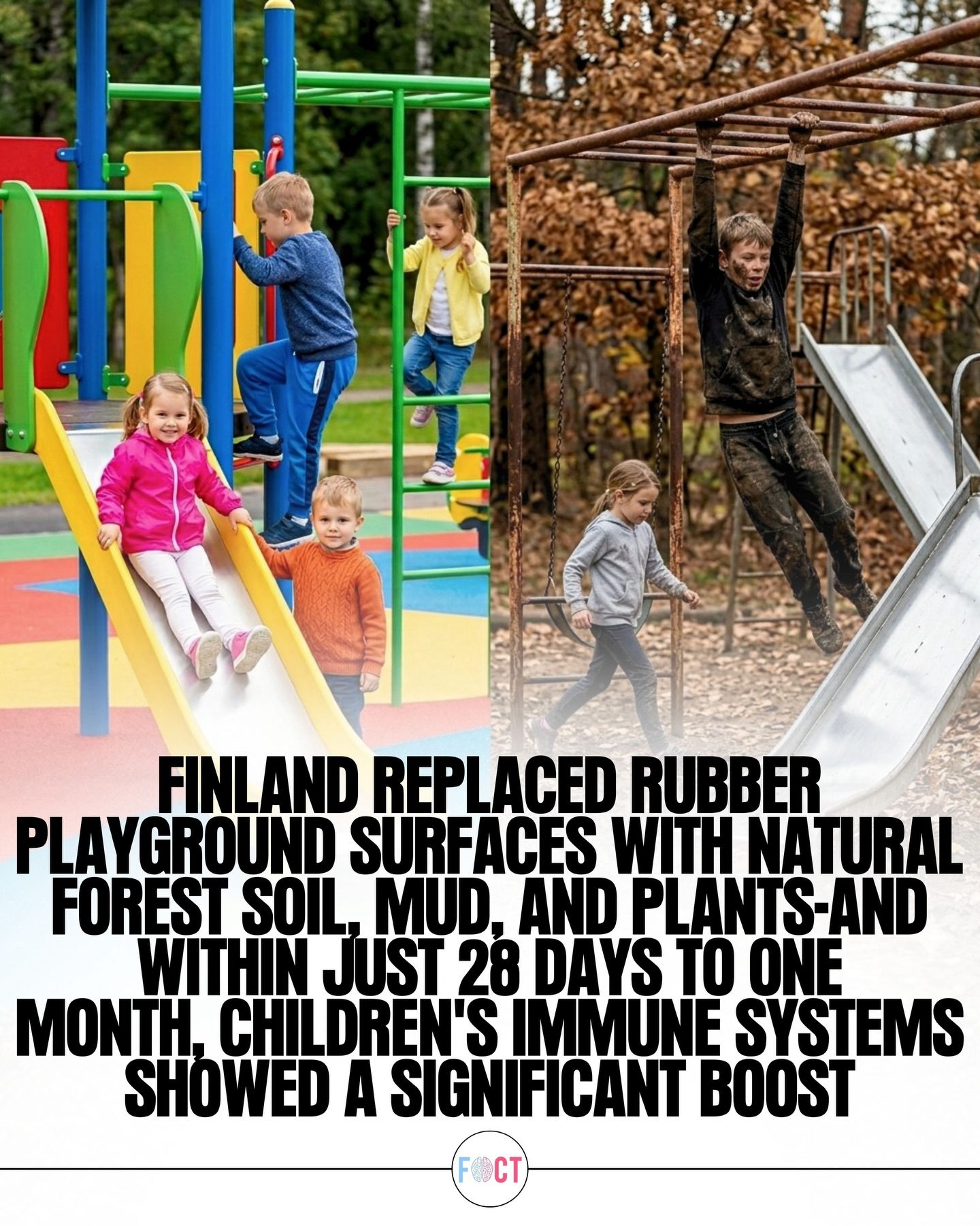
Playground Transformation
Natural environments play a crucial role in children's health, and recent studies have shown that nature-based playgrounds can significantly impact their immune systems. In Finland, a groundbreaking experiment conducted by the Natural Resources Institute Finland revealed that replacing traditional rubber playground surfaces with natural materials like forest soil, mud, and plants can lead to a notable boost in children’s immune systems.
Context / Why this matters
The study, published in the journal Science Advances, involved modifying urban daycare yards by integrating natural elements and observing their effects on children aged 3 to 5. By comparing children in these modified environments with those in standard urban settings, researchers were able to gather valuable data on the benefits of natural playgrounds.
Main discussion
The Experiment
The experiment spanned 28 days, during which researchers replaced rubber playground surfaces with forest soil, grass, and plants. Around 75 children were observed, and the results were striking. Children exposed to these natural materials showed a significant increase in the diversity of beneficial microbes on their skin and in their gut. This microbial shift was linked to improvements in immune function, including higher levels of immune-regulating cells like T-cells and better balance in immune responses.
Immune System Benefits
It's important to note that the study did not claim an immediate or dramatic boost in overall health. Instead, it highlighted early signs of improved immune regulation. This is crucial because better immune regulation can help protect against inflammatory and autoimmune conditions over time.
The Role of Microbes
The diversity of beneficial microbes is a key factor in this immune system boost. Natural environments are rich in these microbes, which can positively influence a child's immune system development. By playing in areas with soil, mud, and plants, children are exposed to a wider variety of microbes, which can help train their immune systems to respond more effectively to various pathogens.
Long-Term Health Implications
While the study focused on short-term effects, the long-term implications are promising. Regular contact with natural environments can support the development of a robust immune system, potentially reducing the risk of chronic diseases later in life. This underscores the importance of incorporating natural elements into children's play areas.
Environmental and Health Synergy
The benefits of natural playgrounds go beyond just health. They also promote environmental awareness and sustainability. By encouraging children to interact with nature, we instill in them a sense of appreciation and responsibility for the natural world. This holistic approach to child development can have lasting impacts on both their health and their environmental stewardship.
Practical tips
If you're considering transforming a playground to include more natural elements, here are some practical tips to get you started:
Assessing the Site
Begin by assessing the current playground area. Look for spaces where natural elements like soil, plants, and grass can be integrated without compromising safety. Consider the existing infrastructure and how natural elements can be seamlessly incorporated.
Selecting the Right Materials
Choose materials that are both safe and beneficial for children. Forest soil, grass, and a variety of plants are excellent choices. Ensure that the plants selected are non-toxic and suitable for the local climate. Adding a mix of trees, shrubs, and groundcover plants can create a diverse and engaging environment.
Gradual Transition
If a complete overhaul is not feasible, consider a gradual transition. Start by replacing a small section of the playground with natural materials and observe the impact. This approach allows for adjustments and ensures that the changes are well-received by both children and caretakers.
Important takeaways
The study highlights several key points:
- Natural playgrounds can significantly boost children's immune systems.
- The diversity of beneficial microbes in natural environments plays a crucial role in immune regulation.
- Incorporating natural elements into playgrounds can have long-term health benefits and promote environmental awareness.
- Gradual transitions and careful material selection are essential for successful playground transformations.
Conclusion
The transformation of urban playgrounds to include natural elements like forest soil, mud, and plants offers a wealth of benefits for children's health and overall development. By fostering a diverse microbial environment, natural playgrounds can support the immune system and contribute to a healthier future. Whether through a complete overhaul or gradual integration, the shift towards nature-based playgrounds is a step in the right direction for enhancing children's well-being and their connection to the natural world.
Questions readers ask
How do natural playgrounds improve children's immune systems?
Natural playgrounds expose children to beneficial microbes found in soil, plants, and other natural elements. This exposure helps to strengthen their immune systems by promoting immune regulation, which can potentially prevent future inflammatory and autoimmune conditions.
What specific natural elements can boost a child's immunity in a playground?
Natural playgrounds with forest soil, mud, and plants are rich in microorganisms that can enhance a child’s immune response. The varied microorganisms help the immune system to mature to deal with the environment.
What did the study in Finland find about natural playgrounds and children's health?
The study in Finland found that replacing traditional playground surfaces with natural materials, such as forest soil and plants, led to a noticeable improvement in children’s immune systems. This was particularly evident in children aged 3 to 5.
How do natural playgrounds compare to traditional playgrounds in terms of immune benefits?
Natural playgrounds offer significant immune benefits compared to traditional playgrounds. The exposure to natural elements and microorganisms in these playgrounds helps to build a child’s immune system, whereas traditional playgrounds, often made of synthetic materials, lack these beneficial microbes.
What are the benefits of outdoor play in a natural setting for children's immunity?
Outdoor play in a natural setting provides children with direct contact with a diverse array of microorganisms. This exposure helps to stimulate and strengthen their immune systems, making them more resilient to various environmental challenges.
Can natural playgrounds help prevent future health issues in children?
Yes, natural playgrounds can potentially help prevent future health issues by improving immune regulation. This can reduce the risk of inflammatory and autoimmune conditions, as a well-regulated immune system is better equipped to handle health challenges.
What is the difference between a traditional playground and a forest school setting?
A traditional playground typically features synthetic or rubber play areas, whereas a forest school setting integrates natural elements such as soil, mud, plants, and more. This natural environment provides children with a richer array of beneficial microbes, enhancing their immune systems through natural exposure.
Related deep dives
Similar reads based on topic and creator.




Recent articles
Fresh deep dives from the latest Reels we unpacked.




Comments
Be the first to comment.