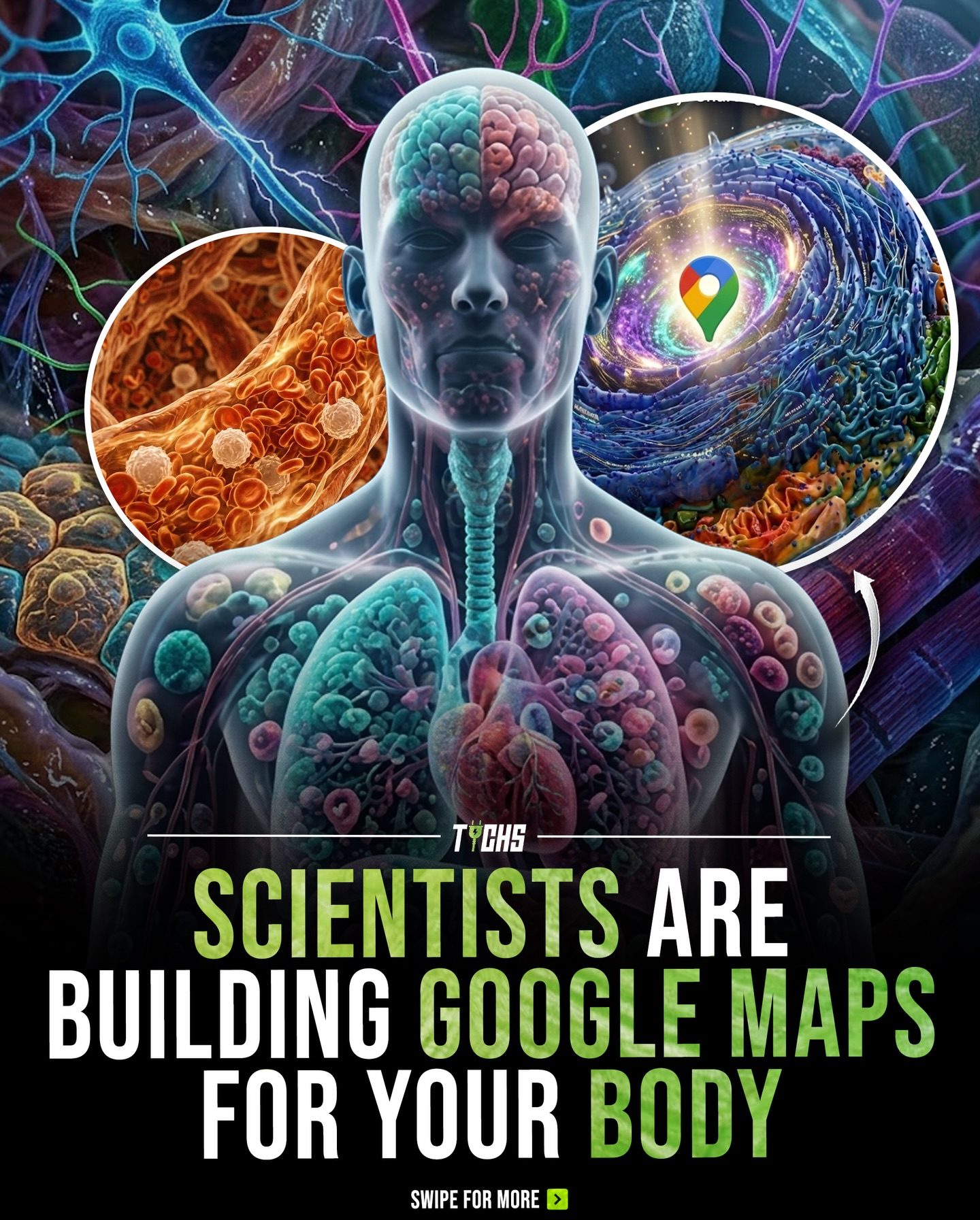
Mapping the Human Body: The Future of Medicine at the Cellular Level
Scientists are currently in the process of building a comprehensive map of the human body at the cellular level. This ambitious project, known as the Human Cell Atlas, aims to create a detailed blueprint of every cell's role, location, and behavior within the body. The initiative involves over 3,600 scientists from 102 countries and has already mapped more than 100 million cells. The goal is to identify and understand each of the body's 37 trillion cells individually, potentially revolutionizing how we approach disease detection and treatment.
Why This Matters
Understanding the human body at the cellular level could transform medicine as we know it. Current medical practices often treat organs broadly, addressing issues at the organ level rather than targeting individual cells. This approach can be effective but lacks the precision needed to tackle complex diseases. By mapping the human body at a cellular level, scientists aim to detect the exact locations where diseases start, allowing for more precise and effective treatments.
The Human Cell Atlas Initiative
The Human Cell Atlas is an international collaborative effort that brings together researchers from around the world. The initiative is designed to create a comprehensive map of every cell in the human body. This map will serve as a reference for understanding health and disease, providing insights into how cells function and interact within the body.
Current Progress
To date, scientists have mapped over 100 million cells from more than 10,000 people. This extensive data set includes a wide range of cell types, providing a foundation for future research. The progress made so far is a testament to the power of collaboration and the advancements in technology that make such a project feasible.
Future Goals
The ultimate goal of the Human Cell Atlas is to create a full blueprint of the human body at the cellular level by 2027. This blueprint will be a valuable resource for researchers and doctors alike, enabling more precise diagnoses and treatments. The initiative aims to break down complex systems before they arise, paving the way for a future where medicine is more personalized and effective.
The Role of Technology
Technology plays a crucial role in the Human Cell Atlas project. Advanced imaging techniques, computational tools, and data analysis methods are essential for mapping and analyzing the vast number of cells in the human body. These technologies allow scientists to visualize and understand cellular structures and functions in unprecedented detail.
Advanced Imaging
Advanced imaging techniques, such as microscopy and tomography, are used to capture detailed images of cells. These images provide valuable data on cell structure, function, and behavior, forming the basis of the Human Cell Atlas.
Computational Tools
Computational tools and algorithms are used to analyze the vast amounts of data generated by the project. These tools help scientists make sense of the complex data, identifying patterns and relationships that would be impossible to detect manually.
Data Analysis
Data analysis methods are crucial for interpreting the data generated by the Human Cell Atlas. Scientists use statistical and machine learning techniques to analyze the data, uncovering insights into cell function and behavior.
Practical Tips for Understanding Cellular Mapping
For those interested in learning more about cellular mapping and its implications for medicine, there are several practical steps you can take.
Stay Informed
Keep up with the latest research and developments in the field of cellular mapping. Follow scientific journals, attend conferences, and engage with online communities to stay informed about the latest discoveries and breakthroughs.
Participate in Research
Consider participating in research studies related to the Human Cell Atlas. Contributing to these studies can help advance our understanding of the human body at the cellular level and pave the way for future medical breakthroughs.
Support Initiatives
Support initiatives and organizations that are working on cellular mapping and related projects. Your contribution can help fund research, develop new technologies, and advance our understanding of the human body.
Important Takeaways
The Human Cell Atlas initiative represents a significant step forward in our understanding of the human body. By mapping the body at the cellular level, scientists are paving the way for more precise and effective medical treatments. The initiative highlights the power of collaboration, the importance of advanced technology, and the potential of a detailed blueprint of the human body to revolutionize medicine.
The Power of Collaboration
The Human Cell Atlas is a testament to the power of international collaboration. By bringing together researchers from around the world, the initiative has made significant progress in mapping the human body at the cellular level.
The Role of Technology
Advanced imaging, computational tools, and data analysis methods are essential for the success of the Human Cell Atlas. These technologies enable scientists to capture, analyze, and interpret vast amounts of data, providing valuable insights into cell function and behavior.
The Potential for Medical Breakthroughs
The Human Cell Atlas has the potential to revolutionize medicine by enabling more precise diagnoses and treatments. By understanding the human body at the cellular level, scientists can detect diseases earlier and develop targeted therapies that are more effective and less invasive.
Conclusion
Mapping the human body at the cellular level is a monumental task that holds immense promise for the future of medicine. The Human Cell Atlas initiative is at the forefront of this effort, bringing together scientists from around the world to create a detailed blueprint of the human body. With over 100 million cells already mapped, the project is making significant progress toward its goal of creating a full cellular map by 2027. This blueprint will serve as a valuable resource for researchers and doctors, enabling more precise and effective treatments for a wide range of diseases. As we continue to advance our understanding of the human body at the cellular level, we are paving the way for a future where medicine is more personalized, precise, and effective.
Questions readers ask
How many cells are involved in the Human Cell Atlas project?
The Human Cell Atlas project aims to map all 37 trillion cells in the human body. This comprehensive approach will allow for a complete understanding of how each cell functions and interacts within the body.
What is the significance of mapping 100 million cells in the Human Cell Atlas?
Mapping 100 million cells is a significant milestone in the Human Cell Atlas project. It provides a substantial dataset for researchers to analyze, helping to identify patterns and behaviors that could lead to more precise disease detection and treatment. This progress brings scientists closer to understanding the vast complexity of human biology.
How does the Human Cell Atlas contribute to disease detection?
The Human Cell Atlas contributes to disease detection by providing a detailed map of the body's cells. By identifying the role and location of each cell, scientists can pinpoint where things might go wrong in the case of a disease, making it easier to detect and diagnose conditions more accurately.
What is the role of international collaboration in the Human Cell Atlas?
International collaboration is crucial in the Human Cell Atlas. With over 3,600 scientists from 102 countries contributing, the project benefits from a diverse range of expertise and resources. This global effort accelerates the process of mapping and understanding the human body at a cellular level.
What are the potential benefits of creating a 'cellular GPS' for the human body?
Creating a 'cellular GPS' for the human body means understanding the precise location and function of every cell. This detailed map can revolutionize medicine by enabling more targeted and effective treatments, as well as providing a deeper understanding of how the body functions in health and disease.
Recent articles
Fresh deep dives from the latest Reels we unpacked.




Comments
Be the first to comment.