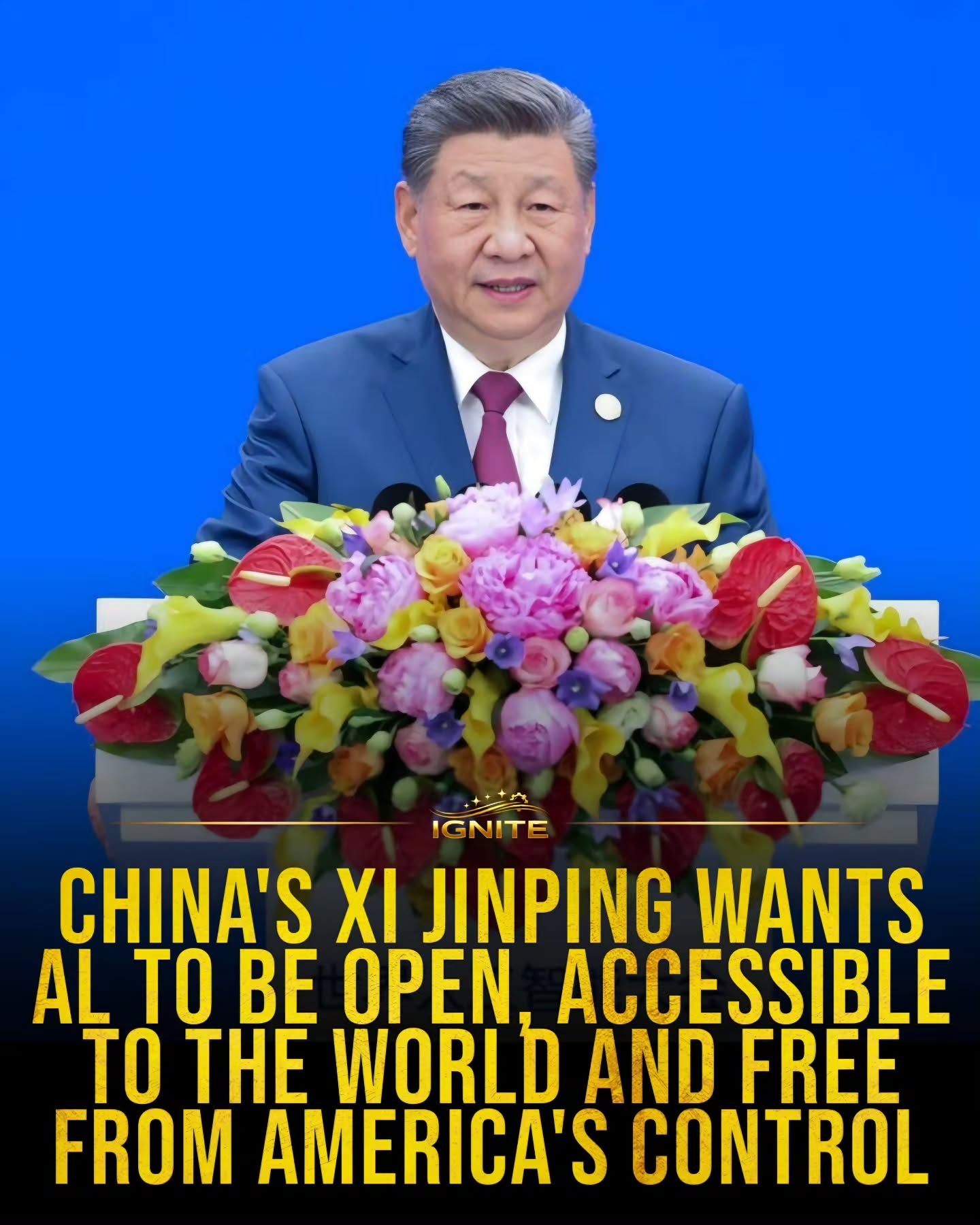
China's Leaders Push for Global AI Access and Independence
China's President Xi Jinping has made clear statements about his views on Artificial Intelligence (AI). He advocates for AI to be open and accessible to the world, free from the control of any single nation, particularly the United States. This stance reflects a broader geopolitical strategy, emphasizing technological sovereignty and global cooperation.
Why this matters
The global race for AI supremacy has significant economic and strategic implications. AI is poised to revolutionize industries from healthcare and finance to manufacturing and beyond. Countries are pouring resources into AI research and development, recognizing its potential to drive innovation, productivity, and national competitiveness.
China's push for an open, globally accessible AI ecosystem signals its ambition to lead in this critical technology. It also highlights a potential shift in global power dynamics, as traditional tech leaders like the United States face increased competition from emerging economies.
Xi Jinping's Vision for AI
Xi Jinping's vision for AI is multifaceted, encompassing both domestic development and international cooperation. Here are the key aspects of his stance:
Global Accessibility
Xi Jinping's call for AI to be open and accessible to the world underscores China's commitment to global technological advancement. By advocating for open AI, China aims to foster a collaborative environment where innovations can be freely shared and built upon. This approach contrasts with more protectionist stances that prioritize national security and economic gain over global cooperation.
Independence from American Control
Xi Jinping's emphasis on AI being free from American control reflects broader geopolitical tensions. The U.S. and China are locked in a complex technological rivalry, with each side seeking to gain an edge in AI. China’s push for independence is driven by a desire to reduce its reliance on American technology and to avoid potential restrictions or sanctions.
Strategic Autonomy
China's push for AI independence is also about strategic autonomy. By developing its own AI capabilities, China can ensure that its technological advancements are not dependent on foreign entities. This independence allows China to set its own standards and regulations, aligning AI development with its national interests and values.
Practical tips for understanding China's AI strategy
To fully grasp the implications of China's AI strategy, it's essential to consider the following:
Stay Informed
Monitoring developments in China's AI sector is crucial. Follow industry reports, academic research, and government policies to stay updated on the latest advancements and initiatives.
Engage in Dialogue
Engaging in dialogue with stakeholders in China's AI community can provide valuable insights. Attend international conferences, participate in webinars, and engage with experts to understand the nuances of China's approach to AI.
Foster Collaboration
While navigating the complexities of geopolitical tensions, fostering collaboration with Chinese tech companies and researchers can lead to mutual benefits. Joint research projects, technology sharing, and strategic partnerships can drive innovation and growth.
Important Takeaways
Xi Jinping's vision for an open, globally accessible AI offers several key takeaways:
- Global Leadership: China's stance positions it as a leader in the global AI landscape, promoting cooperation and knowledge sharing.
- Technological Sovereignty: By advocating for AI independence, China ensures that its technological developments align with its national interests and values.
- Geopolitical Implications: The push for AI independence reflects broader geopolitical tensions and China's desire to reduce reliance on American technology.
Conclusion
Xi Jinping's vision for an open, globally accessible AI, free from American control, represents a significant shift in the global AI landscape. This stance underscores China's ambition to lead in technological innovation and strategic autonomy. As the world continues to navigate the complexities of AI development, understanding China's approach will be crucial for fostering collaboration and driving progress in this transformative technology.
Questions readers ask
What is Xi Jinping's stance on global AI governance?
Xi Jinping advocates for an open and accessible global AI landscape. He believes that AI should be free from the control of any single country, promoting technological sovereignty and global cooperation. This stance is a response to the geopolitical tensions, particularly with the United States, and aims to foster open AI development and international relations.
How does China's AI policy reflect its broader geopolitical strategy?
China's AI policy, as advocated by Xi Jinping, emphasizes technological sovereignty and cooperation. It aims to prevent any single nation from dominating the AI sector, thereby reducing dependence on external actors and enhancing China's global influence. This strategy is part of a broader effort to achieve AI independence and global leadership in technological advancements.
What are the implications of the global AI race between the US and China?
The global AI race has significant economic and strategic implications. Countries are investing heavily in AI research and development to drive innovation, productivity, and national competitiveness. The competition between the US and China is particularly intense, with each country seeking AI dominance to secure future technological and geopolitical advantages.
What is the significance of open AI development in geopolitics?
Open AI development is crucial in geopolitics as it promotes global cooperation and prevents any single country from dominating AI advancements. China's push for open AI aligns with its stance on global AI governance, aiming to foster shared progress and reduce the risk of a technological arms race, thereby promoting stability and collaboration on a global scale.
How does China's stance on AI impact its international relations?
China's stance on AI, as advocated by President Xi, encourages international cooperation and emphasizes the importance of open AI development. This approach aims to foster mutual growth and innovation, thus promoting positive international relations. By advocating for AI free from control, China seeks to build a more inclusive and cooperative global AI landscape.
What does AI independence mean for China's technological sovereignty?
AI independence is a key aspect of China's technological sovereignty, as it aims to reduce dependence on foreign AI technologies. By promoting open and accessible AI development, China seeks to foster its own AI advancements and reduce reliance on external sources, thereby enhancing its global competitiveness and technological leadership.
Related deep dives
Similar reads based on topic and creator.




Recent articles
Fresh deep dives from the latest Reels we unpacked.




Comments
Be the first to comment.