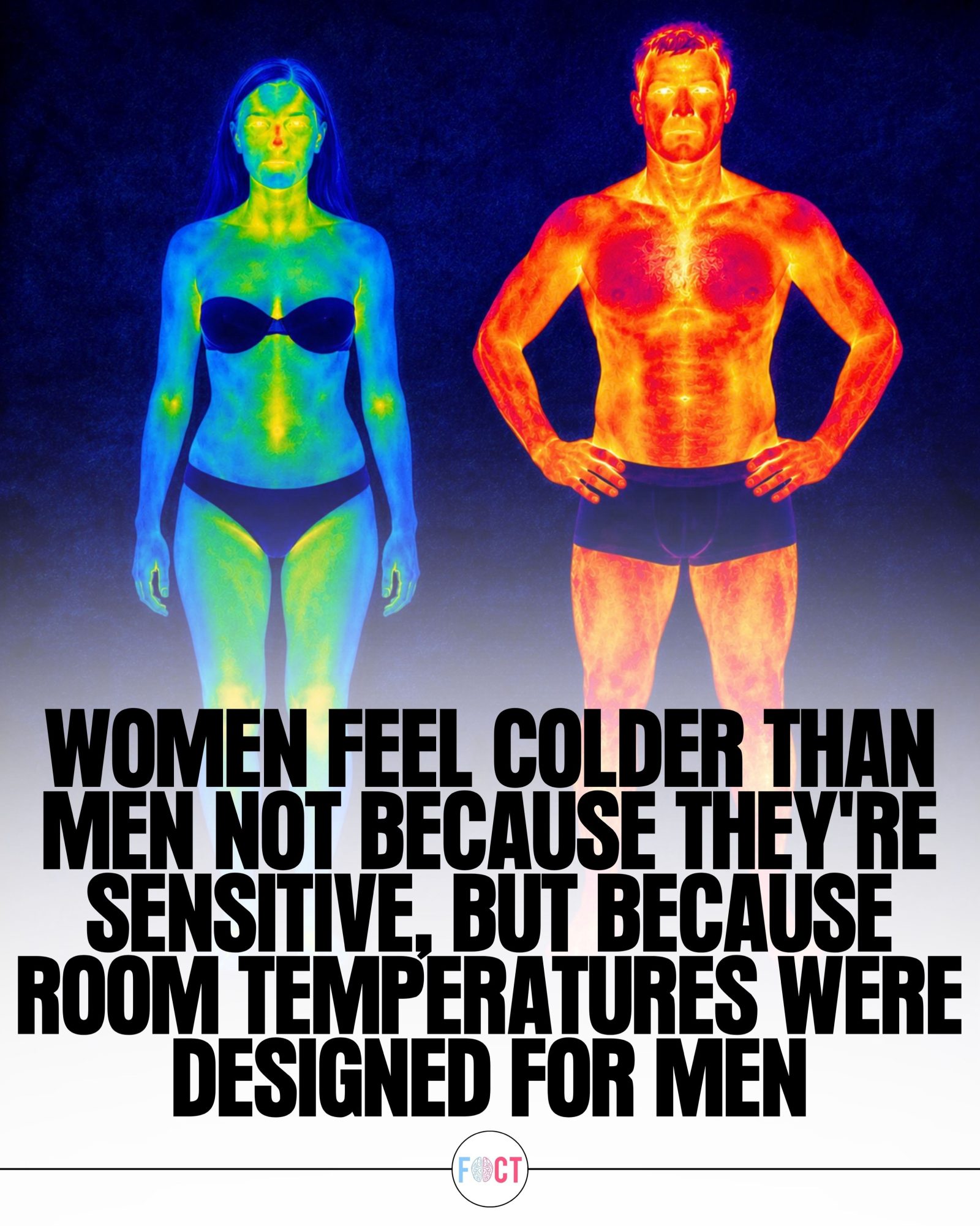
Gender and Room Temperature
The disconnect between how men and women perceive room temperature is a common experience. It's not just about personal preference; there are biological reasons why women often feel colder than men. Understanding the science behind this can help create more comfortable environments for everyone.
Context / Why this matters
The issue of room temperature is more than just a matter of comfort. It affects productivity, health, and overall well-being. In workplaces, schools, and homes, the temperature often defaults to a standard that favors men. The American Society of Heating, Refrigerating and Air-Conditioning Engineers (ASHRAE) has historically used a formula based on male metabolic rates to set indoor temperature standards, leading to environments that are often too cold for women. This has led to health implications such as increased risk for cold-related health issues. By understanding the differences in how men and women regulate body heat, we can create more equitable and comfortable environments for everyone.
Main discussion
Biological Differences in Heat Regulation
Women and men have different metabolic rates and body compositions, which affect how they regulate body heat. Women, on average, have less muscle mass than men, which means they produce less internal heat, even at rest. This lower muscle mass results in less heat production, making women more susceptible to feeling cold. Additionally, women's bodies prioritize keeping vital organs warm over extremities like hands and feet, which can lead to women feeling colder in their extremities. Blood flow to extremities is reduced more quickly, especially under the influence of hormones like estrogen, which causes blood vessels to constrict. This physiological response explains why women often reach for a sweater when men are comfortable in a T-shirt. The thermal imagery often depicts women in cooler colors (blue/green), indicating lower body temperatures, while men are depicted in warmer colors (red/orange).
The Impact of Hormones
Hormones play a significant role in how the body regulates temperature. Estrogen, for example, can cause blood vessels to constrict, reducing blood flow to the extremities. This constriction means that less warm blood is circulated to the hands and feet, leading to a feeling of coldness. This effect is particularly noticeable during different stages of a woman's life, such as menstruation, pregnancy, and menopause, when hormone levels fluctuate.
Main discussion
Historical Standards and their Impact
The standards for indoor temperatures were originally set based on male metabolic rates. In the 1960s, the ASHRAE adopted a formula developed by P.O. Fanger, which used a model of a 40-year-old man weighing 154 pounds (70 kilograms). This standard became the benchmark for setting temperatures in offices, schools, and other public spaces. However, this model did not account for the differences in how women regulate body heat, leading to environments that are often too cold for women. This historical oversight has had lasting effects on how we set temperature standards today.
The Role of Clothing and Environment
Clothing choices also play a role in how men and women perceive temperature. Men often wear fewer layers and opt for more breathable fabrics, which can help them feel comfortable in a wider range of temperatures. Women, on the other hand, may choose to wear more layers or thicker fabrics, which can trap heat and make them feel warmer. Additionally, the environment in which people are situated can affect their perception of temperature. For example, people who are more active or engaged in physical activity may produce more body heat, making them feel warmer. Conversely, people who are sedentary or in a cool environment may feel colder.
Practical tips
Adjusting Temperature Settings
To create a more comfortable environment for everyone, it's essential to adjust temperature settings to account for the differences in how men and women regulate body heat. Setting the thermostat to a slightly higher temperature can help women feel more comfortable without making men overly warm. It's also a good idea to use personal heating devices, such as space heaters or heated blankets, to allow individuals to adjust their temperature to their comfort level.
Layering and Clothing Choices
Encouraging everyone to wear layers can help accommodate individual temperature preferences. Layering allows people to add or remove clothing as needed to feel comfortable. Additionally, choosing breathable fabrics can help regulate body temperature by allowing excess heat to escape. This approach can help create a more comfortable environment for everyone, regardless of their individual temperature preferences.
Personalized Heating Solutions
Personalized heating solutions, such as heated seats, heated desks, or even heated gloves, can provide targeted warmth to individuals without affecting the overall room temperature. This approach allows people to adjust their temperature to their comfort level without disrupting the comfort of others.
Important takeaways
-
Biological Differences: Women and men have different metabolic rates and body compositions, which affect how they regulate body heat.
-
Hormonal Impact: Hormones like estrogen can cause blood vessels to constrict, reducing blood flow to the extremities and leading to a feeling of coldness.
-
Historical Standards: Indoor temperature standards were historically set based on male metabolic rates, leading to environments that are often too cold for women.
-
Personalized Solutions: Adjusting temperature settings, layering clothing, and using personalized heating solutions can help create a more comfortable environment for everyone.
Conclusion
The differences in how men and women perceive room temperature are rooted in biological and hormonal factors. Understanding these differences can help create more comfortable and equitable environments for everyone. By adjusting temperature settings, encouraging layering, and using personalized heating solutions, we can accommodate individual temperature preferences and create a more comfortable environment for all.
Questions readers ask
Why do women often feel colder than men in the same room?
Women tend to have a lower muscle mass than men, which means they produce less heat. Additionally, hormonal fluctuations, particularly during menstruation, pregnancy, and menopause, can affect a woman's internal temperature, making her more sensitive to cold.
How does the body regulate temperature differently in women and men?
Women's bodies regulate temperature differently based on factors like lower metabolic rates and hormonal variations. These factors can lead to women feeling colder in the same environment as men.
What are the implications of setting indoor temperature standards based on male metabolic rates?
Setting indoor temperature standards based on male metabolic rates can lead to environments that are too cold for women, affecting their comfort, productivity, and overall well-being. This is because women's lower muscle mass and hormonal influences make them more sensitive to cold.
How can creating equitable indoor temperatures benefit everyone?
Creating equitable indoor temperatures can benefit everyone by improving comfort and productivity. When indoor temperatures are set to a standard that favors men, it can make environments too cold for women, leading to discomfort and decreased productivity.
What are some ways to set a comfortable room temperature for everyone?
To set a comfortable room temperature for everyone, consider adjusting the thermostat to a range that accommodates both men and women. Aim for a temperature between 68-72°F (20-22°C) and use layers and personal heating devices, like blankets or space heaters.
Why do women feel colder in winter and in an air-conditioned office?
Women feel colder in winter due to a combination of lower muscle mass, which generates less heat, and hormonal fluctuations. In an air-conditioned office, women may also feel colder due to the temperature being set based on male metabolic rates, which doesn't account for women's lower muscle mass and hormonal influences.
How does lower muscle mass impact a woman's perception of temperature?
Lower muscle mass in women means they produce less heat, making them more sensitive to cold. This is especially true in environments where the temperature is set based on male metabolic rates, which can lead to discomfort for women.
Related deep dives
Similar reads based on topic and creator.




Recent articles
Fresh deep dives from the latest Reels we unpacked.




Comments
Be the first to comment.