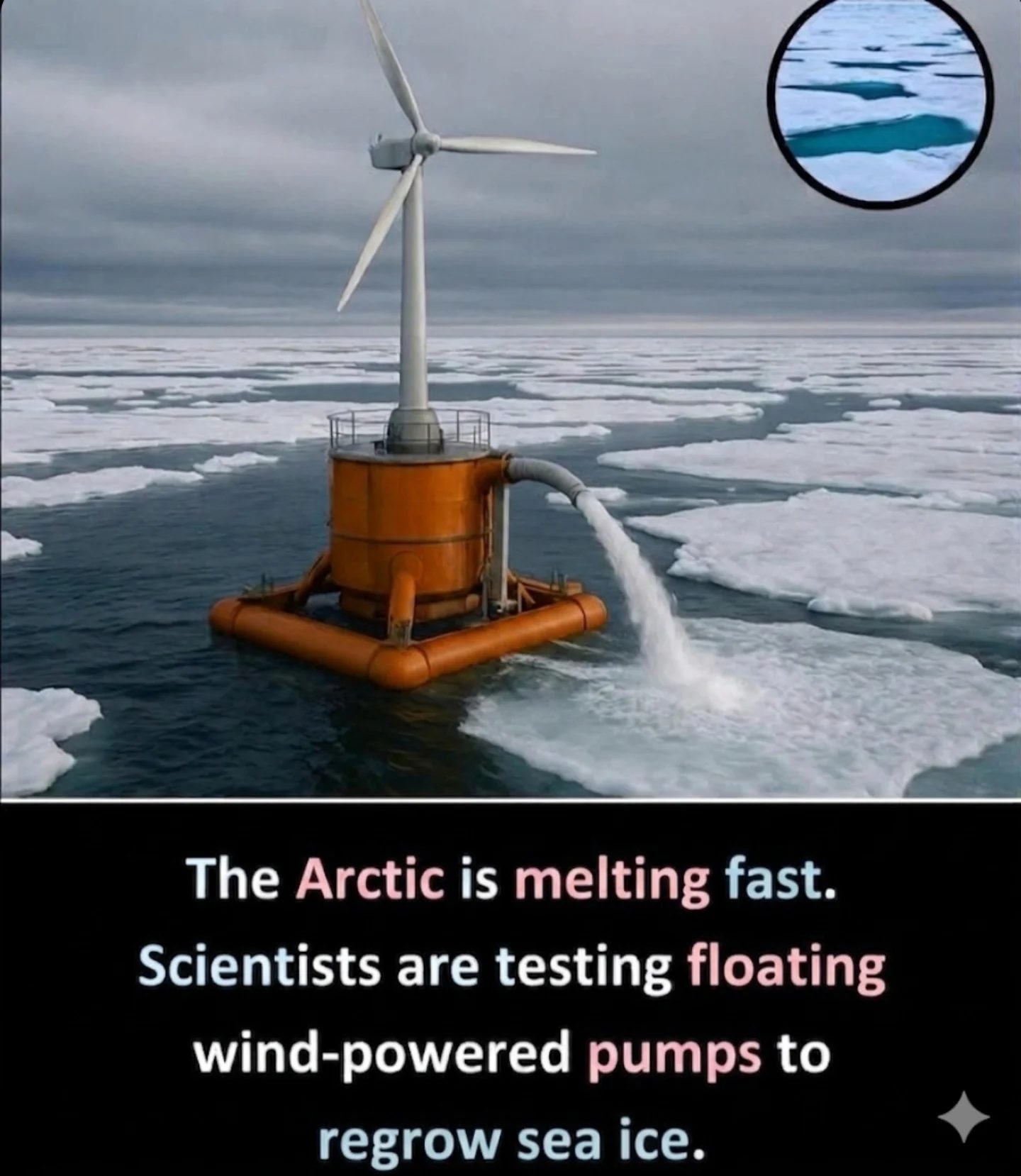
Arctic Sea Ice Restoration
Arctic sea ice is melting at an alarming rate, and scientists are exploring innovative solutions to combat this loss. One of the most promising technologies is the wind-powered pump, a geoengineering project designed to thicken existing ice and help it survive the summer melt. This technology, showcased by a British startup called Real Ice, aims to address the urgent issue of Arctic sea ice loss and its global implications.
Why This Matters
The Arctic sea ice plays a critical role in regulating global temperatures. It acts as the world's natural "refrigerator," reflecting sunlight back into space and keeping the planet cool. As the ice melts, the dark ocean absorbs more heat, leading to a dangerous feedback loop that accelerates warming. Thicker ice, on the other hand, has a higher albedo, meaning it reflects more sunlight and takes much longer to melt during the warmer months. This makes the restoration of Arctic sea ice a high-priority environmental challenge.
Main Discussion
The Core Concept: Ice Thickening
The key to this technology is not just creating ice from scratch, but thickening existing ice sheets. The wind-powered pump is designed to reinforce the ice from above, making it more resilient to melting. By thickening the ice, the pumps help to maintain the Arctic's cooling effect for longer periods.
How It Works
The wind-powered pump operates by drilling through the ice to reach the relatively warmer seawater underneath. Once it has access to the water, the pump then sprays that water across the top surface of the ice sheet. The physics behind this process is straightforward: because Arctic air is significantly colder than the water, the sprayed water freezes rapidly. This rapid freezing creates a layer of "snow ice" that reinforces the sheet from above, making it thicker and more durable.
The Technology in Action
The pump is designed to be fully automated and powered by wind or hydrogen, making it a sustainable solution for the Arctic environment. The technology involves a series of pipes connected to the pump that distribute water across the ice surface. This distribution helps to create an even layer of snow ice, ensuring that the entire ice sheet is strengthened.
Practical Tips
For those interested in the practical aspects of this technology, here are some key points to consider:
- Sustainability: The use of wind or hydrogen power ensures that the pumps have a minimal environmental impact, making them a viable long-term solution.
- Scalability: While the current prototypes are on a small scale, the technology has the potential to be scaled up for broader application across the Arctic.
- Monitoring and Maintenance: Regular monitoring and maintenance will be essential to ensure the pumps are functioning correctly and to make any necessary adjustments.
- Collaboration: International collaboration and funding will be crucial for the widespread implementation of this technology.
Important Takeaways
The wind-powered pump technology represents a significant step forward in the fight against Arctic sea ice loss. Its ability to thicken existing ice sheets has the potential to slow down the melting process and mitigate the dangerous feedback loop caused by the loss of sea ice. By reflecting more sunlight and taking longer to melt, thicker ice plays a crucial role in regulating global temperatures.
Conclusion
The urgency of combating Arctic sea ice loss cannot be overstated. The wind-powered pump technology is a beacon of hope in this environmental challenge. As scientists and engineers continue to refine and scale this technology, it holds the promise of preserving the Arctic's natural "refrigerator" and maintaining global temperature stability. Through continued innovation and international cooperation, this cutting-edge solution could play a pivotal role in addressing one of the most pressing environmental issues of our time.
Questions readers ask
How do wind-powered pumps help in Arctic sea ice regrowth?
Wind-powered pumps work by bringing colder water from the depths of the Arctic Ocean to the surface. This process aids in forming and thickening sea ice, making it more resilient against the summer melt and promoting regrowth.
What makes wind-powered pumps a viable solution for Arctic sea ice protection?
Wind-powered pumps are a sustainable and renewable solution because they harness wind energy. They offer a practical approach to combat Arctic sea ice melting without relying on fossil fuels, making them an environmentally friendly option.
Can wind-powered pumps alone solve the problem of climate change in the Arctic?
While wind-powered pumps can significantly aid in Arctic sea ice thickening and cooling, they are not a standalone solution to climate change. They should be part of a broader strategy that includes reducing greenhouse gas emissions and other mitigation efforts.
What is the role of Real Ice in the development of wind-powered pump technology?
Real Ice is a British startup leading the development and implementation of wind-powered pump technology. They are at the forefront of testing and deploying these floating pumps in the Arctic to thicken sea ice and enhance its resilience.
How does Arctic sea ice loss impact global temperatures?
Arctic sea ice acts as a natural barrier, reflecting sunlight and maintaining cooler global temperatures. When the ice melts, the darker ocean absorbs more heat, leading to a feedback loop that accelerates global warming.
What are some of the specific benefits of using wind-powered pumps for Arctic sea ice regrowth?
Wind-powered pumps can help regulate global temperatures by promoting Arctic ice thickening. These pumps are designed to work efficiently in the harsh Arctic conditions, enhancing the durability of existing ice and aiding in its regrowth.
Related deep dives
Similar reads based on topic and creator.




Recent articles
Fresh deep dives from the latest Reels we unpacked.




Comments
Be the first to comment.