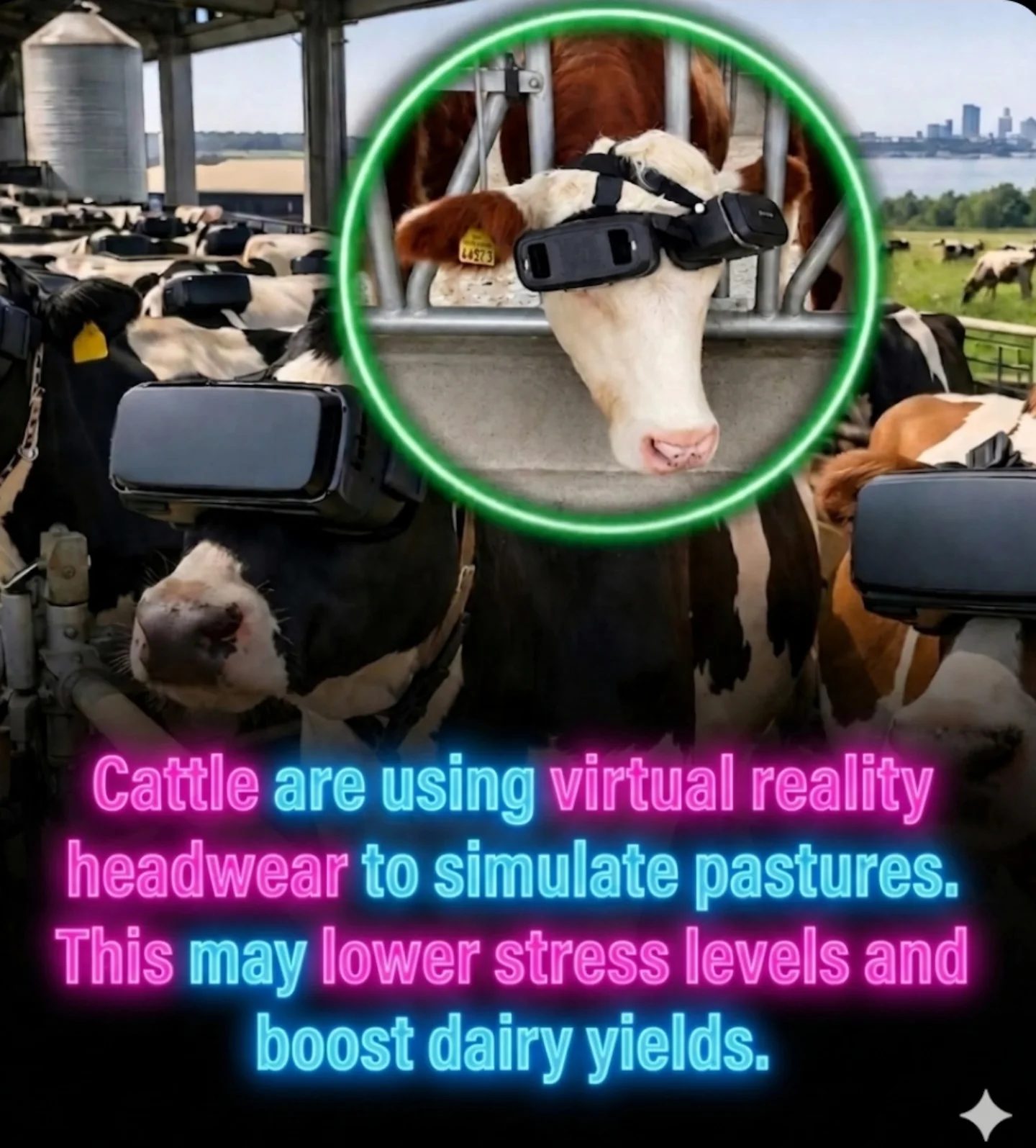
Virtual Reality for Cows: Innovating Dairy Farming
Virtual reality (VR) technology is transforming various industries, and now it's making waves in dairy farming. When most people think of virtual reality, they imagine gaming or immersive entertainment experiences. However, a unique application of this technology has emerged in the agricultural sector, particularly in dairy farming. Virtual reality headsets are being tested on cattle to simulate pastures and potentially reduce stress levels in cows, leading to increased dairy yields.
Why This Matters
For dairy farmers, the health and well-being of their cattle are paramount to the productivity of their operations. Stress is a significant factor that can impact milk production, and managing stress levels in confined environments can be challenging. Virtual reality offers a novel solution to this problem. By simulating natural, calming environments, VR headsets can help reduce stress and potentially boost dairy production. This innovative approach underscores the potential of technology to improve efficiency and sustainability in agriculture.
The Evolution of VR in Dairy Farming
The Moscow Experiment
The concept of using VR headsets on cows originated in 2019 as a pilot project in Moscow, Russia. A collaborative effort between developers, veterinarians, and production consultants led to the development of a unique VR headset designed specifically to fit a cow's head. The goal was to simulate the serene environment of vast, green summer pastures to reduce stress and potentially increase milk yields.
Adoption in Turkey
In 2022, a Turkish cattle farmer named İzzet Koçak read about the Russian experiment and decided to implement it on his own farm. His primary motivation was to combat high feed prices and improve efficiency during harsh winter months. The Turkish dairy farmer successfully replicated the Russian experiment, achieving remarkable results.
How It Works
The process of using VR headsets on cows involves several key components: custom software, the simulation, and the overall atmosphere.
Custom Software
One of the challenges in developing VR for cows is that cows see the world differently than humans. They perceive reddish tones much better than greens and blues. Therefore, VR architects had to alter the color palette of the software specifically for bovine vision to ensure the simulation was realistic and effective.
The Simulation
When the cows put on the headsets, they are shown simulated footage of vast, sunny, green summer pastures. The high-quality simulation is designed to mimic the natural environment, providing a calming effect on the animals. The idea is to trick the cows' senses into believing they are in a peaceful outdoor setting, thereby reducing their stress levels.
The Atmosphere
To enhance the calming effect, the farmers paired the VR headsets with classical music (like Mozart and Beethoven) playing in the background. The combination of visual and auditory stimuli creates an immersive experience that can significantly reduce anxiety and stress in the cows.
The Results
Improved Emotional State
According to the farmers and the Russian Ministry of Agriculture, the results of using VR headsets on cows have been surprisingly positive. The emotional state of the herd improved, and overall anxiety levels dropped significantly. This reduction in stress leads to a more relaxed and content herd, which is beneficial for their overall health and productivity.
Increased Milk Yields
Farmer İzzet Koçak reported that the cows wearing the headsets saw their daily milk production jump from an average of 22 liters up to 27 liters (roughly a 22% increase) of higher quality milk. This significant boost in production and quality highlights the potential benefits of using VR technology in dairy farming. The enhanced milk yield not only increases the farmer's profitability but also ensures a steady supply of high-quality milk for consumers.
Practical Tips for Implementing VR in Dairy Farming
Assess Your Farm's Needs
Before implementing VR technology, assess your farm's specific needs and challenges. Consider factors such as stress levels, feed prices, and the overall environment. Identify areas where VR could potentially make a significant impact.
Choose the Right VR Equipment
Select VR headsets that are specifically designed for bovine use. Ensure the software is customized to simulate pastures accurately, taking into account the unique visual perception of cows. The headsets should be comfortable and secure to wear, allowing the cows to move freely without discomfort.
Create an Immersive Experience
Pair the VR headsets with calming music and natural sounds to enhance the immersive experience. This combination can greatly reduce stress and anxiety in the cows. Experiment with different types of music and sounds to find what works best for your herd.
Monitor and Adjust
Regularly monitor the cows' responses to the VR experience and make adjustments as needed. Track changes in milk production, emotional state, and overall health. Continuous monitoring will help you refine the VR simulations and ensure optimal results.
Important Takeaways
The use of virtual reality headsets to simulate pastures for cows is a groundbreaking approach in dairy farming. This innovative technology helps reduce stress levels in confined environments, leading to increased milk yields and improved animal welfare. By leveraging VR, farmers can enhance the productivity and sustainability of their operations, benefiting both the animals and the industry as a whole.
Conclusion
Virtual reality is not just for gaming and entertainment—it has the potential to revolutionize agricultural practices. By simulating natural environments for cows, VR headsets can significantly reduce stress and improve dairy yields. This innovative approach highlights the intersection of technology and agriculture, offering a new paradigm for enhancing animal welfare and farming efficiency. As the technology continues to evolve, it will be exciting to see how VR can further transform the dairy industry and beyond.
Questions readers ask
How do VR headsets help in increasing cow milk production?
VR headsets for cows simulate calming environments, such as vast, green pastures, which can reduce stress levels in cows. Lower stress levels are linked to increased milk production, making VR a potential tool for enhancing dairy yields.
What is the benefit of using VR in dairy farming?
In dairy farming, VR technology can contribute to dairy efficiency by creating a soothing environment for cows, which in turn, can lead to increased milk production and improved overall animal health.
Is VR for cows a new innovation in Russia?
Yes, the use of virtual reality for cows is a recent innovation in Russia, which has been gaining attention due to its potential to improve dairy farming practices and animal welfare.
Are there any downsides to using VR for cows?
While VR for cows shows promise, it is still a relatively new concept. Potential drawbacks may include the initial cost of implementing the technology, the need for proper maintenance, and ensuring the cows are comfortable with the headsets.
Can VR headsets for cattle replace outdoor grazing?
VR headsets for cattle are not intended to replace outdoor grazing but to supplement it. They provide a simulated environment that can help reduce stress when cows are in confined spaces, such as during colder months or when pasture is not available.
Are there other ways VR can be beneficial for dairy farms?
Beyond simulating calming environments, VR can also be used for training purposes, allowing dairy farmers to practice procedures in a virtual setting before applying them to real animals. Additionally, VR can aid in monitoring cow health and behavior remotely, enhancing overall farm management.
How do dairy farmers know if the VR headsets are effective?
Dairy farmers can assess the effectiveness of VR headsets by monitoring changes in milk production, observing the cows' stress levels, and tracking overall herd health. Comparisons can be made between cows using VR and those that are not to gauge the technology's impact on dairy operations.
Related deep dives
Similar reads based on topic and creator.




Recent articles
Fresh deep dives from the latest Reels we unpacked.




Comments
Be the first to comment.