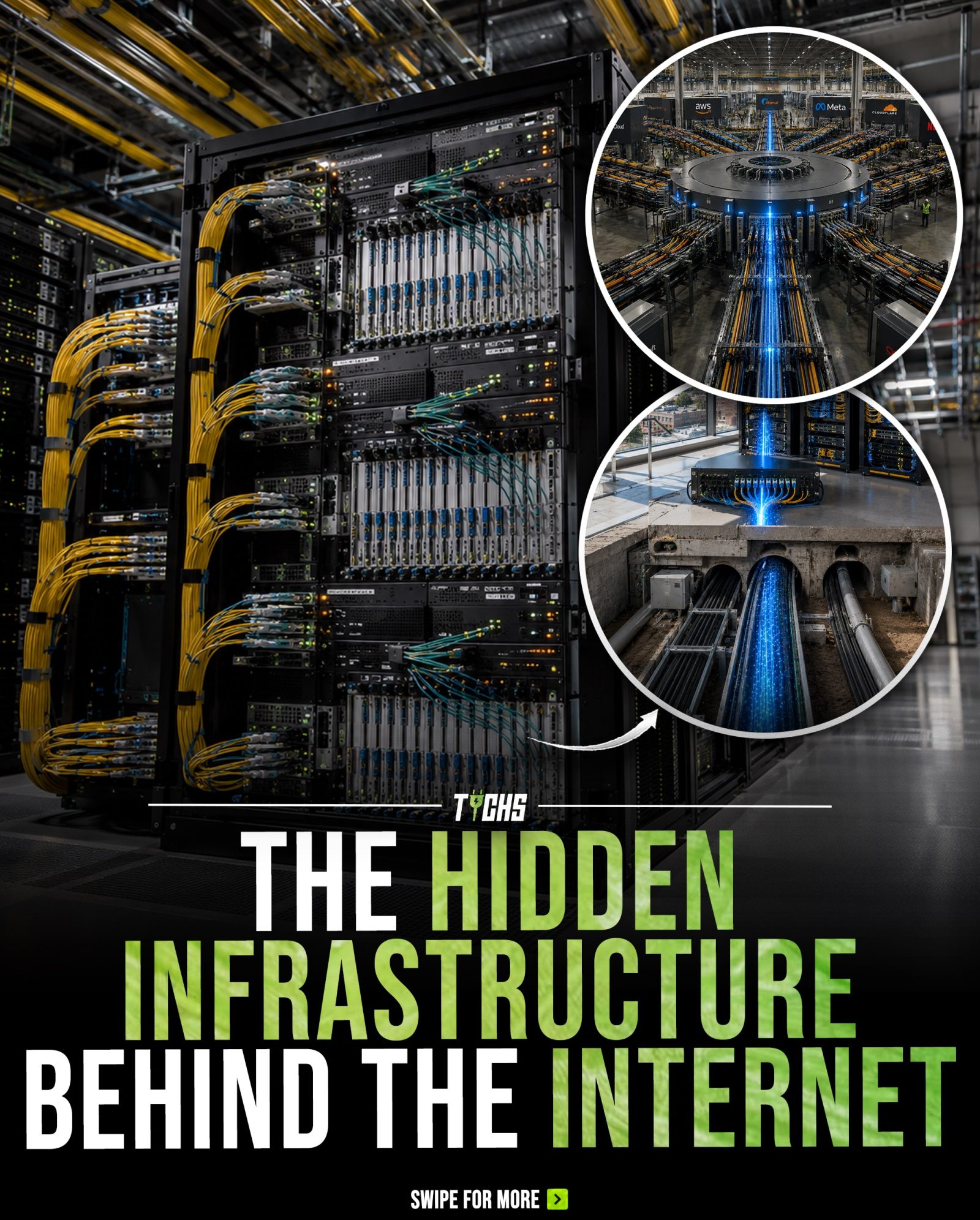
The Hidden Infrastructure Behind the Internet
Every website you visit, every app you use, and every service you access relies on a vast, interconnected web of infrastructure. This infrastructure is the silent force enabling everything from simple web browsing to complex cloud computing and artificial intelligence.
Why This Matters
Understanding the infrastructure that powers the internet is crucial for grasping how data moves and is processed. It also highlights the importance of each component in maintaining the reliability and speed of online services. When you stream a movie, send an email, or use a cloud service, the success of these actions depends on a harmonious interplay of various technologies and systems.
The Backbone of the Internet
Data Centers
Data centers are the physical hubs where servers are housed. These massive facilities contain rows upon rows of server racks, each packed with powerful machines that store, process, and route data. Companies like AWS, Google Cloud, Microsoft Azure, Oracle Cloud, Meta, and Cloudflare operate these facilities. Data centers host the servers that power everything from websites to AI applications. They are the backbone of cloud services, ensuring that data is accessible and reliable.
Internet Exchanges
Internet Exchanges (IXPs) are crucial for the rapid movement of data between networks. These exchanges connect various Internet Service Providers (ISPs) and content delivery networks (CDNs), ensuring that data packets travel the shortest and fastest routes. By facilitating efficient data transfer, IXPs help reduce latency and improve the overall performance of online services.
DNS Servers and Routers
DNS servers translate human-readable website names (like www.example.com) into IP addresses that computers understand. Routers guide data packets across the most efficient paths, ensuring that information gets to its destination quickly and reliably. These components work in tandem to keep the internet running smoothly, enabling seamless navigation and data transfer.
Submarine Cables and Edge Servers
Submarine cables stretch across oceans, connecting continents and enabling global communication. These cables carry vast amounts of data, ensuring that information can travel long distances with minimal delay. Edge servers, on the other hand, are located closer to end-users, reducing latency and improving the performance of applications that require real-time data processing.
Firewalls and Load Balancers
Firewalls protect against malicious traffic, ensuring that only authorized data can enter or exit a network. Load balancers distribute incoming requests across multiple servers, preventing any single server from becoming overloaded. This distribution ensures that services remain available and responsive, even during peak usage times.
GPU and Storage Servers
GPU (Graphics Processing Unit) servers are essential for powering AI applications and high-performance computing tasks. These servers are designed to handle complex calculations and data processing, making them crucial for tasks like machine learning and data analytics. Storage servers, on the other hand, provide the necessary storage capacity to handle vast amounts of data, ensuring that information is always accessible when needed.
Practical Tips for Understanding Internet Infrastructure
Stay Informed
Staying updated on the latest developments in internet infrastructure can help you appreciate the complexities and advancements in data processing and communication. Follow industry experts, read articles, and attend webinars to stay informed.
Explore Data Centers
Many data center operators offer virtual tours or on-site visits. These tours can provide a hands-on understanding of how servers are managed and how data centers operate. Understanding the physical aspects of data centers can give you a deeper appreciation for the infrastructure that powers the internet.
Learn About Networking Basics
Understanding basic networking concepts, such as DNS servers, routers, and internet exchanges, can enhance your understanding of how data moves across the internet. There are numerous online resources and courses available that can help you grasp these concepts.
Recognize the Importance of Security
Firewalls and load balancers are essential for maintaining the security and reliability of online services. Understanding how these components work can help you appreciate the importance of cybersecurity and the measures taken to protect data.
Important Takeaways
The vast network of infrastructure that underpins the internet is often invisible to most users, yet it is indispensable. From DNS servers and routers to data centers and edge servers, each component plays a critical role in ensuring that data moves efficiently and securely. Understanding this infrastructure can help you appreciate the complexities involved in keeping the internet running smoothly.
Conclusion
The internet's infrastructure is a marvel of modern engineering, a vast and interconnected network of data centers, internet exchanges, and various other components. It's a hidden world that most users never see, but it's essential for everything we do online. By understanding the intricacies of this infrastructure, we can appreciate the complexities and efforts involved in making the internet a reliable and efficient tool for communication, entertainment, and work.
Questions readers ask
What are data centers and why are they essential for the internet?
Data centers are physical facilities that house servers and associated components, such as storage systems and networking equipment. They are vital for the internet because they store, process, and distribute the vast amounts of data that we generate and consume daily. Without data centers, the internet as we know it would not function.
How do internet exchanges facilitate online services?
Internet exchanges are facilities where different internet service providers (ISPs) and content delivery networks (CDNs) interconnect. They allow for the efficient routing of data between networks, reducing latency and improving the speed and reliability of online services.
What role do DNS servers play in the internet's infrastructure?
DNS (Domain Name System) servers translate human-readable domain names (like www.example.com) into IP addresses that computers use to identify each other on the network. They are crucial for directing internet traffic to the correct destinations, enabling seamless browsing and online interactions.
What is the internet backbone and how does it support online activities?
The internet backbone refers to the primary data routes that carry internet traffic long distances, often between large cities or across countries. It consists of high-capacity fiber optic cables and advanced networking equipment, ensuring that data can travel quickly and reliably between different parts of the world.
How does the internet's physical cable network contribute to its functionality?
The internet's physical cable network, primarily composed of fiber optic cables, is the backbone of its data transmission capabilities. These cables carry vast amounts of data over long distances with minimal signal loss, ensuring that information can travel quickly and reliably between data centers, internet exchanges, and end-users.
What is the significance of cloud computing infrastructure in modern internet use?
Cloud computing infrastructure refers to the network of servers, storage, and networking resources that enable on-demand access to computing services. This infrastructure supports a wide range of applications, from streaming services to artificial intelligence, by providing scalable, flexible, and cost-effective resources.
How does the internet's power infrastructure ensure continuous online service?
The internet's power infrastructure includes backup generators, uninterruptible power supplies (UPS), and redundant power systems designed to keep data centers and other critical facilities online during power outages. This ensures that online services remain available, even during disruptions in the main power supply.
Related deep dives
Similar reads based on topic and creator.




Recent articles
Fresh deep dives from the latest Reels we unpacked.




Comments
Be the first to comment.