Geological Formation
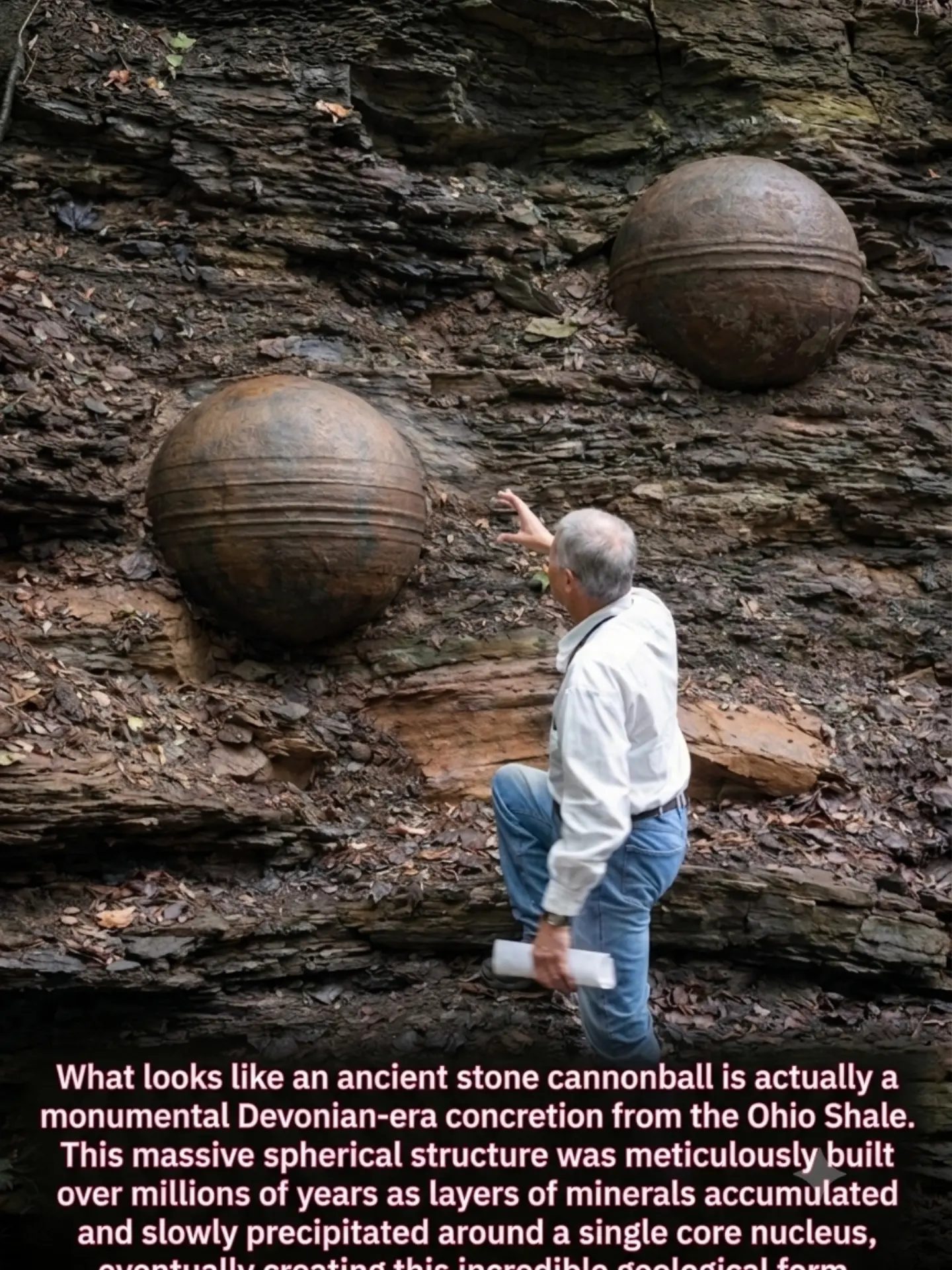
Carbonate concretions are monumental geological formations that have captivated earth scientists for generations. These massive, spherical structures are not man-made but formed naturally over millions of years. Located in the Ohio Shale, these concretions are a testament to the intricate processes that shape our planet. Let’s delve into the fascinating world of these geological marvels, their formation, and what makes them so significant.
Context / Why this matters
Geological formations like carbonate concretions offer invaluable insights into the Earth's geological history. They provide a window into ancient environments, helping scientists reconstruct the conditions of the past. The study of these formations is crucial for understanding the Earth's geological evolution and the processes that have shaped its landscape.
Main discussion
The Devonian Period
The Devonian Period, which spanned from approximately 419 to 359 million years ago, is known as the "Age of Fishes." During this time, the region that is now Ohio was a shallow sea. The concretion is from the Devonian-era Ohio Shale. The shallow sea environment was teeming with life, including ancient fish and plant species. As these organisms died, their remains sank to the muddy ocean floor, setting the stage for the formation of these remarkable concretions.
Formation of Carbonate Concretions
Carbonate concretions are formed through a process of mineral accumulation. When organic materials, such as ancient fish bones or fossilized wood, decayed on the ocean floor, minerals like calcite and dolomite began to crystallize around them. These minerals accumulated layer by layer, forming a hard, spherical structure over millions of years. Around a single core nucleus, that is The formation is a Devonian-era concretion from the Ohio Shale. The sphere formed around a single core nucleus.
The Role of Shale
The mud that accumulated on the ocean floor eventually compressed into solid shale rock. This shale encased the growing concretions, protecting them from erosion and preserving their spherical shape. Over time, as the surrounding rock eroded, the concretions were gradually exposed, revealing these incredible prehistoric globes. These formations often appear as if they were meticulously carved, but they are the result of natural, geological processes.
The Ohio Shale
The Ohio Shale is a significant geological formation in the United States, known for its rich fossil record and unique geological features. The shale formation extends across several states, including Ohio, Kentucky, and West Virginia. It is composed of clay, silt, and organic matter, which, when compacted over millions of years, form a hard, sedimentary rock. The Ohio Shale is particularly notable for its well-preserved fossils, which offer valuable insights into the Devonian Period and the ancient marine life that thrived during that time.
Practical tips
Identifying Carbonate Concretions
If you're interested in identifying carbonate concretions, there are a few key characteristics to look for:
- Spherical Shape: Concretions are often spherical or egg-shaped, distinct from the surrounding rock.
- Hard Surface: They have a hard, smooth surface due to the mineral layers that accumulate over time.
- Core Nucleus: Look for a central core, which is the original organic material around which the minerals crystallized.
- Mineral Content: Concretions are typically composed of minerals like calcite and dolomite.
Geological Exploration
For those interested in exploring geological formations, consider the following tips:
- Research Local Geology: Learn about the geological history of your area. Understanding the local geology can help you identify potential sites for exploration.
- Visit Geological Sites: Many regions have designated geological sites where you can observe and study different formations.
- Join a Geological Society: Joining a local or national geological society can provide access to experts, field trips, and educational resources.
Important takeaways
Understanding Geological Timescales
Geological formations like carbonate concretions remind us of the vast timescales involved in Earth's geological processes. The Devonian Period, which saw the formation of these concretions, was a critical time in the Earth's history, marked by significant changes in climate, ocean chemistry, and the diversity of life.
The Significance of Fossil Records
The fossilized remains of ancient organisms play a crucial role in our understanding of the Earth's past. These fossils provide direct evidence of ancient life forms and the environments in which they lived. The organic materials within the concretions offer insights into the marine life of the Devonian Period, helping scientists reconstruct the ecological conditions of that era.
The Beauty of Geological Process
The formation of carbonate concretions is a testament to the beauty and complexity of geological processes. The accumulation of minerals, the compression of sediments, and the erosion of surrounding rock all contribute to the creation of these remarkable structures. These processes highlight the interconnected nature of geological systems and the dynamic forces that shape our planet.
Conclusion
Carbonate concretions in the Ohio Shale are a fascinating example of the Earth's geological history. Their formation over millions of years, the role of minerals, and the preservation within shale rock all contribute to their significance. These formations offer invaluable insights into the ancient environments of the Devonian Period and the processes that have shaped our planet. By understanding and appreciating these geological marvels, we gain a deeper appreciation for the natural forces that continue to shape our world today.
Questions readers ask
What are Ohio Shale Concretions and how were they formed?
Ohio Shale Concretions are large, round geological formations found in the Ohio Shale, which were created naturally over many millions of years. The formation process began during the Devonian Period, when minerals precipitated and solidified within the shale, creating these unique structures.
Why are the Devonian Period concretions in Ohio significant?
These concretions are significant because they provide insights into the geological history of Ohio and the Earth. They help scientists understand the processes that shaped the planet and reconstruct the environmental conditions of ancient landscapes during the Devonian Period.
How do carbonate concretions in shale help in reconstructing Earth's geological history?
Carbonate concretions in shale are valuable because they offer a glimpse into the past, including the conditions of the ancient environment and the geological events that unfolded over time. By studying these formations, scientists can piece together the Earth's geological history.
What is the significance of the spherical shape of Ohio Shale concretions?
The spherical shape of these concretions is a result of the uniform precipitation of minerals during their formation. This shape is notable because it is distinct from the surrounding shale and provides clues about the natural processes that led to their creation.
What makes the Devonian Period geological history of Ohio unique?
The Devonian Period in Ohio is unique due to the presence of massive shale concretions, which are not found in many other places. These formations offer a specific window into the geological processes and environmental conditions that occurred during this time.
How old are the ancient shale formations in Ohio?
The ancient shale formations in Ohio, including the concretions, are millions of years old, dating back to the Devonian Period. This time period began approximately 419 million years ago and ended around 359 million years ago.
Related deep dives
Similar reads based on topic and creator.




Recent articles
Fresh deep dives from the latest Reels we unpacked.




Comments
Be the first to comment.