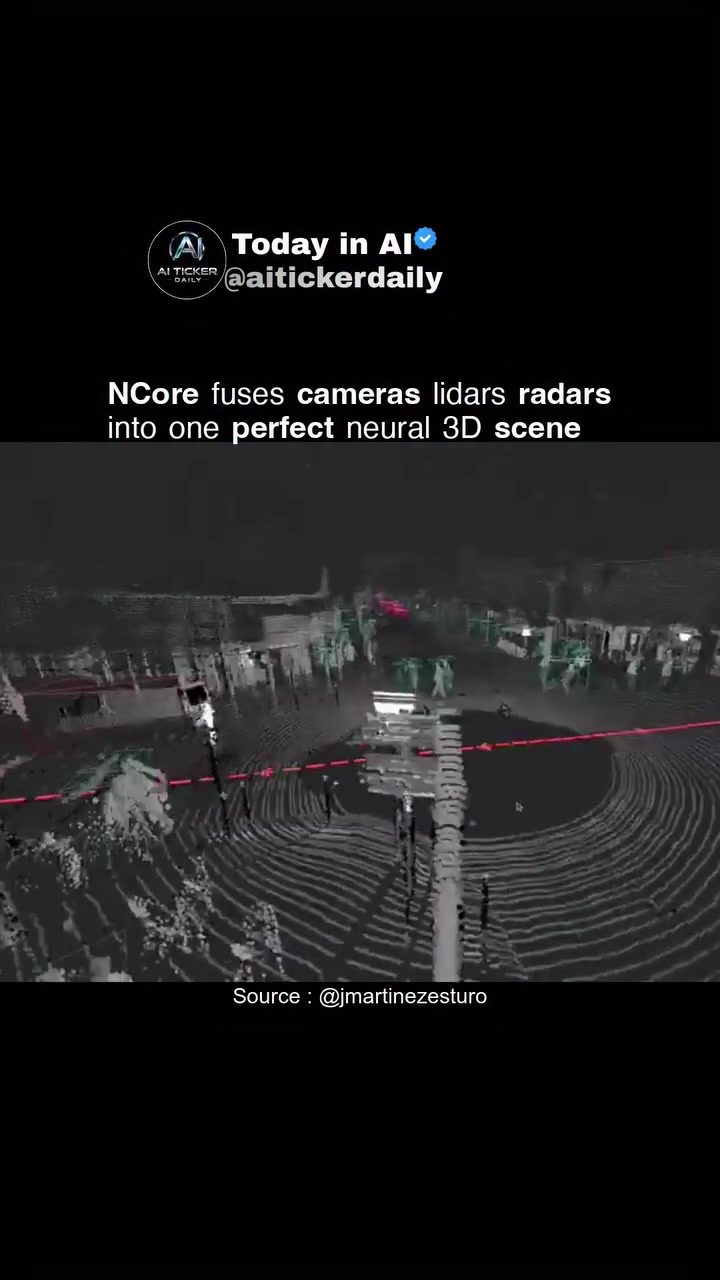
AI Multi-Sensor Fusion: Creating Perfect Neural 3D Scenes
NCore is a revolutionary open-source data layer designed to unify the data from various sensors into a single, cohesive neural 3D scene. This technology is particularly significant for industries such as autonomous vehicles (AV), robotics, and physical AI, where precise and integrated data is crucial. By fusing data from cameras, lidars, and radars, NCore aims to create a perfect neural 3D representation of the environment.
Context: The Power of Multi-Sensor Fusion
Fusing data from multiple sensors is a critical aspect of modern AI applications, especially in autonomous systems. Traditional methods often rely on a single type of sensor, which can lead to incomplete or inaccurate data. For example, cameras excel at providing visual information but struggle in low-light conditions. Lidars are excellent for depth perception but can be misled by reflective surfaces. Radars, on the other hand, offer robust performance in various weather conditions but lack spatial resolution.
NCore addresses these limitations by integrating data from all these sources, leveraging each sensor's strengths to create a more accurate and reliable 3D scene. This unified data layer is essential for applications that require precise spatial awareness and real-time decision-making.
The NCore Framework
Unified Formats and APIs
One of the standout features of NCore is its unified format and APIs. This standardization allows developers to seamlessly integrate data from different sensors into a single, coherent neural 3D scene. This capability significantly simplifies the development process for applications in autonomous vehicles, robotics, and physical AI. By providing a common framework, NCore reduces the complexity and time required to build these systems.
Sensor Integration
NCore fuses data from cameras, lidars, and radars, along with poses, calibrations, and labels. This comprehensive approach ensures that all relevant data is integrated into the neural 3D scene, providing a detailed and accurate representation of the environment. The integration process involves several key steps:
- Data Collection: Data from various sensors is collected in real-time.
- Sensor Fusion: The collected data is fused using advanced algorithms to create a unified neural 3D scene.
- Data Refinement: The fused data is refined to enhance accuracy and reliability, ensuring that the 3D scene is as close to perfect as possible.
Practical Applications
The applications of NCore are vast and varied. In autonomous vehicles, the technology can enhance navigation, obstacle detection, and decision-making. In robotics, it can improve spatial awareness and interaction with the environment. For physical AI, NCore can provide a more accurate and detailed representation of the world, enabling better decision-making and control.
Practical Tips for Implementing NCore
Getting Started with NCore
To get started with NCore, it is essential to familiarize yourself with the unified formats and APIs provided by the framework. Begin by setting up the necessary hardware and software, ensuring that all sensors are properly calibrated and integrated. Then, follow the guidelines outlined in the documentation to start fusing the data and creating neural 3D scenes.
Leveraging NVIDIA's Release Notes
NVIDIA provides detailed release notes for NCore, offering insights into the scope and licensing of the technology. These notes can be invaluable for developers looking to implement NCore in their applications. They provide guidance on the best practices for data fusion, as well as tips for optimizing performance.
Building a Weekday Rhythm
NCore emphasizes the importance of building a weekday rhythm for staying ahead in AI development. By subscribing to a curated newsletter that provides five weekday AI drops, developers can stay updated on the latest developments and best practices. This rhythm can help you stay ahead in an ever-evolving field.
Important Takeaways
- Unified Data: NCore provides a unified data layer for multi-sensor neural 3D, making it easier to integrate data from cameras, lidars, and radars.
- Accurate Representation: The technology creates a detailed and accurate 3D representation of the environment, crucial for autonomous systems and AI applications.
- Open-Source: Being open-source, NCore offers a flexible and customizable framework for developers.
- Industry Applications: The technology is particularly beneficial for industries such as autonomous vehicles, robotics, and physical AI.
Conclusion
NCore represents a significant advancement in the field of multi-sensor fusion, offering a unified and accurate neural 3D scene. By leveraging the strengths of multiple sensors, NCore provides a more comprehensive and reliable representation of the environment, essential for modern AI applications. Whether you are developing autonomous vehicles, robots, or physical AI systems, NCore offers a powerful and flexible framework to enhance your projects.
Questions readers ask
What is NCore and how does it differ from traditional sensor systems?
NCore is an open-source data layer designed to integrate data from various sensors like cameras, lidars, and radars into a single, precise 3D neural scene. Unlike traditional systems that often rely on a single sensor type, NCore enhances spatial awareness and decision-making by fusing multiple sensor data sources in real-time.
Why is multi-sensor fusion crucial for autonomous vehicles and robotics?
Multi-sensor fusion is vital for autonomous vehicles and robotics as it provides a more comprehensive and accurate view of the environment. By integrating data from cameras, lidars, and radars, NCore helps these systems make better-informed decisions, improving safety and efficiency.
What are the key benefits of using NCore's neural 3D scene technology?
NCore's neural 3D scene technology offers several benefits, including enhanced spatial awareness, improved decision-making, and real-time data processing. This technology is particularly useful in dynamic environments where precise and integrated data is essential for safe and efficient operations.
How does NCore's technology enhance spatial awareness?
NCore enhances spatial awareness by integrating data from various sensors to create a unified 3D neural scene. This integrated approach provides a more accurate representation of the environment, allowing autonomous systems and robots to better understand and navigate their surroundings.
What types of sensors can be integrated using NCore's technology?
NCore can integrate data from cameras, lidars, and radars, creating a comprehensive and real-time 3D neural scene. By fusing these different sensor types, NCore ensures that autonomous systems receive a complete and accurate representation of their environment.
Can NCore be used in industries beyond autonomous vehicles and robotics?
Yes, while NCore is particularly beneficial for autonomous vehicles and robotics, its applications extend to other fields as well. Any industry requiring precise and integrated data for real-time decision-making, such as physical AI and advanced manufacturing, can leverage NCore's capabilities.
Is NCore's technology suitable for real-time applications?
Absolutely, NCore is designed to process data in real-time, making it ideal for applications where immediate and precise information is crucial. This real-time capability is particularly important in autonomous driving and robotics, where split-second decisions can significantly impact safety and performance.
Related deep dives
Similar reads based on topic and creator.




Recent articles
Fresh deep dives from the latest Reels we unpacked.




Comments
Be the first to comment.