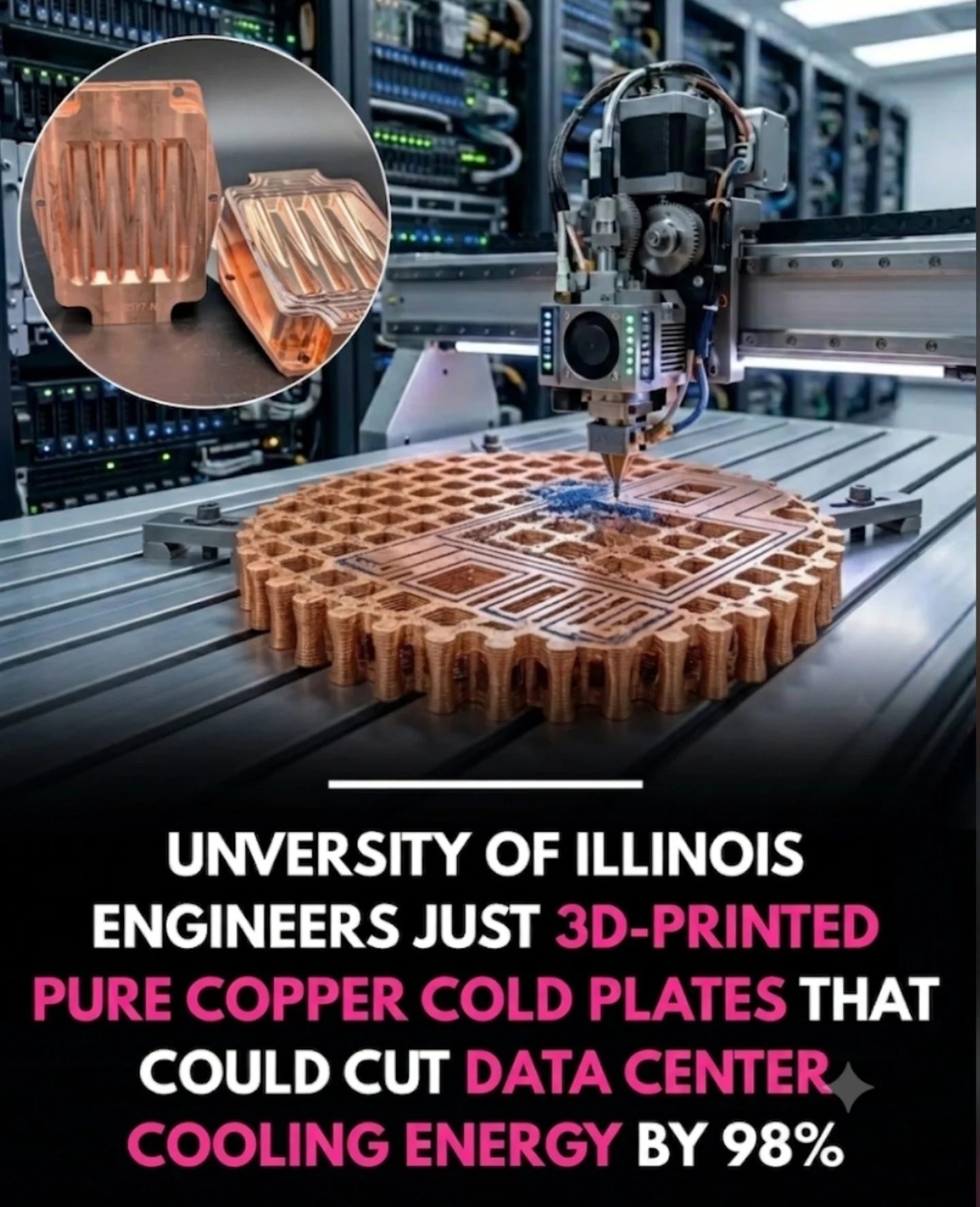
3D-Printed Copper Plates and Their Impact on Data Center Cooling
Data centers consume vast amounts of energy, with a significant portion dedicated to cooling. Engineers at the University of Illinois Urbana-Champaign are at the forefront of addressing this challenge. By harnessing the power of Electrochemical Additive Manufacturing (ECAM) and 3D printing, they have developed pure copper cold plates that promise to revolutionize data center cooling efficiency. The intricate copper plates feature sub-100-micrometer fin geometries, which are physically impossible to manufacture using traditional methods. This innovation could lead to a drastic reduction in cooling energy consumption, from 550 megawatts to just 11 megawatts for a hypothetical 1-gigawatt facility.
Why This Matters
Energy consumption in data centers is a critical issue for both operational costs and environmental sustainability. The cooling infrastructure in data centers is one of the primary energy consumers. Innovations like the 3D-printed copper plates could significantly reduce this energy demand, making data centers more efficient and eco-friendly.
Main Discussion
The Technology: ECAM and Topology Optimization
Electrochemical Additive Manufacturing (ECAM) is a groundbreaking process that operates at room temperature, making it possible to fabricate intricate structures that are impossible with traditional 3D printing methods. This method, combined with topology optimization, allows for the creation of complex fin geometries that enhance cooling performance.
Topology Optimization
Topology optimization is a mathematical design algorithm that optimizes the layout and shape of structures for specific performance criteria. In this case, the goal was to maximize thermal cooling capacity while minimizing liquid pumping resistance. This resulted in a plate design that significantly outperforms traditional rectangular-finned cold plates.
The Results
The outcomes of this research are impressive. The 3D-printed copper plates show a 32% improvement in thermal cooling capacity. They also reduce liquid pumping resistance (pressure drop) by 68% compared to conventional cold plates. When directly compared to traditional air-cooling infrastructure, the new system could reduce the proportion of electricity dedicated to cooling from 30% to just 1.1%.
Energy Savings
The potential energy savings are staggering. For a hypothetical 1-gigawatt facility, the reduction in cooling energy needs from 550 megawatts to 11 megawatts represents a 98% cut in cooling energy. This significant reduction highlights the potential of this technology to transform data center operations and sustainability.
What Makes 3D-Printed Copper Plates Different
Traditional 3D Printing vs. ECAM
Traditional 3D printing methods, such as CNC and melt-based processes, have limitations in creating extremely fine and complex structures. In contrast, ECAM enables the fabrication of sub-100-micrometer fin geometries, which are crucial for the enhanced performance of the 3D-printed copper plates. This capability makes ECAM a game-changer in the field of cooling solutions.
Potential Applications
The use of 3D-printed copper cold plates is not limited to data centers. Their advanced cooling capabilities make them suitable for a wide range of applications where efficient heat dissipation is crucial. These could include:
- Electronics Manufacturing: High-performance computing and consumer electronics often require efficient cooling to maintain optimal performance.
- Industrial Processes: Many industrial processes generate significant heat, and efficient cooling is essential for maintaining productivity and safety.
- Renewable Energy: Solar and wind energy systems can benefit from advanced cooling solutions to maximize efficiency and lifespan.
Practical Tips
When considering the implementation of 3D-printed copper plates in any cooling system, it is essential to evaluate the specific requirements and constraints of the application. Here are some practical tips:
Assess Energy Saving Potential
Before investing in 3D-printed copper plates, assess the current cooling energy consumption of your system. Calculate the potential energy savings and determine whether the investment in this advanced cooling solution is feasible and cost-effective. This will help in making an informed decision about integrating the new technology.
Evaluate Compatibility
Ensure that the 3D-printed copper plates are compatible with your existing infrastructure. This includes assessing the compatibility of the liquid-cooling system and any necessary modifications to integrate the new plates. Compatibility considerations should focus on both technical and operational aspects.
Consider Maintenance and Durability
While the 3D-printed copper plates offer superior performance, it is essential to consider their maintenance requirements and durability. Regular maintenance is crucial to ensure the longevity and efficiency of the cooling system. Additionally, assess the durability of the plates in the specific operating conditions of your application.
Long-Term Benefits
Consider the long-term benefits of using 3D-printed copper plates, including reduced energy costs, improved performance, and potential environmental benefits. These factors can significantly impact the overall value and sustainability of the cooling solution.
Engage with Experts
Engage with experts in the field of 3D printing and cooling solutions to gain insights and guidance on the best practices for implementing 3D-printed copper plates. Experts can provide valuable recommendations on system design, integration, and optimization to maximize the benefits of the new technology.
Important Takeaways
The development of 3D-printed copper cold plates by the University of Illinois Urbana-Champaign represents a significant advancement in cooling technology. These plates offer superior thermal cooling capacity and reduced liquid pumping resistance, making them an ideal solution for data centers and other applications requiring efficient cooling. The 98% reduction in cooling energy consumption highlights their potential to transform the energy efficiency and sustainability of cooling systems.
Conclusion
The future of efficient and sustainable cooling is bright with the advent of 3D-printed copper cold plates. These innovative plates, made possible through the ECAM process and topology optimization, promise to revolutionize cooling solutions in data centers and beyond. By reducing energy consumption and improving performance, this technology offers a path toward more efficient and eco-friendly operations. As the demand for energy-efficient cooling solutions continues to grow, innovations like these will be crucial in shaping the future of various industries.
Questions readers ask
How do the 3D-printed copper plates from the University of Illinois improve data center cooling?
The 3D-printed copper plates enhance data center cooling by featuring intricate fin geometries with sub-100-micrometer details. These precise structures, made possible by a unique 3D printing process, significantly improve heat transfer efficiency, allowing for more effective cooling of data center equipment.
What makes the 3D printing process used by the University of Illinois unique?
The University of Illinois employs a specialized 3D printing method called Electrochemical Additive Manufacturing (ECAM). This process enables the creation of extremely fine details in the copper plates, which are impossible to achieve with conventional manufacturing techniques.
What are the potential energy savings for a data center that utilizes these 3D-printed copper plates?
The 3D-printed copper plates could significantly reduce cooling energy consumption. For a 1-gigawatt facility, the cooling energy use could be cut from 550 megawatts to around 11 megawatts, representing a reduction of approximately 98%.
How do these copper plates compare to traditional liquid cooling infrastructure?
The 3D-printed copper plates offer a more efficient alternative to traditional liquid cooling infrastructure. The intricate fin geometries allow for better heat dissipation, which can lead to reduced energy consumption and improved overall performance in data center cooling.
Are the 3D-printed copper plates compatible with existing data center infrastructure?
The 3D-printed copper plates are designed to integrate seamlessly with existing data center infrastructure, enhancing cooling efficiency without requiring extensive modifications. This compatibility makes them an attractive option for upgrading current cooling systems.
What is the significance of the University of Illinois's cooling technology for data centers?
The cooling technology developed by the University of Illinois is significant because it addresses the substantial energy demands of data centers. By drastically reducing cooling energy consumption, this innovation can help lower operational costs and contribute to more sustainable data center practices.
What are the future implications of this 3D printing technology for data center design?
The advancements in 3D printing technology for data center cooling could pave the way for more efficient and sustainable data center designs. As this technology evolves, it may become a standard component in future data center infrastructure, leading to widespread energy savings and improved performance.
Related deep dives
Similar reads based on topic and creator.




Recent articles
Fresh deep dives from the latest Reels we unpacked.




Comments
Be the first to comment.