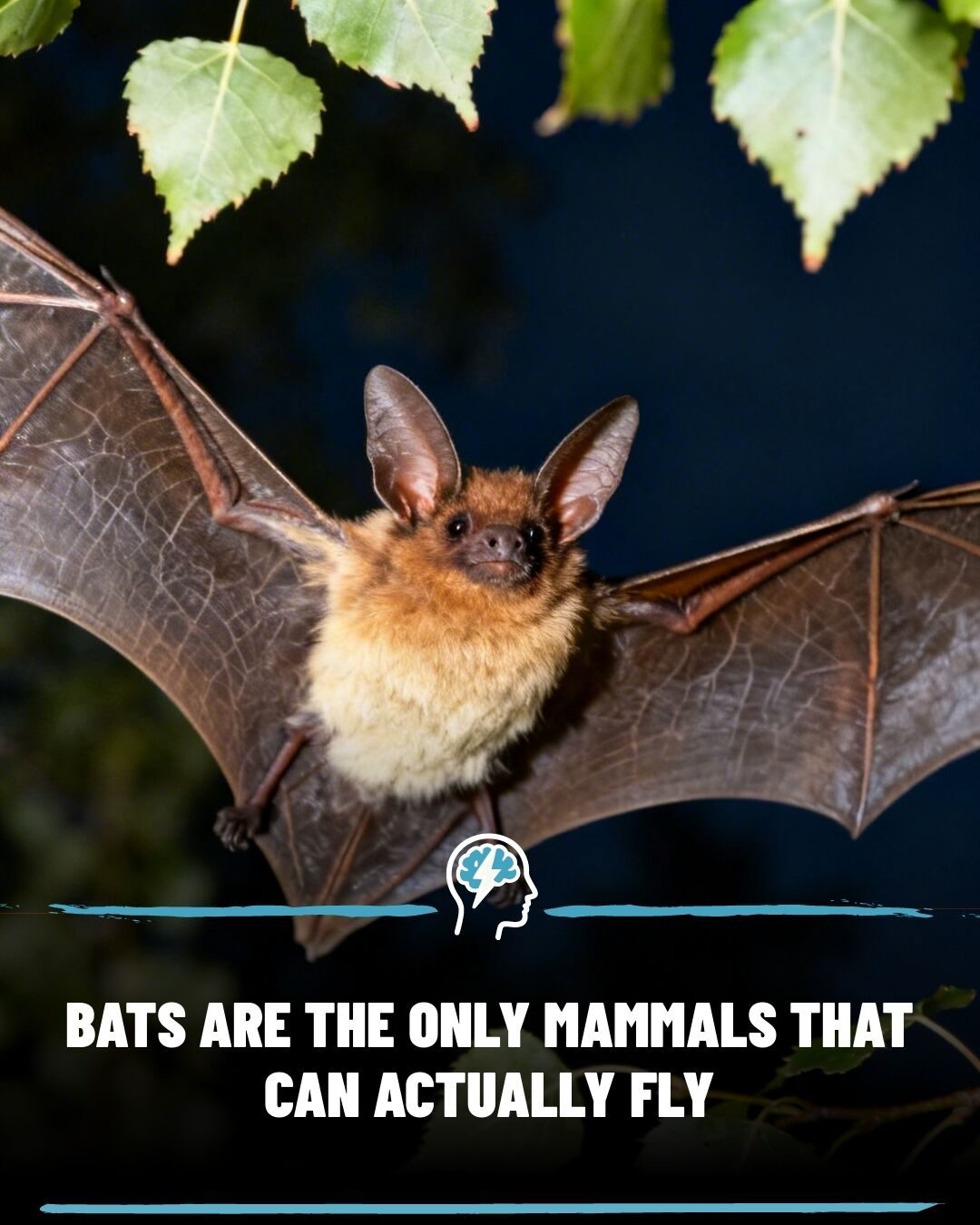
Bats: The Only Mammals That Can Truly Fly
Bats are intriguing creatures, known for their unique ability to fly. Unlike other mammals, bats can perform true powered flight, a capability that sets them apart from all other animals in the mammal world. This means they can take off from a standstill, climb, hover, and maneuver with precision, making them the most agile fliers in the animal kingdom.
Why This Matters
Understanding the biology and behavior of bats is crucial for several reasons. Their ability to fly makes them essential for various ecological functions, including pollination, seed dispersal, and insect control. Additionally, bats serve as vital indicators of ecosystem health, making their conservation a key focus for environmental scientists and wildlife enthusiasts alike.
The Unique Anatomy of Bats
Bats are the only mammals that can fly. Their unique anatomy is what makes this possible. With elongated finger bones and thin membranes of skin, bats have a structure that allows them to generate lift and thrust through active wing movement. This structure is not just about the wings. Bats have four elongated finger bones that stretch out to support thin membranes of skin. These membranes are flexible and responsive, containing blood vessels, nerves, and tendons. This unique design enables bats to fly with remarkable agility and control, hovering, and maneuvering through the night sky.
The fourth and fifth digit, the thumb, remains separate with a small claw. This structure allows bats to grasp and hold onto surfaces, which is essential for their nocturnal lifestyle. The flexibility and responsiveness of their wings make bats some of the best flyers in the animal world.
The scientific name for bats, Chiroptera, literally means "hand-wing" in Greek, highlighting the unique structure of their wings. This structure has been around for a remarkably long time. Fossil evidence suggests that bat-like flying mammals appeared during the Eocene Epoch, over 50 million years ago. This extraordinary adaptation has been around for a remarkably long time, giving bats a unique evolutionary advantage.
The Secret of Bat Flight
The secret of bat flight lies in their remarkable wing structure. The scientific name Chiroptera literally means "hand-wing" in Greek, and for good reason. Bats have four elongated finger bones that stretch out to support thin membranes of skin. These membranes contain blood vessels, nerves, and tendons, creating a flexible, responsive flight surface. This unique design enables bats to generate lift and thrust through active wing movement, allowing them to climb, hover, and maneuver through the night sky. This structure has been around for a remarkably long time, giving bats a unique evolutionary advantage.
The Importance of Bat Flight
Bat flight supports critical ecological functions. These nocturnal fliers help with pollinating plants, dispersing seeds across ecosystems, controlling insect populations, and completing long-distance migrations that connect distant habitats. With somewhere between 900 and 1,400 recognized species depending on current taxonomy, bats represent roughly one quarter of all mammal species on the planet. Their diversity reflects millions of years of evolutionary success.
Practical Tips for Bat Watching
Watching bats can be a fascinating experience, and there are a few tips to make the most of it. First, find a good spot to observe them. Bats are nocturnal, so twilight is the best time to watch them. Look for areas where there are water sources and plenty of insects. Bats are also attracted to bridges, caves, and old buildings, so these can be great places to spot them.
What to Look For
When watching bats, pay attention to their flight patterns. Bats are agile flyers and can change direction quickly, so keep an eye out for sudden movements. Also, listen for the echolocation calls they use to navigate. These calls are usually too high-pitched for humans to hear, but some species, like the Mexican free-tailed bat, have calls that can be heard with the naked ear.
Important Takeaways
Bats are the only mammals that can truly fly. Their unique anatomy and behavior make them essential for various ecological functions, including pollination, seed dispersal, and insect control. Their ability to hover and maneuver through the night sky is a testament to their evolutionary success. Watching bats can be a fascinating experience, and it’s important to observe them responsibly.
Conclusion
Bats are truly remarkable creatures, and their ability to fly sets them apart from all other mammals. Their unique anatomy and behavior make them essential for various ecological functions, and watching them can be a fascinating experience. Whether you're a wildlife enthusiast or just curious about bats, understanding their unique abilities and the importance of their flight is a crucial part of appreciating these incredible creatures.
Questions readers ask
Why are bats considered the only mammals that can truly fly?
Bats are classified as the only true flying mammals because they possess the unique ability to perform powered flight. This means they can generate lift and thrust using their wings, allowing them to take off from a standstill, climb, hover, and maneuver with exceptional precision, unlike any other mammal.
How do the wing anatomy of bats contribute to their flight capabilities?
Bat wings are composed of elongated finger bones and thin skin membranes, which allow for intricate movements and remarkable agility. This unique structure enables bats to navigate through complex environments with ease, making them superior fliers compared to other animals.
What role do bats play in ecosystem functions?
Bats contribute significantly to ecosystem functions through pollination, seed dispersal, and pest control. As they fly, they transfer pollen between plants and distribute seeds, aiding in plant reproduction, while their insectivorous diet helps maintain healthy insect populations.
How does bat flight agility compare to other flying animals?
Bat flight agility is unparalleled among flying animals. Their ability to perform sharp turns, sudden stops, and precise maneuvers is due to their lightweight bodies, powerful muscles, and flexible wing membranes, allowing them to navigate through dense vegetation and tight spaces effortlessly.
How did bats evolve to fly, and how does this compare to bird flight?
Bats evolved flight independently from birds, using a unique adaptation of their forelimbs into wings. Unlike birds, which have feathers and a different wing structure, bats' wing design allows for greater maneuverability and control, making their flight mechanics distinct and specialized.
What is the significance of studying the science of bat flight?
Studying the science of bat flight is important for understanding advanced aerodynamic principles and inspiring innovations in technology. By examining the biomechanics of bat flight, researchers can develop more efficient aircraft and flying robots, as well as gain insights into the evolution of powered flight in mammals.
Related deep dives
Similar reads based on topic and creator.




Recent articles
Fresh deep dives from the latest Reels we unpacked.




Comments
Be the first to comment.