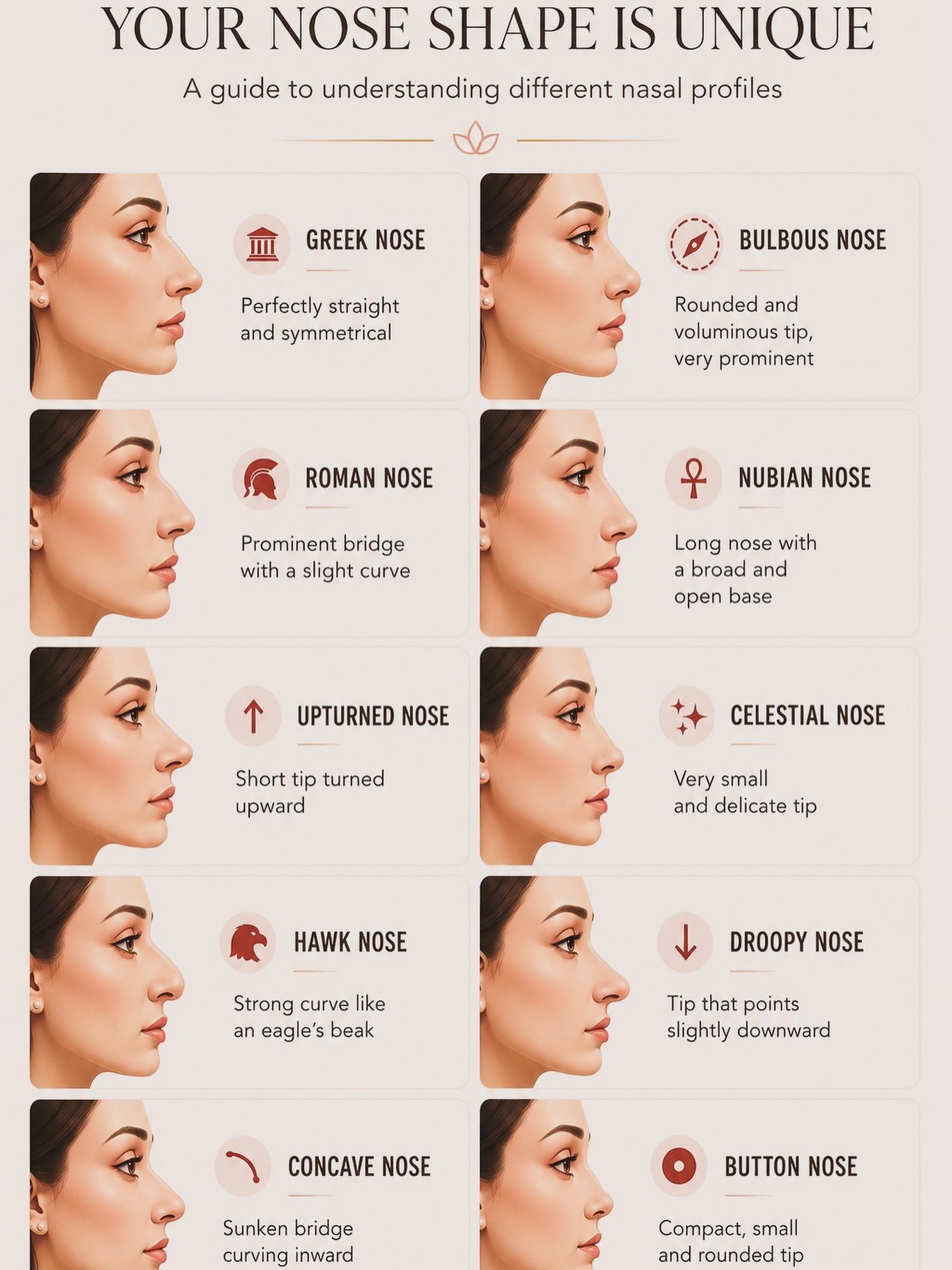
Nose Shape Guide: Understanding the Diversity of Nasal Profiles
Every nose is unique, contributing to the overall balance and harmony of the face. Understanding the different nasal profiles can help appreciate the diversity of facial features and facilitate more personalized discussions, especially when considering aesthetic concerns. Here, we explore the various nose shapes, their characteristics, and what makes each one unique.
Context: Why this matters
Nasal anatomy varies naturally between individuals, and there is no single "ideal" shape. Recognizing and appreciating these differences can enhance self-acceptance and guide those considering cosmetic procedures. By understanding the different nose shapes, you can better communicate your aesthetic goals and make more informed decisions.
Main discussion
The Variety of Nose Shapes
Nose shapes can be categorized into several distinct types. Each shape has unique characteristics that contribute to the overall appearance of the face.
Greek Nose
The Greek nose is known for its perfectly straight and symmetrical profile. This classic shape is often associated with balance and harmony. It features a straight bridge and a well-defined tip, creating a elegant and refined look. The Greek nose is often sought after for its timeless appeal and ability to complement a variety of facial structures.
Bulbous Nose
The bulbous nose is characterized by a rounded and voluminous tip, which is very prominent. This shape can add a distinctive and bold feature to the face. The bulbous nose often requires careful consideration when it comes to aesthetic procedures, as the goal is to enhance the unique characteristics without altering the natural proportions too drastically.
Roman Nose
The Roman nose is defined by its prominent bridge with a slight curve. This shape can add a strong and regal appearance to the face. The Roman nose is often associated with a sense of authority and elegance. The slight curve of the bridge can create a dynamic and interesting profile, making it a distinctive feature of the face.
Nubian Nose
The Nubian nose is long with a broad and open base. This shape can add a sense of strength and presence to the face. The Nubian nose is often celebrated for its unique and striking appearance, and it can be a distinctive feature that contributes to the overall balance and harmony of the face.
Upturned Nose
The upturned nose features a short tip that turns upward. This shape can create a youthful and playful appearance. The upturned nose is often associated with a sense of vitality and energy. The upward tilt of the tip can add a charming and endearing quality to the face, making it a popular choice for those seeking a more playful and youthful look.
Celestial Nose
The celestial nose is characterized by its very small and delicate tip. This shape can add a sense of refinement and elegance to the face. The celestial nose is often associated with a sense of grace and sophistication. The delicate tip can create a fine and delicate profile, making it a distinctive and unique feature.
Hawk Nose
The hawk nose features a strong curve, reminiscent of an eagle’s beak. This shape can add a distinctive and bold appearance to the face. The hawk nose is often associated with a sense of strength and power. The strong curve can create a dynamic and striking profile, making it a recognizable and unique feature.
Droopy Nose
The droopy nose is characterized by a tip that points slightly downward. This shape can add a sense of warmth and approachability to the face. The droopy nose is often associated with a sense of kindness and empathy. The downward tilt of the tip can create a softer and more approachable profile, making it a distinctive and unique feature.
Concave Nose
The concave nose features a sunken bridge that curves inward. This shape can add a sense of depth and intrigue to the face. The concave nose is often associated with a sense of mystery and allure. The inward curve of the bridge can create a unique and captivating profile, making it a distinctive and interesting feature.
Button Nose
The button nose is compact, with a small and rounded tip. This shape can add a sense of youthfulness and playfulness to the face. The button nose is often associated with a sense of charm and innocence. The rounded tip can create a soft and endearing profile, making it a distinctive and unique feature.
Practical Tips
When considering aesthetic concerns related to your nasal profile, it's essential to approach the topic with an open mind and a clear understanding of your unique features. Consulting with a qualified practitioner can provide valuable insights and personalized recommendations. Here are some practical tips to keep in mind:
Assess Your Anatomy
Take the time to assess your individual anatomy, facial proportions, and aesthetic goals. Understanding your unique features can help you make more informed decisions about any potential procedures. Consider how your nasal profile contributes to the overall balance and harmony of your face.
Consider Your Goals
Think about what you hope to achieve with any aesthetic enhancements. Whether you're looking to enhance a specific feature or address a particular concern, having clear goals can guide your decisions and help you communicate effectively with your practitioner.
Explore Your Options
Discuss the range of options available and ask about the potential risks and benefits. Each procedure has its own set of considerations, and understanding these can help you make a more informed decision. Consider the suitability and expected outcomes for your unique needs and anatomy.
Prioritize Personalization
Embrace a philosophy of enhancement over overpowering. The goal should be to highlight and enhance your natural features, rather than drastically altering them. Work with your practitioner to create a personalized plan that respects your unique anatomy and aesthetic goals.
Important Takeaways
Your nose shape is a distinctive and unique feature that contributes to the overall balance and harmony of your face. Understanding the different nasal profiles can help you appreciate the diversity of facial features and facilitate more personalized discussions when considering aesthetic concerns. Whether you have a Greek, bulbous, or any other nose shape, embracing your unique features can enhance your natural beauty and confidence.
Conclusion
From Greek and Roman profiles to button and bulbous noses, there is no single "ideal" shape. Nasal anatomy varies naturally between individuals, and each shape has its own unique characteristics and appeal. By understanding and appreciating the diversity of nasal profiles, you can make more informed decisions about your aesthetic goals and embrace your unique features with confidence.
Questions readers ask
What are the most common nose shapes?
The most common nose shapes include the Greek nose, which is straight and symmetrical; the Roman nose, characterized by a prominent bridge and aquiline tip; the bulbous nose, recognized for its rounded tip; and the button nose, which is small and rounded. Other shapes include the hawk nose, upturned nose, and the snub nose.
What is a Greek nose and how does it contribute to facial harmony?
A Greek nose is characterized by a straight, narrow bridge and a well-defined tip. This shape often contributes to a balanced and harmonious facial appearance, as it creates symmetry and proportion. It is often considered suitable for many facial structures, as it complements a variety of features.
What distinguishes a Roman nose from other nasal profiles?
A Roman nose is notable for its prominent, aquiline bridge and a tip that points slightly downward. This shape is often associated with a strong, regal appearance. It can be particularly striking on individuals with broad or square-shaped faces, as it adds definition and character.
What are the key characteristics of a bulbous nose?
A bulbous nose is characterized by a rounded, bulbous tip and a broader bridge. This shape can create a bold, distinctive look. Individuals with a bulbous nose may have a unique and striking profile, it can project an overall strong appearance.
What are the communication benefits of understanding different nose shapes?
Understanding different nose shapes can enhance communication, especially when discussing facial aesthetics. By recognizing and appreciating the unique characteristics of each nasal profile, you can better articulate your preferences and goals, whether for personal satisfaction or when considering cosmetic procedures.
Do all nose shapes suit all face shapes?
Different nose shapes can complement and enhance various facial structures, however, certain shapes may be more suitable for specific face shapes. For example, a narrower, more refined nose can provide a more balanced appearance on a rounder face, while a broader, more distinctive nose can add character to a more angular face.
Why is it important to appreciate the natural diversity of nasal anatomy?
Appreciating the natural diversity of nasal anatomy is essential for promoting self-acceptance and body positivity. Every nose is unique, and there is no single 'ideal' shape. Recognizing and valuing this diversity can help individuals make more informed decisions about their appearance and encourage a more inclusive view of beauty.
Recent articles
Fresh deep dives from the latest Reels we unpacked.




Comments
Be the first to comment.