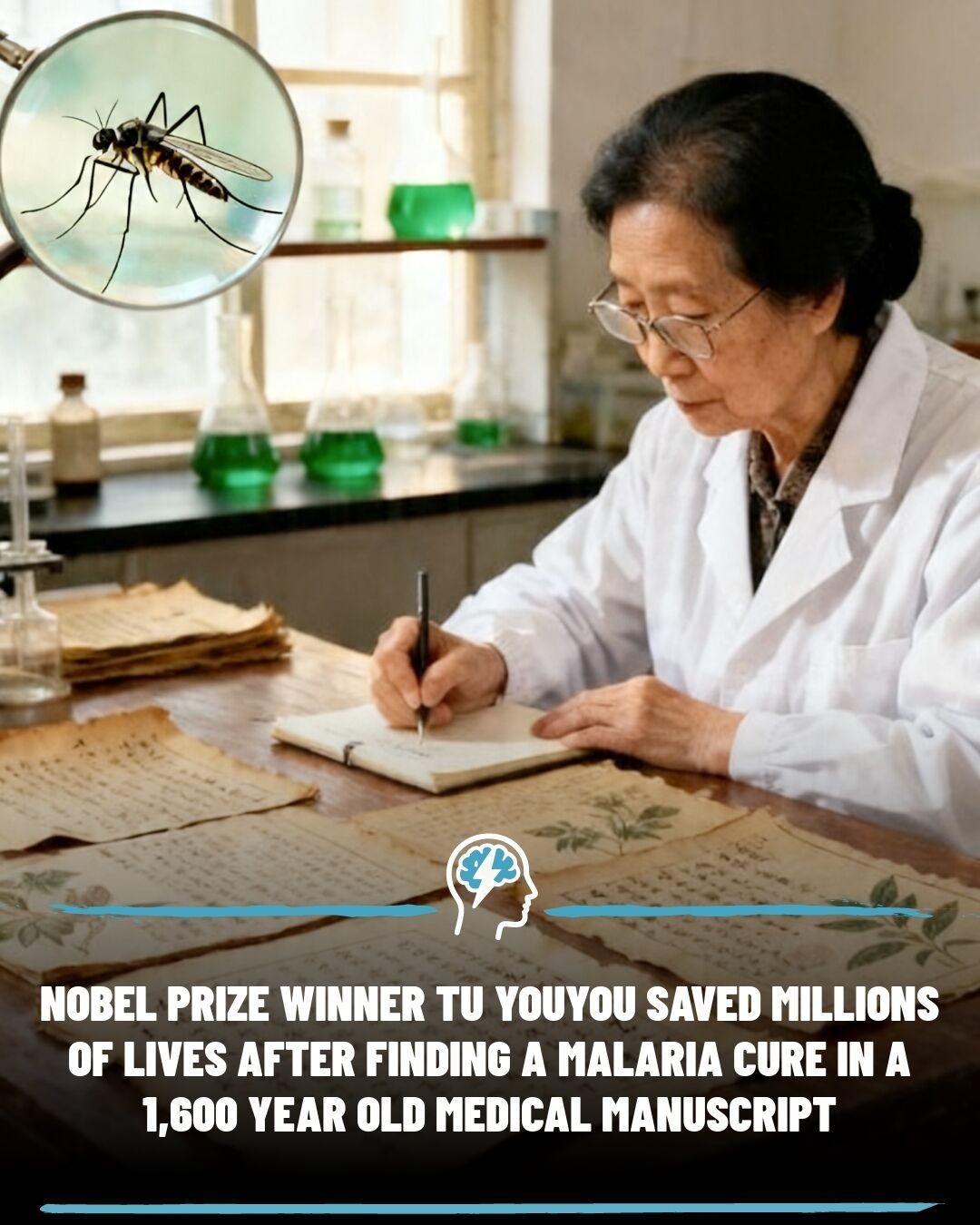
The 1600-year-old Text that Saved Millions from Malaria
The story of malaria treatment is a tale of perseverance and innovation, one that spans centuries and continents. At the heart of this narrative is Tu Youyou, a Chinese researcher whose groundbreaking discovery has saved millions of lives worldwide.
The Scope of the Problem
Malaria, a disease transmitted through the bites of infected mosquitoes, has been a significant global health challenge. In the 1970s, when Tu Youyou began her research, the disease was claiming countless lives. The urgency to find a cure was immense, and over 240,000 compounds had already been tested without success. The need for a solution was critical, and Tu Youyou's journey would eventually lead her to an ancient manuscript for answers.
Turning to Ancient Wisdom
Tu Youyou's breakthrough came from an unexpected source: an ancient medical text. The text in question, "A Handbook of Prescriptions for Emergencies" by Ge Hong, dated back to the fourth century. In this manuscript, she found a reference to treating intermittent fevers—a common symptom of malaria—with sweet wormwood, known as Artemisia annua. This ancient remedy had long been overlooked by modern scientists, who were focused on more contemporary methods.
The Discovery Process
The key to Tu Youyou's discovery lay in the extraction method described in the ancient text. Unlike the heat-based approach used by modern scientists, the ancient recipe called for a cold extraction method. This subtle but crucial difference was pivotal. Heat was destroying the active compound in the sweet wormwood, rendering it ineffective. Once Tu Youyou adjusted her technique to a cold extraction process, the results were remarkable. The extract achieved a 100% success rate in eliminating the Plasmodium parasite in mice and monkeys.
Artemisinin and Its Impact
The active compound in sweet wormwood, known as artemisinin, would go on to revolutionize malaria treatment. Today, artemisinin-based therapies are a cornerstone of global malaria treatment. These therapies have contributed significantly to the survival and improved health of millions of people worldwide. The impact of Tu Youyou's discovery is immeasurable, highlighting the potential of integrating ancient wisdom with modern scientific methods.
The Nobel Prize and Recognition
In 2015, Tu Youyou received the Nobel Prize in Physiology or Medicine for her discoveries concerning a novel therapy against malaria. This prestigious award recognized her groundbreaking work and the lasting impact of her discovery. Her journey serves as a reminder that scientific progress often comes from unexpected places and that ancient texts can hold valuable clues to modern problems.
The Importance of Rigorous Testing
While ancient remedies can offer valuable insights, it is crucial to approach them with rigor andmodern testing. Not every traditional remedy is effective, and findings always need proper clinical verification before widespread use. Tu Youyou's story underscores the importance of curiosity, persistence, and the integration of traditional knowledge with modern scientific methods.
Practical Tips for Researchers
For those inspired by Tu Youyou's journey, here are some practical tips to guide your own research:
Embrace Interdisciplinary Approaches
Drawing from multiple disciplines can lead to innovative solutions. Ancient texts, traditional remedies, and modern science can all contribute to groundbreaking discoveries.
Be Persistent
Scientific progress often comes after numerous failures. Persistence and the willingness to explore unconventional methods are key to success. Tu Youyou tested over 240,000 compounds before turning to ancient wisdom—her persistence paid off.
Validate Findings
Always validate traditional remedies through rigorous modern testing. This ensures the effectiveness and safety of any discovered compound before it is widely used.
Integrate Traditional Knowledge
Traditional knowledge can offer valuable insights that are often overlooked. Integrating this knowledge with modern scientific methods can lead to transformative discoveries.
Important Takeaways
Tu Youyou's story is a testament to the power of curiosity, persistence, and the integration of ancient wisdom with modern science. Her journey highlights the following important takeaways:
- Ancient Texts Can Offer Valuable Insights: Traditional remedies and ancient texts can provide valuable clues to modern problems, but they need to be validated through rigorous scientific testing.
- Interdisciplinary Approaches Lead to Innovation: Drawing from multiple disciplines can lead to groundbreaking discoveries. Ancient texts, traditional remedies, and modern science can all contribute to innovative solutions.
- Persistence Pays Off: Scientific progress often comes after numerous failures. Persistence and the willingness to explore unconventional methods are key to success.
- Rigorous Testing is Essential: Always validate traditional remedies through rigorous modern testing. This ensures the effectiveness and safety of any discovered compound before it is widely used.
Conclusion
Tu Youyou's discovery of artemisinin, a malaria cure from a 1,600-year-old medical manuscript, is a testament to the power of integrating ancient wisdom with modern science. Her journey serves as an inspiration for researchers worldwide, reminding us that scientific progress often comes from unexpected places. By embracing interdisciplinary approaches, being persistent, and validating findings through rigorous testing, we can continue to make groundbreaking discoveries that save lives and improve global health.
Related deep dives
Similar reads based on topic and creator.




Recent articles
Fresh deep dives from the latest Reels we unpacked.




Comments
Be the first to comment.