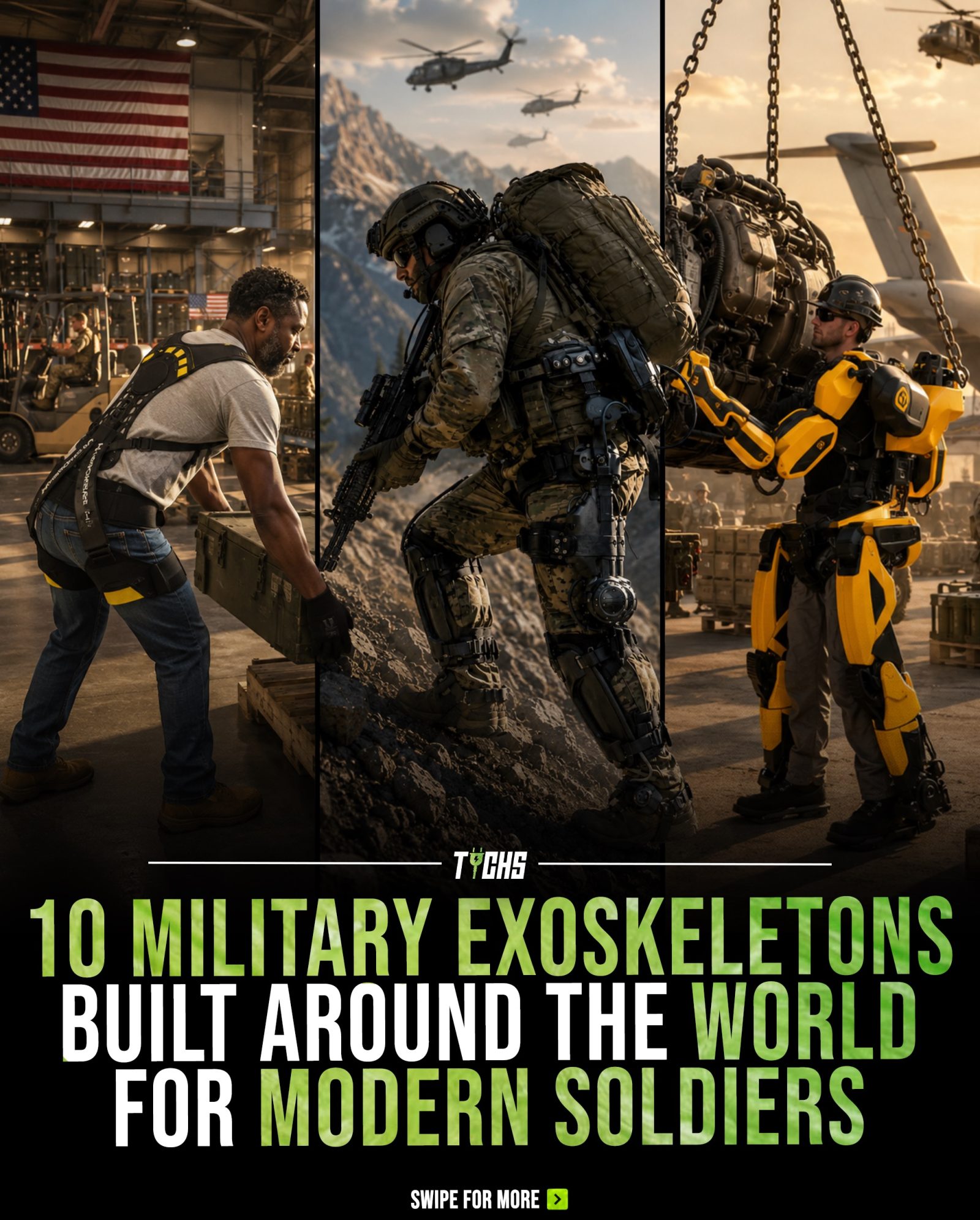
Military Exoskeletons: The Future of Defense Enhancement
Military exoskeletons are transforming how modern armed forces operate on the battlefield. These advanced wearable technologies improve soldiers' strength, endurance, and mobility. From AI-powered knee supports and robotic ankle systems to full-body powered suits and lightweight passive exoskeletons, these innovations help soldiers carry heavier loads, reduce fatigue, and operate more effectively in demanding environments. Additionally, many of these systems are being adapted for logistics, maintenance, and rehabilitation, further enhancing their utility in military operations.
Why This Matters
The integration of exoskeletons in military operations represents a significant shift in how armed forces approach combat readiness and logistical support. By enhancing human performance, these devices enable soldiers to operate more efficiently and effectively, reducing the strain of heavy equipment and fatiguing tasks. This not only improves battlefield performance but also has implications for post-service rehabilitation, helping soldiers recover from injuries more quickly and thoroughly.
Main Discussion
Global Development of Military Exoskeletons
Countries around the world are actively developing and deploying exoskeletons tailored to their specific needs. These devices are designed to meet various requirements, from enhancing combat capabilities to improving logistics and rehabilitation.
Russian Ratnik Exoskeleton
Russia's Ratnik exoskeleton is a notable example of a passive exoskeleton designed to reduce physical fatigue. This system redistributes weight, making it easier for soldiers to carry heavy loads over long distances. Integrated with Russia's passive combat system, the Ratnik exoskeleton is particularly effective in snowy and rugged terrains, highlighting its versatility and practicality in diverse environments.
Ottobock Paexo from Germany
Germany's Ottobock Paexo is another standout in the field of military exoskeletons. This lightweight upper-body exoskeleton is designed to support soldiers during repetitive lifting tasks, significantly reducing fatigue. The Paexo is commonly used in factory settings for maintenance and assembly, showcasing its practical applications beyond the battlefield. Its lightweight design and effective support mechanisms make it a valuable asset for various military operations.
The Role of Exoskeletons in Modern Warfare
Exoskeletons are not just about enhancing physical capabilities; they also play a crucial role in logistics, maintenance, and rehabilitation. These devices help soldiers transport heavy equipment, perform maintenance tasks with greater ease, and speed up the recovery process from injuries. This versatility makes them indispensable in modern military operations, where efficiency and adaptability are paramount.
Practical Tips
Selecting the Right Exoskeleton
When choosing an exoskeleton, it's essential to consider the specific needs of the operation. For instance, if the primary goal is to reduce physical fatigue, a passive exoskeleton like the Ratnik might be the best choice. On the other hand, for tasks involving repetitive lifting, a lightweight upper-body exoskeleton like the Ottobock Paexo could be more suitable.
Training and Maintenance
Proper training is crucial for effective use of exoskeletons. Soldiers must be trained to operate these devices safely and efficiently. Regular maintenance is also necessary to ensure the exoskeletons remain in optimal condition. This includes checking for wear and tear, updating software, and ensuring all components are functioning correctly.
Adaptation for Various Environments
Different environments require different types of exoskeletons. For instance, the Ratnik is well-suited for snowy and rugged terrains, while the Paexo is ideal for factory settings. Understanding the specific requirements of the environment is key to selecting the right exoskeleton.
Important Takeaways
Enhancing Human Performance
Exoskeletons are designed to enhance human performance rather than replace it. This focus on augmentation ensures that soldiers can operate more effectively without compromising their natural abilities. By reducing fatigue and increasing strength, these devices help soldiers perform to the best of their abilities in challenging conditions.
Versatility in Military Operations
The versatility of exoskeletons in military operations is a significant advantage. They are not only used in combat but also in logistics, maintenance, and rehabilitation. This multi-functional use makes them a valuable asset for modern armed forces, enhancing overall operational efficiency.
Future of Defense Technology
As wearable robotics continue to evolve, exoskeletons will play an increasingly important role in the future of defense. Their ability to enhance human performance and adapt to various needs makes them a key component of modern military technology.
Conclusion
Military exoskeletons are revolutionizing how armed forces operate on the battlefield and beyond. By enhancing strength, endurance, and mobility, these devices help soldiers operate more effectively in demanding environments. From AI-powered knee supports to full-body powered suits, the advancements in this field are transforming the future of defense. As technology continues to evolve, exoskeletons will remain a crucial part of modern military operations, providing unparalleled support and versatility.
Questions readers ask
What are the primary benefits of using military exoskeletons in combat situations?
Military exoskeletons primarily enhance soldiers' strength, endurance, and mobility. They allow troops to carry heavier loads, reduce physical fatigue, and perform better in challenging environments, ultimately improving overall combat effectiveness.
How do military exoskeletons aid in logistics and maintenance tasks?
Exoskeletons assist in logistics by enabling soldiers to transport heavier equipment and supplies over longer distances with less strain. In maintenance, they help technicians perform tasks that require heavy lifting or precise movements, reducing the risk of injuries and increasing efficiency.
What is the role of exoskeletons in the rehabilitation of injured soldiers?
Military exoskeletons play a crucial role in rehabilitation by aiding injured soldiers in regaining strength and mobility. They provide support during physical therapy exercises and help in the recovery process by allowing gradual and controlled movement, reducing the risk of further injury.
Which types of exoskeletons are commonly used in modern warfare?
Modern warfare employs various types of exoskeletons, including AI-powered knee supports, robotic ankle systems, full-body powered suits, and lightweight passive exoskeletons. Each type is designed to address specific needs, such as load-bearing, endurance, and mobility enhancement.
How does the Ottobock exoskeleton brand contribute to military applications?
Ottobock is a prominent brand in the exoskeleton industry, known for its innovative designs that enhance soldier capabilities. Their exoskeletons are used for a variety of military applications, including improving mobility, reducing fatigue, and aiding in rehabilitation processes for injured soldiers.
What are the key improvements exoskeletons bring to soldier endurance and mobility?
Exoskeletons significantly improve soldier endurance by reducing the physical strain of carrying heavy loads. They enhance mobility by providing additional support and assistance in movement, allowing soldiers to navigate challenging terrains more efficiently and effectively.
How do exoskeletons help in reducing fatigue during prolonged military operations?
By distributing the weight of heavy equipment more evenly and providing mechanical assistance, exoskeletons reduce the physical exertion required by soldiers. This help in maintaining alertness and performance over extended periods, which is crucial for prolonged military operations and missions.
Related deep dives
Similar reads based on topic and creator.




Recent articles
Fresh deep dives from the latest Reels we unpacked.




Comments
Be the first to comment.