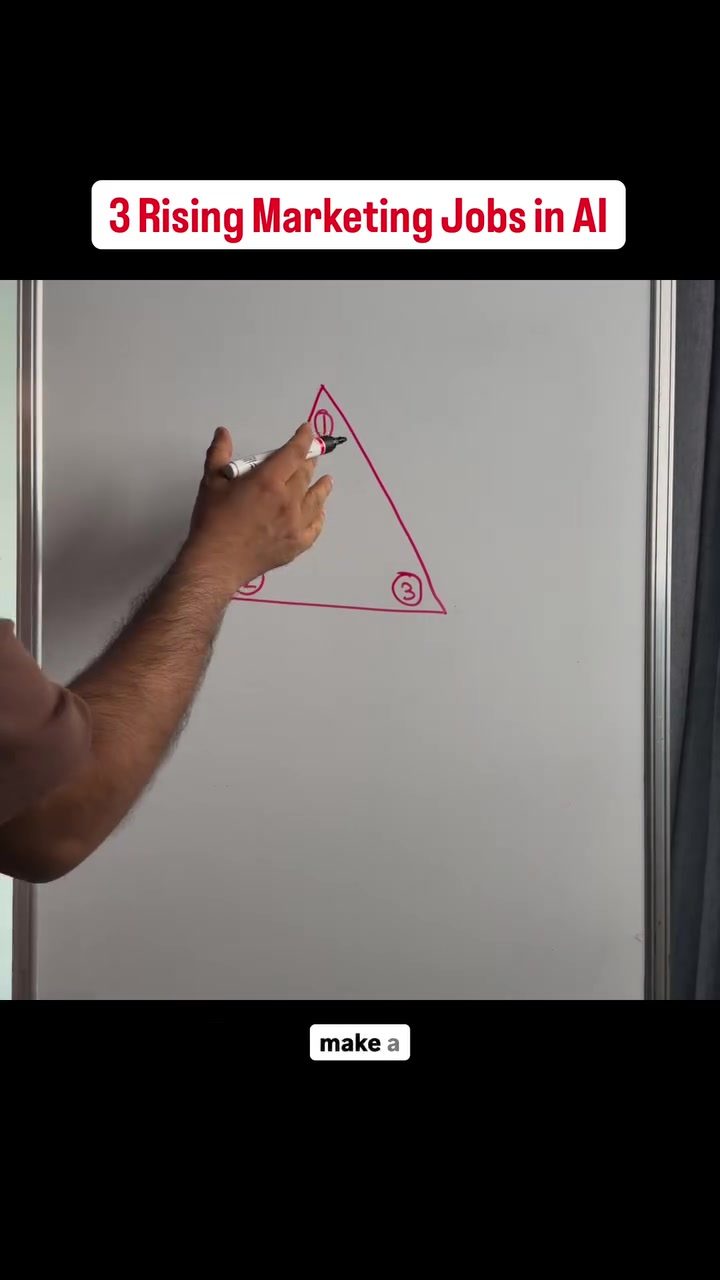
Marketing Jobs in AI: Three Roles Driving Transformation
With the rapid advancement of artificial intelligence, marketing roles are evolving to integrate AI technologies. Companies are actively seeking professionals who can leverage AI to drive marketing strategies and execution. Here are three key roles that exemplify this trend.
Context: Why This Matters
The integration of AI in marketing is not just a fleeting trend; it is a fundamental shift in how companies approach their marketing strategies. AI enables marketers to automate processes, analyze vast amounts of data, and create more personalized customer experiences. This transformation is creating new job opportunities and redefining existing roles. Understanding these emerging positions can help professionals position themselves for success in this dynamic field.
Three Emerging Roles in AI Marketing
Marketing AI Lead
The Marketing AI Lead is a pivotal role that focuses on enabling AI across the marketing team. This position is responsible for setting standards, running pilots, and evaluating different AI tools. The lead ensures that AI experimentation is cohesive and aligned with the company's overall strategy, preventing fragmented efforts.
Key Responsibilities
- Setting Standards: Establishing guidelines for AI implementation to ensure consistency and effectiveness.
- Running Pilots: Conducting small-scale tests to evaluate the feasibility and impact of AI tools.
- Evaluating Tools: Assessing various AI tools to determine which ones best meet the marketing team's needs.
- Coaching Teams: Providing guidance and support to marketing teams to help them effectively use AI tools.
- Ensuring Coherence: Making sure that AI experiments are integrated and aligned with the company's objectives.
Currently, there are around 300 to 600 such roles listed on LinkedIn, and the job titles can vary, including AI and creative tech strategist.
GTM Engineer
The GTM (Go-To-Market) Engineer is a hands-on role that involves building AI agents, workflows, and automation to scale revenue. These engineers are responsible for creating the systems that run marketing campaigns, making them essential for performance marketers who are willing to learn APIs, Clay, n8n, and AI agents.
Key Responsibilities
- Building AI Agents: Developing AI-based tools that can handle various marketing tasks.
- Creating Workflows: Designing automated workflows to streamline marketing processes.
- Embedding Automation: Integrating automation into marketing teams to enhance efficiency.
- Scaling Revenue: Using AI to scale revenue through more efficient and effective marketing strategies.
There are approximately 3,000 active job listings for this profile on LinkedIn, and the role didn't even exist three years ago, highlighting the rapid growth in this area.
VP Marketing Excellence & Transformation
The VP of Marketing Excellence and Transformation, also known as the VP of Marketing AI, is a strategic role primarily found in Fortune 500 companies. This position is responsible for owning the AI roadmap, governance, vendor selection, and compliance within the organization.
Key Responsibilities
- Owning the AI Roadmap: Developing a comprehensive AI strategy that aligns with the company's goals.
- Governing Vendor Selection: Managing the process of selecting and working with AI vendors.
- Managing Compliance: Ensuring that all AI initiatives comply with relevant regulations and standards.
- Cross-Functional Collaboration: Working with different departments to integrate AI across the organization.
- Defining Use Cases: Identifying specific applications for AI within the marketing strategy.
These roles are predominantly open in Fortune 500 companies but are likely to grow in other sectors as well.
Practical Tips for Aspiring AI Marketers
Skills to Develop
- Programming and Technical Skills: Familiarity with APIs, Clay, n8n, and AI agents is crucial for roles like GTM Engineer.
- Project Management: Strong project management skills are essential for Marketing AI Leads who need to run pilots and set standards.
- Strategic Thinking: For VP-level roles, the ability to develop and implement comprehensive AI strategies is key.
- Data Analysis: Proficiency in data analysis is vital for all roles, as it enables marketers to make data-driven decisions.
- Collaboration: Effective collaboration skills are necessary for working cross-functionally and coaching teams.
Positioning Yourself for Success
- Stay Informed: Keep up with the latest trends and technologies in AI marketing.
- Network: Build a strong network of professionals in the AI marketing field.
- Gain Experience: Seek out opportunities to gain hands-on experience with AI tools and projects.
- Certifications: Consider obtaining certifications in AI and marketing to enhance your credentials.
Importance of Experience
Experience is a significant factor in these roles, particularly for Marketing AI Leads and VPs. Senior marketers with 8 to 15 years of experience are often best suited for these positions. For GTM Engineers, a background in performance marketing and a willingness to learn new technologies are key.
Important Takeaways
- AI Integration is Essential: Companies are increasingly integrating AI into their marketing strategies, creating new job opportunities.
- Roles are Evolving: Traditional marketing roles are being redefined to include AI expertise.
- Skills Matter: Technical skills, strategic thinking, and project management are crucial for success in these roles.
- Experience Counts: Senior marketers with relevant experience are in high demand.
Conclusion
The integration of AI in marketing is transforming the job landscape, creating exciting new opportunities for professionals. Whether you're a seasoned marketer or just starting out, understanding these emerging roles and developing the necessary skills can position you for success in this dynamic field.
Questions readers ask
What are the top AI-powered marketing roles that are currently in demand?
The top AI-powered marketing roles currently in demand include AI Marketing Engineer, AI Content Strategist, and AI-Driven Customer Experience Specialist. These roles leverage AI to automate marketing processes, analyze data, and enhance customer interactions, driving innovative marketing strategies.
How does AI transform traditional marketing roles?
AI transforms traditional marketing roles by automating routine tasks, enabling more sophisticated data analysis, and facilitating the creation of highly personalized customer experiences. This allows marketers to focus on strategic planning and creative development, while AI handles the execution and optimization of campaigns.
What skills are required for AI marketing roles?
Skills required for AI marketing roles include proficiency in AI technologies, data analysis, and marketing strategy. Specific skills may include machine learning, natural language processing, data visualization, and experience with marketing automation tools. Strong analytical and problem-solving abilities are also crucial.
How can professionals transition into AI marketing roles?
Professionals can transition into AI marketing roles by gaining relevant certifications, such as machine learning or data analytics courses, and by gaining hands-on experience with AI tools. Networking through professional organizations and LinkedIn groups focused on AI in marketing can also provide valuable insights and opportunities. Additionally, staying updated with the latest AI marketing trends and best practices is essential.
What are the benefits of integrating AI into marketing strategies?
Integrating AI into marketing strategies offers numerous benefits, including improved efficiency through automation, enhanced data-driven decision-making, and the ability to deliver highly personalized customer experiences. AI can also help identify trends and predict customer behavior, allowing marketers to stay ahead of the competition and optimize their strategies for better results.
How are companies leveraging AI to enhance customer experiences?
Companies are leveraging AI to enhance customer experiences by using AI-driven chatbots for instant customer support, personalized product recommendations based on user behavior, and predictive analytics to anticipate customer needs. AI also enables the creation of dynamic content that adapts to individual preferences, resulting in a more engaging and satisfying customer journey.
What are the key AI marketing automation tools available today?
Key AI marketing automation tools available today include HubSpot, Marketo, and Salesforce Marketing Cloud, which offer features like lead scoring, email automation, and social media management. Platforms like IBM Watson and Google Analytics also provide advanced data analysis and predictive capabilities, helping marketers make informed decisions and optimize their campaigns.
Related deep dives
Similar reads based on topic and creator.




Recent articles
Fresh deep dives from the latest Reels we unpacked.




Comments
Be the first to comment.