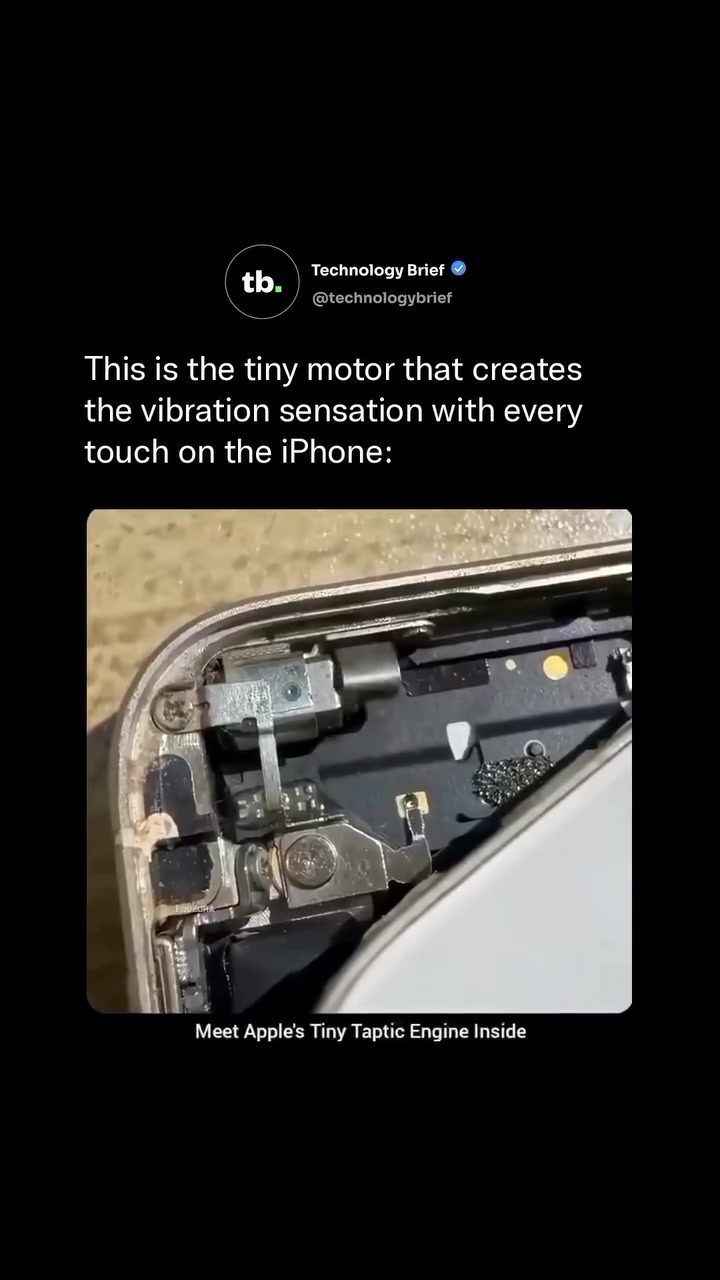
Understanding the iPhone Taptic Engine
Apple’s Taptic Engine is a small but powerful component integrated into every modern iPhone. It is a linear actuator that moves a small metal weight back and forth at high speed to produce precise vibrations. These vibrations provide users with a sense of tactile feedback, enhancing the overall user experience. Introduced in the original Apple Watch in 2014, the Taptic Engine was later integrated into the iPhone with the iPhone 6S in 2015.
Why This Matters
The Taptic Engine revolutionized the way users interact with their devices. Unlike older vibration motors that produced a dull, buzzing sensation, the Taptic Engine delivers short, crisp taps that mimic the feel of a real button click. This innovation has significantly improved user experience, making interactions with the device more intuitive and satisfying.
The Mechanics of the Taptic Engine
The Core Components
The Taptic Engine is remarkably simple in its design, consisting of just three core parts:
- Electromagnet: This component generates the magnetic field that drives the motor.
- Metal Weight: This small metal mass is moved back and forth by the electromagnet to create vibrations.
- Spring: This helps to control the movement of the metal weight, ensuring precise and consistent vibrations.
How It Works
The Taptic Engine converts electrical signals into precise vibrations. When the device receives a command to create a haptic feedback response, the electromagnet rapidly moves the metal weight back and forth. This rapid movement generates a vibration that is felt by the user. The spring helps to control the movement, ensuring that the vibrations are smooth and consistent.
Creating Clicks Without Moving Parts
One of the most impressive features of the Taptic Engine is its ability to create the sensation of a button click without any moving parts. This is achieved by firing a quick vibration in sync with a small sound. The brain interprets this combination as a real button press, providing a seamless and satisfying user experience.
The Evolution of the Taptic Engine
From Apple Watch to iPhone
The Taptic Engine was first introduced in the original Apple Watch in 2014. Its success in providing haptic feedback led to its integration into the iPhone with the iPhone 6S in 2015. Since then, it has become a standard feature in all modern iPhones, enhancing the user experience with its precise and intuitive feedback.
Improvements Over Older Motors
Unlike older vibration motors that used rotating weights to produce a dull buzz, the Taptic Engine delivers short, crisp taps. This improvement significantly enhances the user experience, making interactions with the device more intuitive and satisfying.
Applications Beyond the iPhone
The technology used in the Taptic Engine has applications beyond the iPhone. For example, it is also used in MacBook trackpads, which are completely fixed but feel like they click when pressed. This demonstrates the versatility and potential of the Taptic Engine in various devices.
Practical Tips for Getting the Most Out of the Taptic Engine
Customizing Haptic Feedback
Apple's iOS allows users to customize the intensity of haptic feedback to suit their preferences. This can be done in the settings menu under the "Accessibility" section. Adjusting the haptic feedback intensity can make interactions with the device more enjoyable and personalized.
Using Haptic Feedback in Apps
Many apps now leverage the Taptic Engine to enhance user interactions. For example, some gaming apps use haptic feedback to provide a more immersive experience, while productivity apps use it to confirm actions like deleting items or completing tasks.
Important Takeaways
The Taptic Engine is a remarkable innovation that has significantly improved the way users interact with their iPhones. Its ability to provide precise and intuitive haptic feedback has made interactions with the device more satisfying and enjoyable.
The Future of Haptic Feedback
As technology continues to evolve, the Taptic Engine is likely to become even more sophisticated. Future iterations may include even more precise and varied haptic feedback patterns, further enhancing the user experience.
The Importance of Tactile Feedback
Tactile feedback is an essential aspect of modern device design. It provides users with a sense of interaction and confirmation, making devices more intuitive and enjoyable to use.
Conclusion
The iPhone Taptic Engine is a small but powerful component that plays a crucial role in enhancing the user experience. Its ability to provide precise and intuitive haptic feedback has made interactions with the device more satisfying and enjoyable. As technology continues to evolve, the Taptic Engine is likely to become even more sophisticated, further enhancing the way we interact with our devices.
Questions readers ask
What is the Taptic Engine and how does it work?
The Taptic Engine is a compact component in modern iPhones that generates precise vibrations. It operates by moving a small metal weight rapidly back and forth, creating a tactile feedback that enhances user interactions with the device. This mechanism is distinct from older vibration motors, which typically produce a less refined, buzzing sensation.
When was the Taptic Engine first introduced in Apple devices?
The Taptic Engine was first introduced in the original Apple Watch in 2014. It was later integrated into iPhones starting with the iPhone 6S in 2015, bringing its advanced tactile feedback to a wider range of Apple products.
How does the Taptic Engine enhance the iPhone user experience?
The Taptic Engine enhances the iPhone user experience by providing crisp, satisfying feedback that mimics the feel of a button click. This makes interactions with the device more intuitive and engaging, as users receive immediate and precise responses to their inputs.
What are the key components of the Taptic Engine inside an iPhone?
The Taptic Engine primarily consists of a linear actuator and a small metal weight. The actuator moves the weight rapidly back and forth, generating the precise vibrations that users feel as tactile feedback. This design allows for a more controlled and satisfying user experience compared to traditional vibration motors.
How does the Taptic Engine differ from older vibration motors?
Unlike older vibration motors that produce a dull, buzzing sensation, the Taptic Engine delivers short, crisp taps. These precise vibrations better mimic the feel of a real button click, providing a more satisfying and intuitive feedback for users. This innovation has significantly improved the overall interaction experience with iPhones.
Related deep dives
Similar reads based on topic and creator.




Recent articles
Fresh deep dives from the latest Reels we unpacked.




Comments
Be the first to comment.