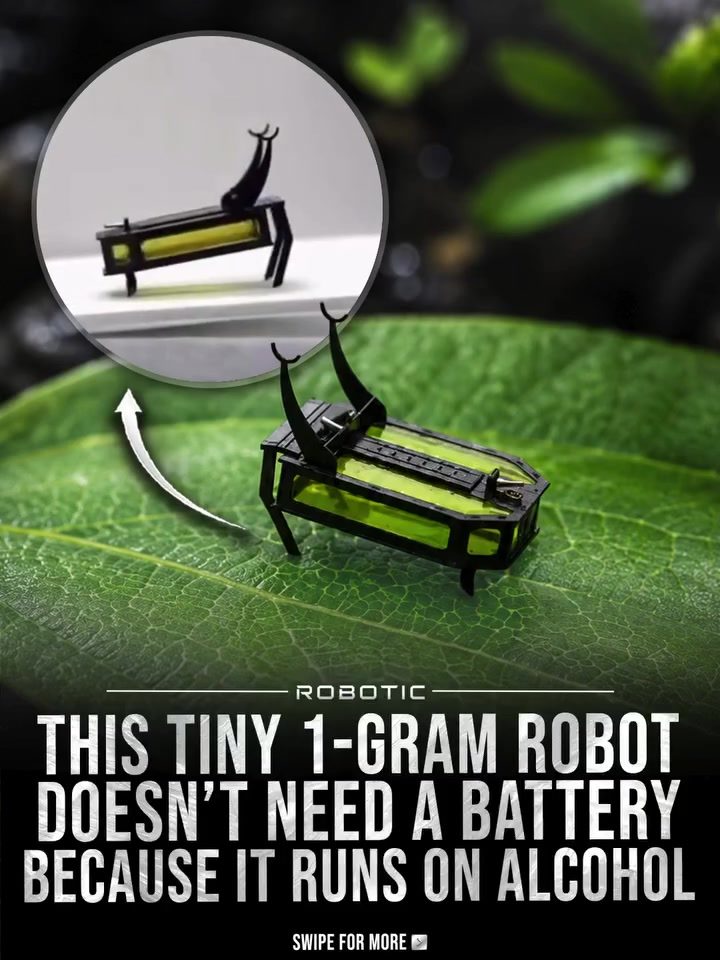
Tiny Alcohol-Powered Robots
Tiny robots that can crawl using alcohol as a power source are at the forefront of recent technological innovations in robotics. Unlike most robots that rely on batteries or external power, these minute machines harness the energy from methanol, eliminating the need for batteries, wires, or electromagnetic fields. This advancement is exemplified by the RoBeetle, a robot that weighs a mere 88 milligrams and can carry a payload of up to 230 milligrams. Its unique design and functionality make it a groundbreaking development in the field of microsystems.
Why This Matters
The potential applications for tiny alcohol-powered robots are vast and varied. These robots can infiltrate spaces where larger, battery-operated robots cannot. This makes them ideal for tasks such as environmental monitoring, medical diagnostics, and precise industrial inspections. The key advantage is RoBeetle's high energy density at extremely small scales, addressing challenges that conventional batteries face in miniature devices. By using chemical fuels, these robots can achieve autonomous movement, which is crucial for applications requiring compact, self-sufficient devices.
Main Discussion
The Design and Functionality of Alcohol-Powered Robots
The RoBeetle is a paragon of advanced engineering and design. It stores methanol in its body and utilizes a nickel-titanium wire coated with platinum as an artificial muscle. Methanol vapor reacts on the platinum surface, generating heat that causes the wire to contract. As the wire cools, it extends again, creating a mechanical cycle that drives the robot's legs.
Energy Source and Efficiency
The use of methanol as an energy source is a game-changer. Methanol is a liquid chemical fuel that can be stored and transported efficiently, providing a high energy density. This makes it an ideal power source for small robots. In contrast, traditional batteries have limited energy density, making them impractical for miniature robots. By utilizing methanol, the RoBeetle can operate continuously without the need for recharging or external power sources.
Mechanical Advantages
One of the standout features of the RoBeetle is its mechanical efficiency. The robot can crawl at speeds of up to 0.76 millimeters per second, which may seem slow but is significant given its size. This mechanical cycle, driven by the contraction and extension of the nickel-titanium wire, allows the RoBeetle to move autonomously, demonstrating how chemical fuels can enable movement in tiny robots.
Practical Tips
Constructing and operating alcohol-powered robots involves several key steps and considerations. If you're interested in creating or utilizing these devices, consider the following:
Material Selection
Choosing the right materials is crucial. The nickel-titanium wire coated with platinum is essential for the mechanical cycle that drives the robot's movement. Ensure that the materials used are compatible with methanol and can withstand the chemical reactions involved.
Design Considerations
Designing a robot of this scale requires precision and attention to detail. The robot's internal components, including the methanol storage and the platinum-coated wire, must be meticulously engineered to fit within the tiny frame while ensuring efficient operation.
Maintenance and Safety
Handling methanol and other chemical fuels requires safety precautions. Ensure that the robot is used in a well-ventilated area and that all components are properly sealed to prevent leaks. Regular maintenance and inspection are also necessary to keep the robot functioning optimally.
Important Takeaways
The development of alcohol-powered robots represents a significant leap in robotic technology. Some of the key takeaways from this innovation include:
- Energy Efficiency: Alcohol-powered robots offer high energy density, making them ideal for small-scale applications.
- Autonomous Movement: The mechanical cycle driven by the contraction and extension of the wire allows for autonomous movement, eliminating the need for external power sources.
- Versatility: These robots can be used in a variety of fields, from environmental monitoring to medical diagnostics, thanks to their compact size and self-sufficiency.
Conclusion
The emergence of tiny alcohol-powered robots, exemplified by the RoBeetle, marks an exciting new chapter in robotics. These miniature machines, powered by methanol, offer a range of benefits, including high energy density, autonomous movement, and versatility in application. As research and development in this field continue, we can expect to see even more innovative applications and improvements in design. Whether for industrial inspections, medical diagnostics, or environmental monitoring, alcohol-powered robots are poised to revolutionize how we think about and utilize small-scale robotic technology.
Questions readers ask
How do tiny alcohol-powered robots like the RoBeetle generate movement?
Tiny alcohol-powered robots use methanol as their fuel source. The robot's engine converts the methanol into heat, which drives a micro-engine, allowing the robot to crawl and move around. This process eliminates the need for a bulky battery, allowing for a more compact design.
What are the advantages of using methanol as a power source for small robots?
Methanol offers a high energy density, meaning it can pack a lot of power into a small space. This makes it ideal for tiny robots, which need a compact energy source to maximize their functionality. Additionally, methanol is a readily available and safe fuel source, making it easier to use in various settings.
What are some practical applications of tiny alcohol-powered robots?
These robots are well-suited for tasks in confined spaces. For instance, they can be used for environmental monitoring in hard-to-reach areas, such as inside machinery or in small crevices. In the medical field, they could aid in diagnostics by navigating through the human body for minimally invasive procedures.
What is the payload capacity of the RoBeetle robot?
The RoBeetle, a notable example of a tiny alcohol-powered robot, can carry a payload of up to 230 milligrams. This capacity is impressive given its lightweight design of only 88 milligrams, making it an excellent choice for tasks that require carrying small, specialized equipment into tight spaces.
How does the design of the RoBeetle contribute to its functionality?
The RoBeetle's unique design incorporates a methanol-powered engine that drives its movements. Its lightweight and compact structure allows it to navigate through narrow areas and perform tasks in environments where larger robots cannot operate. This makes the RoBeetle a versatile tool for a variety of applications.
Can these tiny robots operate without external power sources?
Yes, the tiny alcohol-powered robots are designed to function independently without the need for batteries, wires, or electromagnetic fields. They generate power through the combustion of methanol, which provides the necessary energy for movement and functionality, making them highly autonomous.
Related deep dives
Similar reads based on topic and creator.




Recent articles
Fresh deep dives from the latest Reels we unpacked.




Comments
Be the first to comment.