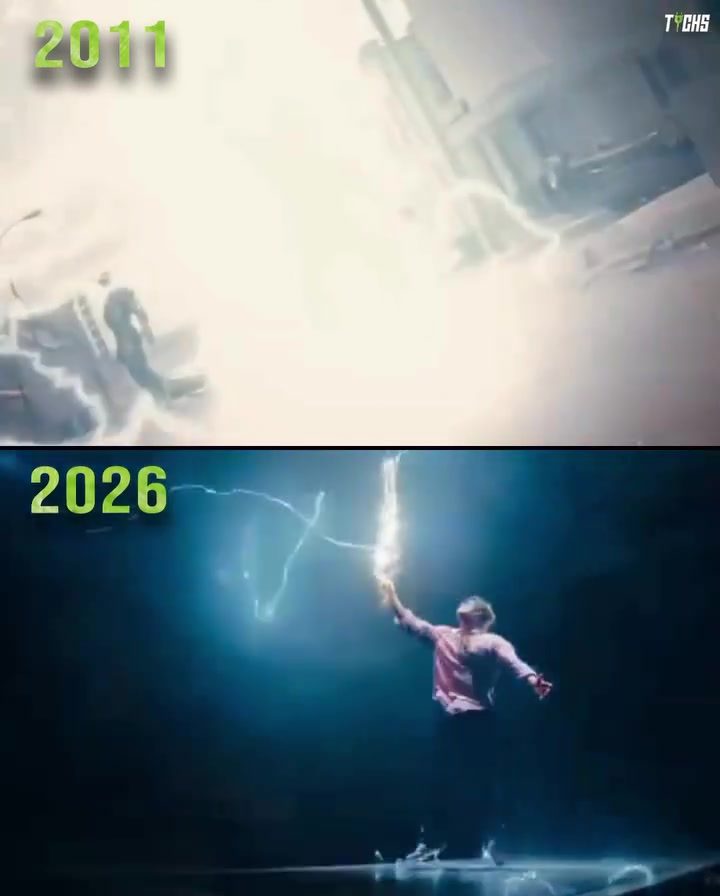
Thor's Evolution: A Decade of CGI Advancements
The comparison of Thor's appearance from 2011 to 2026 offers a striking visual journey through the evolution of computer-generated imagery (CGI) in film. This side-by-side contrast highlights not just the character's changing costume, but the significant strides made in rendering, lighting, animation, textures, and visual effects over the years.
Context / Why this Matters
CGI has been a cornerstone of modern filmmaking, transforming how stories are told on screen. The technology's advancements have enabled filmmakers to create increasingly realistic and immersive worlds. Whether it's the fantastical realms of superheroes or the deepest depths of space, CGI brings these visions to life. Thor's transformation serves as a microcosm of this broader technological evolution, illustrating how far visual effects have come and what the future might hold.
Main Discussion
The Early Years: 2011 and Beyond
In 2011, CGI was already a powerful tool, but it lacked the subtlety and realism of today’s standards. Thor's costume in this era is darker, more metallic, and less detailed. The rendering is noticeable, with textures that, while impressive for the time, appear somewhat flat and artificial by today's standards. The lighting effects are also more pronounced, giving a slightly cartoonish feel to the character. This era marked a significant leap from the early days of CGI, but it was still in its developmental stages.
The Mid 2010s: Refining the Craft
As the years progressed, significant improvements were made in rendering and lighting. The textures became more refined, and the animation began to mimic real-life movements more closely. The mid-2010s saw a shift towards more grounded and realistic visual effects, with characters like Thor becoming more lifelike. This period also marked the advent of more complex visual effects, such as detailed facial expressions and movement that felt more natural. These advancements paved the way for the hyper-realistic CGI we see today.
The Future: 2026 and Beyond
Looking ahead to 2026, Thor's appearance is drastically different. The costume is more futuristic, with glowing elements that add a dynamic layer to the visual style. The rendering is so advanced that it's nearly indistinguishable from reality, with highly detailed textures and lifelike movement. The lighting effects are seamless, integrating perfectly with the surrounding environment. This future iteration of Thor represents the pinnacle of what CGI can achieve, offering a glimpse into how visual effects technology might continue to evolve.
Practical Tips
For those interested in understanding and appreciating the evolution of CGI, a few practical tips can enhance the viewing experience:
Study Side-by-Side Comparisons
Side-by-side comparisons, such as the one showcasing Thor's transformation, provide a clear visual representation of CGI's progress. By examining these comparisons, viewers can see the subtle and significant changes that have occurred over the years. This method is particularly effective for understanding how rendering, lighting, and texture have evolved.
Look for Specific Elements
When analyzing CGI, focus on specific elements such as rendering, lighting, textures, and animations. These components are key to understanding the overall quality and realism of the CGI. Pay attention to how these elements have improved over time and how they contribute to the overall visual experience.
Explore Different Eras
Don't limit your exploration to a single era. By comparing CGI from different decades, you can gain a comprehensive understanding of its evolution. This approach highlights the incremental improvements and significant leaps that have occurred, providing a more holistic view of CGI's development.
Important Takeaways
Thor's transformation from 2011 to 2026 offers several important takeaways:
- Realism and Detail: The advancements in rendering, lighting, and textures have made CGI increasingly realistic and detailed, creating a more immersive viewing experience.
- Evolution of Visual Effects: The evolution of CGI is a testament to the continuous improvement in visual effects technology, with each era building on the last to create more sophisticated and lifelike visuals.
- Future Possibilities: The future of CGI, as exemplified by Thor's 2026 appearance, promises even more realistic and dynamic visuals, pushing the boundaries of what is possible in filmmaking.
Conclusion
The comparison of Thor's appearance from 2011 to 2026 is a compelling demonstration of CGI's evolution. From the early days of metallic costumes and noticeable rendering to the future of glowing suits and hyper-realistic textures, this journey showcases the remarkable advancements made in visual effects technology. Whether you're a movie enthusiast, a visual effects artist, or simply curious about the future of filmmaking, understanding this evolution provides valuable insights into the world of CGI and its continued impact on modern cinema.
Questions readers ask
How has the rendering in Thor's CGI evolved from 2011 to 2026?
The rendering of Thor's CGI has evolved significantly, with early CGI from 2011 displaying a more stylized and cartoonish appearance. By 2026, rendering techniques have improved dramatically, producing highly realistic and detailed textures, and more accurate reflections. This advancement allows Thor to blend seamlessly with live-action environments, enhancing the overall immersion.
What are the key differences in lighting between Thor's CGI in 2011 and 2026?
In 2011, the lighting effects in Thor's CGI often appeared artificial, with less nuanced shading and highlights. By 2026, advancements in lighting technology have enabled more realistic, dynamic, and natural lighting. This includes better simulation of shadows, glare, and the interplay of light with textures. These improvements contribute to a more believable and immersive portrayal of Thor.
How has the animation of Thor's CGI changed over the years?
The animation of Thor's CGI from 2011 to 2026 has seen remarkable improvements. Early CGI animations often featured rigid and repetitive movements, whereas 2026's CGI boasts fluid, natural, and highly detailed movements. Modern CGI gives Thor a more lifelike and realistic range of motion, allowing for more expressive and nuanced performances.
What advancements in CGI technology have contributed to the evolution of Thor's appearance?
Several advancements in CGI technology have contributed to Thor's evolving appearance, including enhanced rendering techniques, improved textures, and more sophisticated lighting and shading algorithms. Additionally, advances in motion capture and real-time rendering have allowed for more realistic and dynamic character movements and interactions.
How does the progression of CGI in Thor films reflect the broader trends in visual effects in cinema?
The progression of CGI in Thor films mirrors the broader trends in visual effects, showcasing how the industry has shifted towards more realistic and immersive visuals. From 2011 to 2026, the enhanced detail, realism, and integration of CGI with live-action elements in Thor's depiction reflect a wider cinematic trend toward hyper-realistic and seamless visual effects across various genres and styles.
What are some of the most notable improvements in visual effects for Thor from 2011 to 2026?
Some of the most notable improvements in visual effects for Thor from 2011 to 2026 include more detailed skin textures, realistic hair and fabric simulation, and advanced physics-based animation. These advancements allow for a level of realism that was previously unattainable, making Thor's on-screen presence more believable and engaging.
Why is the comparison of Thor's CGI from 2011 and 2026 significant for understanding the progress of CGI in movies?
The comparison of Thor's CGI from 2011 and 2026 is significant as it showcases the rapid advancements in CGI technology over a relatively short period. This comparison highlights the improvements in rendering, lighting, animation, and overall realism, providing a clear visual representation of how far CGI has come in making characters and environments more lifelike and immersive in modern cinema.
Related deep dives
Similar reads based on topic and creator.




Recent articles
Fresh deep dives from the latest Reels we unpacked.




Comments
Be the first to comment.