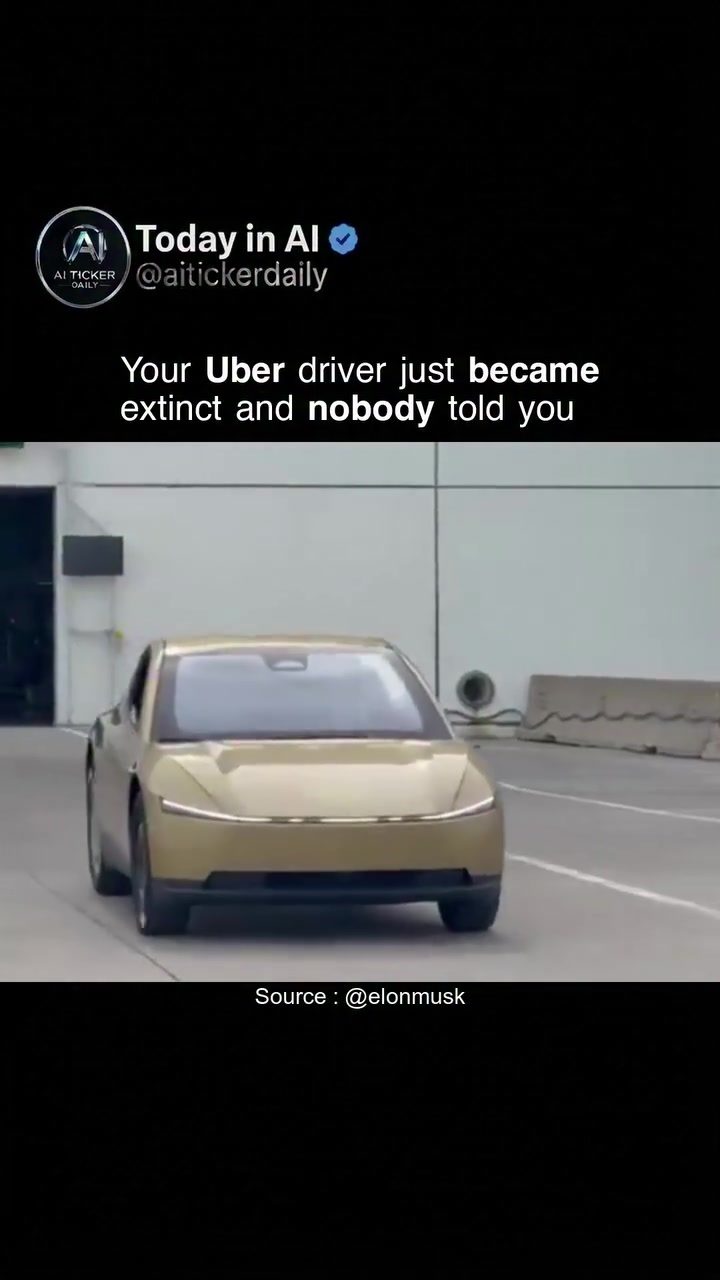
Autonomous Vehicles: The Future of Ride-Sharing
Autonomous vehicles are no longer a distant dream but a reality inching closer to public roads. The latest demonstration by Tesla showcases the Cybercab, a model designed to operate entirely without human intervention. This groundbreaking technology has significant implications for the future of ride-sharing services and the broader automotive industry.
Why This Matters
The advent of autonomous vehicles is set to revolutionize the way we think about transportation, particularly in the context of ride-sharing. With millions of drivers employed by companies like Uber and Lyft, the potential for widespread adoption of self-driving technology could reshape the job market and transportation infrastructure. Tesla's recent demo of its Cybercab autonomously navigating out of the GigaTexas factory serves as a stark reminder that this future is closer than many realize.
Main Discussion
The Cybercab Revolution
The Cybercab, Tesla's latest addition to its fleet of autonomous vehicles, is designed to operate without a driver, steering wheel, or any human involvement. This model was recently seen driving itself out of the GigaTexas factory, a real-world environment, highlighting its readiness for public use. This demonstration underscores the advanced capabilities of autonomous driving technology and its potential to eliminate the need for human drivers in ride-sharing services.
Public Road Testing
Tesla's plans to introduce these autonomous vehicles on public roads soon signal a significant milestone in the development of self-driving technology. The transition from controlled test environments to real-world conditions is a crucial step in proving the reliability and safety of autonomous vehicles. This move is poised to catalyze widespread adoption and integration of self-driving cars into daily life.
Impact on Job Market
The rise of autonomous vehicles presents a double-edged sword for the job market. On one hand, the elimination of human drivers could lead to job displacement, especially in the ride-sharing sector. However, it also opens up new opportunities in areas such as autonomous vehicle maintenance, software development, and fleet management. The shift towards autonomous technology necessitates a reevaluation of workforce skills and training programs to prepare for the future of work.
Technological Advancements
The Cybercab's ability to navigate complex environments without human intervention is a testament to the advancements in artificial intelligence and machine learning. These technologies enable autonomous vehicles to process vast amounts of data in real-time, making split-second decisions to ensure safe and efficient operation. The integration of sensors, cameras, and advanced algorithms allows these vehicles to perceive and respond to their surroundings with unprecedented accuracy.
Regulatory Considerations
The deployment of autonomous vehicles on public roads requires careful consideration of regulatory frameworks. Ensuring the safety of autonomous vehicles involves addressing issues such as liability, insurance, and traffic laws. Regulatory bodies must work closely with technology companies to develop guidelines that promote innovation while safeguarding public safety. The transition to autonomous transportation will necessitate a collaborative effort between industry leaders, policymakers, and the public to establish a robust regulatory framework.
Environmental Benefits
Autonomous vehicles offer numerous environmental benefits, including reduced carbon emissions and optimized traffic flow. By improving fuel efficiency and reducing congestion, autonomous vehicles can contribute to a more sustainable transportation system. Additionally, the integration of electric autonomous vehicles can further enhance environmental sustainability, aligning with broader efforts to combat climate change.
Consumer Acceptance
The widespread adoption of autonomous vehicles hinges on public acceptance and trust. Consumers must feel confident in the safety and reliability of autonomous technology to embrace these vehicles as a viable mode of transportation. Building this trust involves transparent communication about the technology's capabilities, addressing safety concerns, and providing clear evidence of its benefits. Consumer education and engagement will play a critical role in driving the adoption of autonomous vehicles.
Practical Tips
-
Stay Informed: Keep up-to-date with the latest developments in autonomous vehicle technology. Follow expert sources and industry leaders for reliable information and insights.
-
Understand the Regulations: Familiarize yourself with local and national regulations governing autonomous vehicles. Knowing the legal landscape can help you prepare for the changes and opportunities ahead.
-
Evaluate Job Opportunities: As the job market evolves, consider retraining or upskilling in areas related to autonomous vehicle technology. This proactive approach can position you for new career opportunities in the industry.
-
Engage with the Technology: Test drive autonomous vehicles when possible and engage with technology companies to voice your concerns and suggestions. Your input can shape the future of autonomous transportation.
-
Support Sustainable Initiatives: Advocate for policies and initiatives that promote the adoption of autonomous electric vehicles. Sustainable transportation is crucial for a greener future.
Important Takeaways
The future of autonomous vehicles is rapidly approaching, with companies like Tesla leading the charge. The Cybercab's demonstration of autonomous driving capabilities highlights the potential for this technology to revolutionize ride-sharing and the broader transportation sector. While there are challenges to overcome, the benefits of autonomous vehicles in terms of safety, efficiency, and sustainability are undeniable. Preparing for this future requires staying informed, understanding regulatory frameworks, and embracing the technological advancements that are reshaping our world.
Conclusion
The Cybercab's autonomous journey out of the GigaTexas factory marks a pivotal moment in the evolution of autonomous vehicles. As these technologies continue to advance, their impact on the job market, regulatory landscape, and environmental sustainability will be profound. Embracing these changes with an open mind and proactive approach can help us navigate the transition to a future where autonomous vehicles are a common sight on our roads.
Questions readers ask
What is the Tesla Cybercab and how does it differ from traditional ride-sharing services?
The Tesla Cybercab is an autonomous vehicle designed to operate without a human driver, unlike traditional ride-sharing services that rely on human drivers. This vehicle is a significant step towards fully autonomous ride-sharing, aiming to provide a driverless alternative to the current fleets of company-owned cars.
How does Tesla's Cybercab impact the job market for drivers?
The introduction of the Cybercab could lead to a significant shift in the job market for drivers. With autonomous vehicles taking over ride-sharing services, there may be a reduction in demand for human drivers, potentially leading to job displacement in the short term.
What are the key features that set the Tesla Cybercab apart from other autonomous vehicles?
The Cybercab stands out due to its fully autonomous capabilities, designed to operate without human intervention. It has undergone real-world testing on public roads, demonstrating Tesla's commitment to advancing driverless technology and integrating it into everyday transportation.
How will the broader automotive industry be affected by the Cybercab's development?
The Cybercab's development signals a major trend in the automotive industry towards autonomous vehicles. As Tesla advances its driverless technology, other companies are likely to follow suit, leading to increased competition and innovation in the autonomous vehicle sector.
What are the potential benefits of widespread adoption of autonomous vehicles like the Cybercab?
Widespread adoption of autonomous vehicles could lead to reduced traffic congestion, improved safety through elimination of human error, and more efficient use of transportation resources. However, it also raises concerns about job losses and the need for policy changes to accommodate this new technology.
How does Tesla's approach to testing the Cybercab on public roads impact its development?
Testing the Cybercab on public roads allows Tesla to gather real-world data and refine its autonomous technology in various driving conditions. This approach helps identify and address potential issues, ensuring the vehicle's reliability and safety before broader deployment.
Related deep dives
Similar reads based on topic and creator.




Recent articles
Fresh deep dives from the latest Reels we unpacked.




Comments
Be the first to comment.