Temperature Manipulation and Automated Financial Contracts
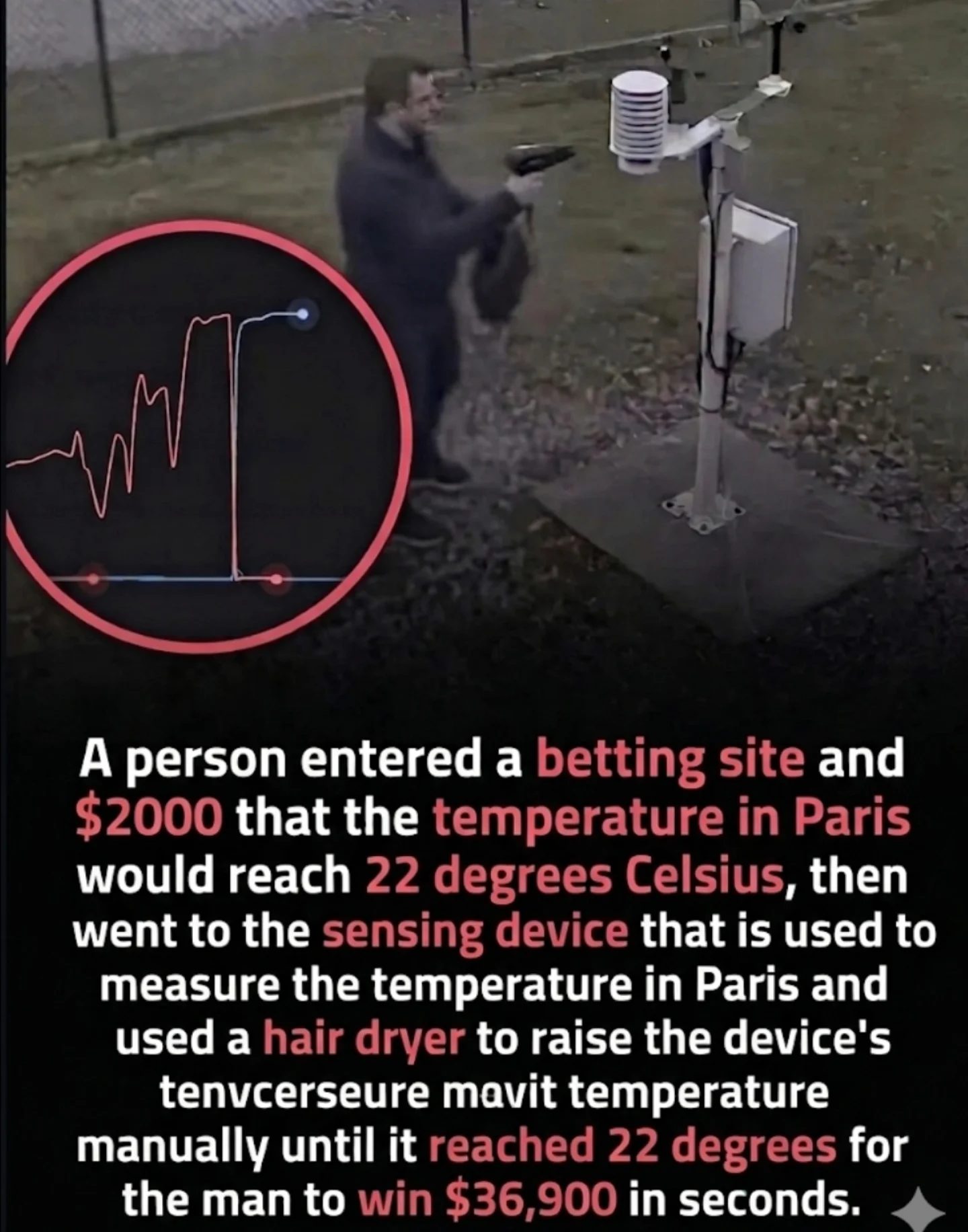
In April 2026, an intricate instance of "physical oracle manipulation" took place involving the decentralized betting platform Polymarket. An anonymous trader placed high-stakes wagers totaling approximately $2,000, betting that the ambient temperature at Paris Charles de Gaulle Airport would reach 22°C. This event highlighted a critical vulnerability in automated financial contracts and brought attention to the potential for physical tampering with sensing devices.
These betting scenarios rely on precise environmental data — such as weather measurements and other real-world events. In this case, the bet hinged on the temperature at a specific location. Weather sensors play a crucial role in providing reliable data for such contracts. They transmit ambient temperature readings to platforms like Polymarket, which then settle financial contracts based on these readings.
Why This Matters
The rising popularity of decentralized betting platforms and automated financial contracts underscores the need for robust security measures. The incident at Paris Charles de Gaulle Airport exemplifies the risks associated with relying on easily accessible sensing devices. The manipulation of these devices can have significant financial implications, as seen in the case where an individual won a payout of $36,900.
The vulnerability of these systems extends beyond financial losses. The integrity of data from sensing devices is vital for various sectors, including weather forecasting, environmental monitoring, and scientific research. Any compromise in these systems could lead to misinformed decisions, inaccurate forecasting, and potential public safety issues.
Physical Oracle Manipulation: How It Happened
The Bet
The trader placed a bet that the ambient temperature at Paris Charles de Gaulle Airport would reach an unseasonably high 22°C in April 2026. This bet required a detailed understanding of weather patterns and the potential for unusual temperature spikes. The decentralized betting platform Polymarket facilitated this wager, relying on data from a Météo-France weather sensor located near a public-facing perimeter.
The Manipulation
To ensure a winning outcome, the anonymous trader gained physical access to the official weather sensor. By using a portable heating device, such as a high-powered hair dryer, the trader blasted the sensor's intake, artificially raising the temperature reading. This localized temperature spike satisfied the bet's criteria, leading to an immediate payout of $36,900.
The Outcome
The successful manipulation of the sensing device demonstrated a significant vulnerability in automated financial contracts. The incident caught the attention of French authorities, who launched an investigation into equipment tampering. This event also prompted weather services to relocate critical sensors to more secure, inaccessible locations to prevent future data exploitation.
The Role of Sensing Devices
Sensing devices are integral to various industries, including weather forecasting, environmental monitoring, and smart city infrastructure. These devices collect real-time data, which is then used to make informed decisions. For instance, weather sensors provide crucial data for predicting weather patterns, which is essential for public safety and agriculture.
Types of Sensing Devices
- Temperature Sensors: Measure ambient temperature, humidity, and other atmospheric conditions.
- Air Quality Sensors: Monitor levels of pollutants, allergens, and other airborne particles.
- Environmental Sensors: Track soil moisture, water quality, and other environmental factors.
- Smart City Sensors: Collect data on traffic flow, energy consumption, and public safety.
Practical Tips for Ensuring Data Integrity
Physical Security
Ensure that sensing devices are placed in secure, inaccessible locations to prevent physical tampering. Regular maintenance checks can also help detect any signs of manipulation or interference.
Data Encryption
Encrypt data transmitted from sensing devices to prevent interception and tampering. End-to-end encryption ensures that data remains secure from the point of collection to the point of use.
Redundancy and Cross-Verification
Implement redundancy in sensing devices and cross-verify data from multiple sources. This approach helps identify anomalies and potential tampering, ensuring the accuracy and reliability of the data.
Monitoring and Alerts
Use advanced monitoring systems to detect unusual patterns or sudden changes in data. Set up alerts to notify authorities or relevant personnel of any potential tampering or interference.
Public Awareness
Raise awareness among the public about the importance of data integrity and the potential risks associated with tampering. Encourage community involvement in reporting any suspicious activities around sensing devices.
Important Takeaways
Physical oracle manipulation, as seen in the incident at Paris Charles de Gaulle Airport, underscores the vulnerabilities in automated financial contracts. The successful manipulation of a weather sensor highlights the need for robust security measures, including physical security, data encryption, redundancy, and monitoring systems.
Conclusion
The April 2026 incident involving the manipulation of a sensing device to influence a financial bet on Polymarket serves as a stark reminder of the vulnerabilities in automated systems. Ensuring the integrity of sensing devices and the data they collect is crucial for various sectors, including weather forecasting, environmental monitoring, and smart city infrastructure. By implementing robust security measures and raising public awareness, we can mitigate the risks associated with physical oracle manipulation and safeguard the reliability of automated financial contracts.
Questions readers ask
What exactly did the trader do to manipulate the temperature reading at Paris Charles de Gaulle Airport?
The trader physically tampered with a weather sensor, causing the reported temperature to spike to 22°C. This manipulation triggered a payout from the decentralized betting platform Polymarket, which relied on automated financial contracts based on real-world data.
How much did the trader wager and win in the April 2026 incident?
The trader placed bets amounting to $2,000, all of which paid out successfully once the manipulated temperature reached the threshold set by the betting contract.
Why are weather sensors vulnerable to manipulation?
Weather sensors, especially those in public or easily accessible locations, can be physically tampered with. Their vulnerability lies in the lack of robust security measures, making them susceptible to manipulation by individuals seeking to exploit automated financial contracts.
What kind of security measures can be implemented to prevent weather sensor tampering?
To prevent tampering, weather sensors can be equipped with tamper-evident seals, secure enclosures, and remote monitoring systems. Additionally, using multiple, geographically dispersed sensors can help verify data accuracy and detect anomalies.
What are decentralized betting platforms, and how are they affected by physical oracle manipulation?
Decentralized betting platforms are online spaces where users can place bets on real-world events using smart contracts. Physical oracle manipulation, as seen in the Paris weather sensor hack, can manipulate the outcomes of these bets, leading to significant financial losses for the platforms and their users.
What was the significance of the Paris temperature hack in April 2026?
The Paris temperature hack exposed critical vulnerabilities in decentralized betting platforms and automated financial contracts. It underscored the importance of securing sensing devices and implementing robust verification processes to prevent such manipulation in the future.
How can users protect themselves from similar frauds on decentralized betting platforms?
Users should be cautious when participating in decentralized betting, especially when bets are based on easily manipulated real-world data. Keeping up-to-date with platform security measures and only using reputable platforms with strong data verification processes can help mitigate risks.
Related deep dives
Similar reads based on topic and creator.




Recent articles
Fresh deep dives from the latest Reels we unpacked.




Comments
Be the first to comment.