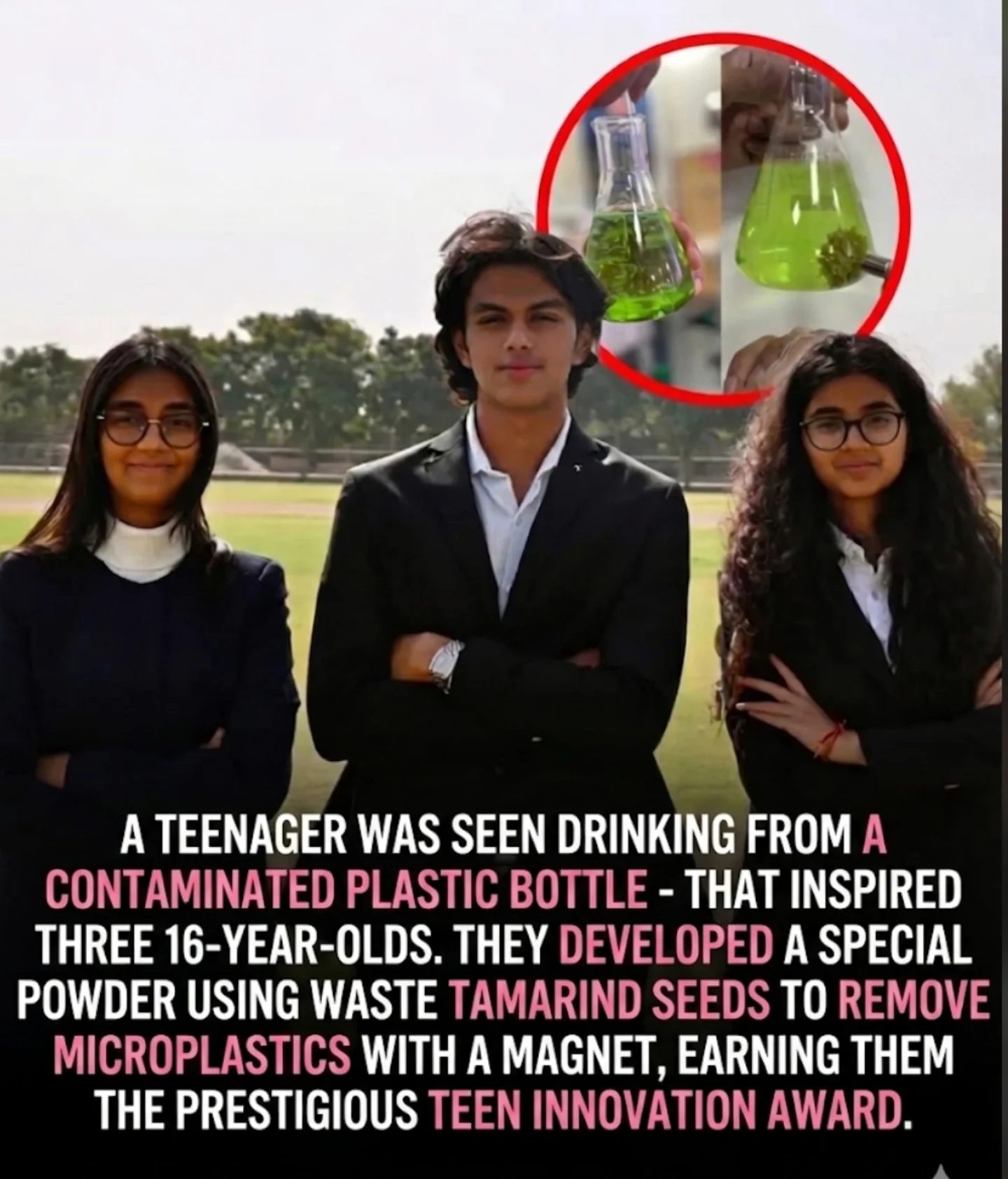
Microplastic Removal with Tamarind Powder
Microplastics in water are an invisible but increasingly concerning form of pollution. Addressing this issue, three 16-year-old students from India—Vivaan Chhawchharia, Ariana Agarwal, and Avyana Mehta—developed an innovative solution. Their inspiration came from a simple yet alarming observation: a child drinking from a shared, unfiltered water container in a rural community. The trio sought to create an accessible and low-cost method to combat microplastic pollution, leading to the creation of "Plas-Stick."
Context / Why this matters
Microplastic contamination in water sources is a significant environmental issue. These tiny plastic particles can infiltrate water supplies, posing risks to both human health and ecosystems. Traditional filtration methods can be costly and inaccessible, particularly in rural or underdeveloped areas. The innovative solution devised by these teenagers addresses this gap by providing a sustainable and affordable approach to removing microplastics from contaminated water.
Their solution, visualized with a close-up inset showing a green liquid in a plastic Erlenmeyer flask, demonstrates the practical application of their idea.
Main discussion
The Inspiration Behind Plas-Stick
The inspiration for Plas-Stick came from an everyday observation. Seeing a child drinking from a contaminated plastic bottle highlighted the urgency of the problem. The trio realized that effective solutions for microplastic removal needed to be accessible and affordable for communities that often lack advanced infrastructure. This observation laid the groundwork for their innovative approach.
The Science Behind Plas-Stick
Plas-Stick is a low-cost, biodegradable powder synthesized from discarded tamarind seed waste. Tamarind seeds are a common agricultural byproduct in South Asian cuisine, making them an abundant and sustainable resource. The powder acts as a natural binding agent, attracting and clustering microscopic plastic particles into visible masses. This process enables easy extraction of the microplastics using a basic handheld magnet without the need for electricity or complex infrastructure.
The Extraction Process
The process involves introducing Plas-Stick to contaminated water. The powder's natural binding properties cause it to attract microplastic particles, forming them into visible clumps. These clumps can then be easily removed using a magnet. This method is not only effective but also environmentally friendly, as it uses natural ingredients and requires minimal resources.
Collaboration and Recognition
The team collaborated with researchers at the Indian Institute of Technology Guwahati to refine their method and validate its effectiveness. Their hard work and innovation did not go unnoticed. The trio was named the Global Winner of The Earth Prize 2026, the world's largest environmental competition for teenagers.
This prestigious award underscores the significance of their work and the potential it holds for addressing microplastic pollution on a global scale.
Practical Tips
For those interested in replicating or understanding the process behind Plas-Stick, here are some practical tips:
- Source Tamarind Seeds: Tamarind seeds are readily available in South Asia. Look for discarded seeds from local markets or farms.
- Prepare the Powder: Grind the tamarind seeds into a fine powder. This powder will be the key ingredient in your microplastic removal process.
- Contaminated Water: Introduce the powder to contaminated water. The binding agent in the powder will attract and cluster the microplastic particles.
- Extraction: Use a basic handheld magnet to extract the visible clumps of microplastics from the water. This step ensures that the water is free from harmful plastics.
Important Takeaways
- Accessibility: Plas-Stick provides an accessible and affordable solution for communities that lack advanced filtration systems.
- Sustainability: The use of tamarind seed waste makes Plas-Stick an environmentally friendly option.
- Effectiveness: The method effectively removes microplastics from contaminated water, making it a viable solution for clean water initiatives.
- Innovation: The project demonstrates the potential for young innovators to make significant contributions to environmental sustainability.
Conclusion
The development of Plas-Stick by Vivaan Chhawchharia, Ariana Agarwal, and Avyana Mehta is a testament to the power of innovation driven by observation and community needs. Their solution to microplastic pollution not only addresses a critical environmental issue but also highlights the potential for sustainable and affordable solutions. As the world continues to grapple with microplastic contamination, innovations like Plas-Stick offer hope for cleaner and safer water sources.
Questions readers ask
How does Plas-Stick tamarind powder work to remove microplastics from water?
Plas-Stick works by causing microplastics to coagulate, or clump together, due to the natural properties of tamarind powder. These clumped microplastics then settle at the bottom of the water container, making it easier to separate them from the water, which can then be filtered and used safely.
Why did the teenagers choose tamarind powder for their microplastic removal solution?
The teenagers chose tamarind powder because it is a natural, sustainable, and affordable resource. It is readily available in many parts of the world, particularly in rural and underdeveloped areas, making it an ideal component for a low-cost water treatment solution. Additionally, its effectiveness in removing microplastics from water makes it an excellent choice for this purpose.
Can Plas-Stick tamarind powder be used in rural and underdeveloped areas?
Yes, Plas-Stick is designed to be particularly accessible to rural and underdeveloped areas. The tamarind powder is readily available in many of these regions, and is very affordable. This makes it a practical and sustainable solution for communities that may lack access to more advanced water treatment technologies.
How effective is Plas-Stick in removing microplastics from water?
Plas-Stick has been shown to be quite effective in removing microplastics from water. The tamarind powder causes the microplastics to bind together, making them easier to filter out. This process helps to significantly reduce the amount of microplastics in the water, making it safer for consumption and other uses.
What inspired the teenagers to create Plas-Stick?
The inspiration for Plas-Stick came from a simple yet alarming observation: a child drinking from a shared, unfiltered water container in a rural community. This sight motivated the teenagers to find an accessible and low-cost method to combat microplastic pollution, leading to the development of Plas-Stick.
What makes Plas-Stick a sustainable solution for microplastic removal?
Plas-Stick is a sustainable solution because it uses tamarind powder, a natural and renewable resource. The process does not require advanced technology or a significant amount of energy, making it environmentally friendly. Additionally, its affordability and accessibility make it a sustainable choice for communities that may struggle with more complex or expensive water treatment methods.
Are there other benefits to using Plas-Stick beyond microplastic removal?
While the primary benefit of Plas-Stick is its ability to remove microplastics from water, its natural and affordable nature makes it beneficial for other purposes as well. The tamarind powder can also help improve the clarity and taste of the water, providing additional benefits for communities that rely on local water sources.
Related deep dives
Similar reads based on topic and creator.

Recent articles
Fresh deep dives from the latest Reels we unpacked.
Comments
Be the first to comment.