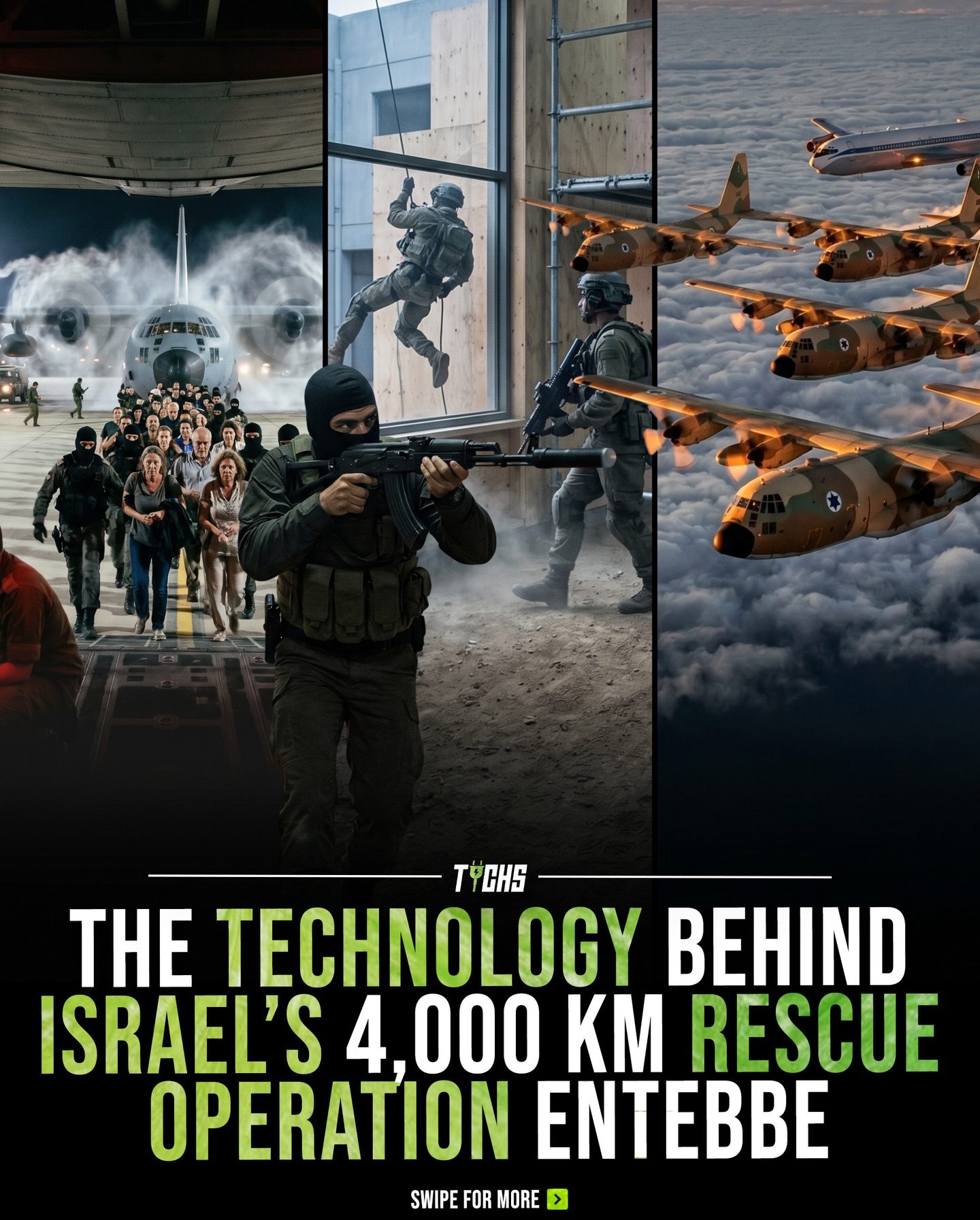
Operation Entebbe: The Technology and Planning Behind the 4,000 km Rescue Mission
Operation Entebbe stands as a testament to precision, coordination, and technological prowess in military operations. This daring 4,000 km long-range rescue mission showcased the innervings of Israeli military strategy, precision tactics, and the seamless integration of technology in high-stakes operations.
Context: Why this matters
Understanding Operation Entebbe offers valuable insights into how meticulous planning, advanced technology, and rapid execution can turn a high-risk operation into a successful mission. The operation, which spanned over 4,000 kilometers, involved the rescue of 102 hostages in Uganda within minutes of execution. This feat highlights the significance of precise timing, synchronized movements, and the effective use of advanced technology in military endeavors.
Key Components of the Operation
Intelligence Reconstruction
Before any operation, intelligence gathering and reconstruction are vital. For Operation Entebbe, the Israeli forces reconstructed the terminal layout using debriefs from released passengers. This detailed understanding of the terrain and enemy positions allowed for precise planning and execution.
Aviation and Vehicle Deployment
The mission involved multiple C-130 aircraft, which were crucial for transporting the rescue team to and from the operation site. These aircraft were equipped with low-altitude radar evasion techniques and Inertial Navigation System (INS) based navigation, ensuring they could navigate the skies undetected by Ugandan forces.
Deception and Stealth
One of the most critical aspects of the mission was the use of deception. Deception vehicles, mimicking the appearance of civilian aircraft, were deployed to mislead the enemy. This was complemented by secure radios, which allowed for real-time communication without the risk of interception, and close-quarters weapons, which were essential for neutralizing threats at close range.
Synchronization and Timing
The entire plan was choreographed to the minute, including aircraft arrival, vehicle rollout, and hostage extraction. Time was of the essence, and every movement was carefully synchronized to minimize exposure to Ugandan forces. This precision ensured that the operation ran smoothly and efficiently, reducing the risk of detection and counterattacks.
Practical Tips for Military Operations
In any military operation, several key elements must be meticulously planned and executed. These include:
Comprehensive Intelligence Gathering
Intelligent reconstruction is a cornerstone of successful military operations. Accurate and detailed information about the enemy's positions, terrain, and other critical factors can significantly enhance the chances of success. Gathering intelligence through various means, including debriefs from released passengers, is essential.
Advanced Technology Integration
Technology plays a crucial role in modern military operations. Advanced navigation systems, low-altitude radar evasion, and secure communication devices are just a few examples of how technology can be leveraged to gain an edge over adversaries. In Operation Entebbe, these technologies were seamlessly integrated, ensuring the operation's success.
Precision and Synchronization
Timing and synchronization are vital in high-stakes operations. Precision in every movement, from aircraft arrival to hostage extraction, ensures that the operation runs smoothly and efficiently. This requires meticulous planning and the ability to adapt to any changes in real-time.
Important Takeaways
The success of Operation Entebbe underscores several important takeaways:
- Precision and Timing: Every movement must be meticulously planned and synchronized to the minute to ensure success. This precision minimizes the risk of detection and counterattacks.
- Advanced Technology: Integrating advanced technologies like low-altitude radar evasion, INS-based navigation, and secure communication devices is crucial for the success of any military operation.
- Intelligence Gathering: Accurate and detailed information about the enemy's positions, terrain, and other critical factors is essential for successful military operations.
- Coordination: Coordinating the efforts of multiple teams, aircraft, and vehicles across long distances requires exceptional teamwork and communication.
Conclusion
Operation Entebbe stands as a testament to the Israeli military's ability to execute complex and high-risk operations with precision and efficiency. By leveraging advanced technology, meticulous planning, and seamless coordination, the mission successfully rescued 102 hostages in under 90 minutes. This operation serves as a blueprint for future military endeavors, demonstrating how coordination, speed, and technology can turn high-risk operations into historic success with minimal margin for error.
Questions readers ask
What made the Entebbe rescue mission particularly challenging?
The Entebbe rescue mission was challenging due to its long range, spanning over 4,000 kilometers, and the high stakes involved in rescuing 102 hostages. The operation required precise coordination, advanced military technology, and meticulous planning to ensure the safety of the hostages and the success of the mission.
How did the Israeli military use technology in the Entebbe raid operation?
The Israeli military employed advanced technology for navigation, communication, and reconnaissance. This included specialized aircraft for long-range travel, and precision weapons. The use of sophisticated intelligence and communications systems allowed for seamless coordination among the various teams involved in the operation.
What role did military intelligence play in the planning of the Entebbe rescue mission?
Military intelligence was crucial in gathering detailed information about the hostage location, the layout of the airport, and the number of hostiles. This intelligence enabled the Israeli forces to create an accurate reconstruction of the scene and plan the operation with precision, minimizing risks and maximizing the chances of a successful rescue.
How did the Israeli special forces prepare for the Entebbe raid operation?
The Israeli special forces conducted extensive training and simulations based on the intelligence gathered. This included practicing the specific actions required for the rescue, such as breaching the terminal building and neutralizing hostiles. The forces also trained under conditions that mimicked the actual environment in Uganda, ensuring they were physically and mentally prepared for the mission.
How was the operation able to rescue hostages in a matter of minutes?
The operation was executed with precise timing and coordination. The rescue teams were able to move swiftly and decisively upon landing, taking control of the airport and the terminal building within minutes. This was achieved through extensive planning, synchronized movements, and the use of specialized equipment, ensuring that the hostages were rescued quickly and safely.
Related deep dives
Similar reads based on topic and creator.




Recent articles
Fresh deep dives from the latest Reels we unpacked.




Comments
Be the first to comment.