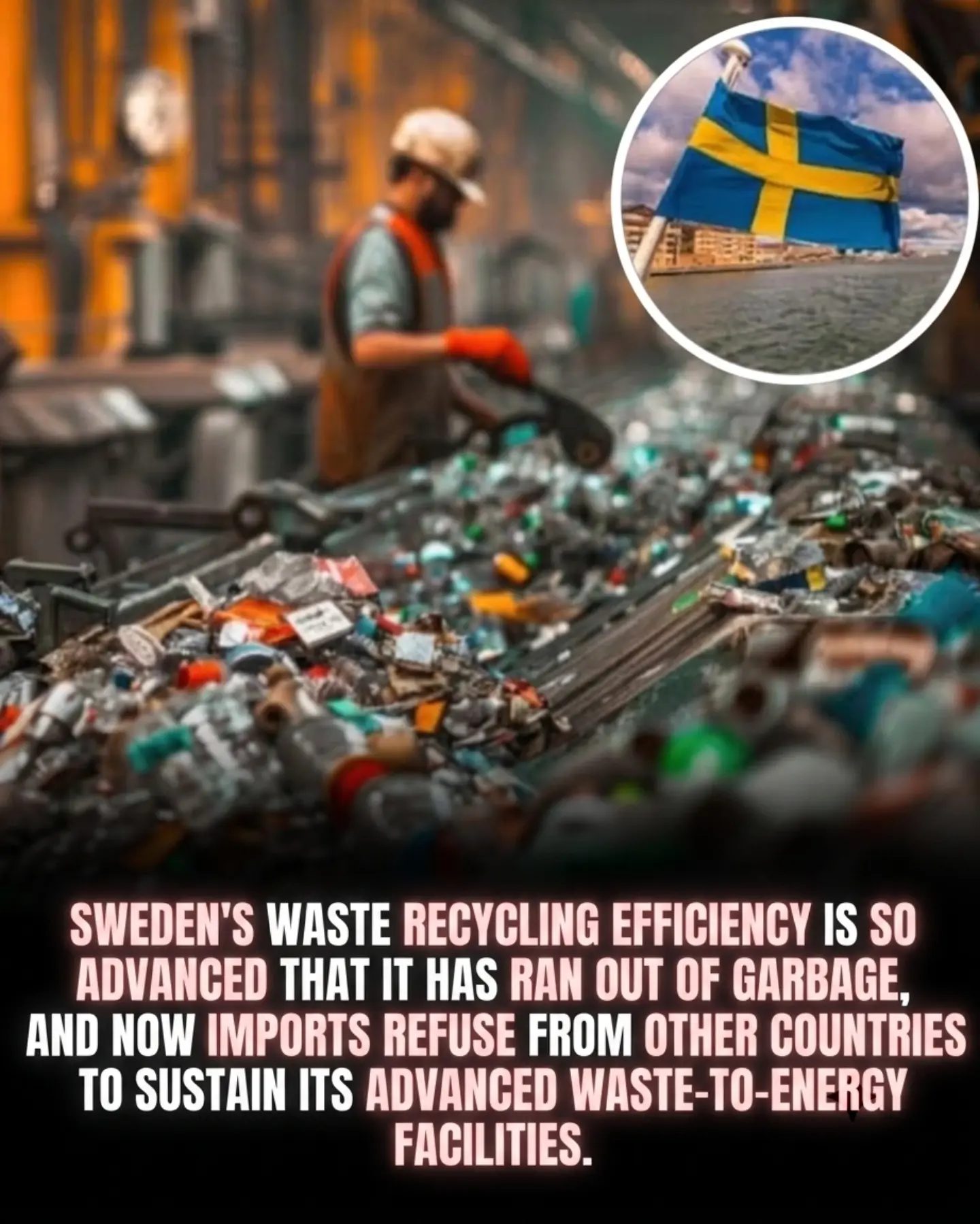
Sweden's Advanced Waste Recycling
Sweden's approach to waste management stands as a global model for recycling and waste-to-energy conversion. The country's sophisticated recycling system ensures that less than 1% of household waste ends up in landfills, achieving a near-zero-waste goal. Their Waste-to-Energy (WTE) facilities are pivotal in this system, converting non-recyclable waste into electricity and heat for hundreds of thousands of homes.
Recycling System and Efficiency
How Sweden Manages Waste
Instead of dumping garbage into landfills, Sweden has developed an advanced waste sorting system. This system meticulously separates recyclable materials from non-recyclable waste. The recyclables are then reused in various industries, while the non-recyclable waste is fed into WTE facilities. Each of these steps involves significant technological and engineering advancements, making the process both efficient and sustainable.
Waste-to-Energy Facilities
The WTE facilities play a crucial role in Sweden's waste management strategy. These plants burn non-recyclable waste to generate electricity and heat. This process doesn't merely dispose of waste but also creates a valuable resource. The energy generated from these facilities is clean and renewable, contributing to Sweden's overall energy supply.
Importing Garbage: A Unique Problem
Sweden's recycling efficiency is so advanced that the country has run out of its own garbage. This means that the WTE facilities, which have the capacity to process a significant amount of waste, are not operating at full power. To sustain these advanced facilities, Sweden imports refuse from other European countries. This is a testament to the country's commitment to a circular economy, where waste is seen as a resource rather than a problem.
Impact and Benefits
Environmental Benefits
By diverting waste from landfills, Sweden significantly reduces methane emissions, a potent greenhouse gas. This contributes to the country's overall environmental sustainability goals. The WTE process further minimizes the environmental impact by converting waste into energy, reducing the need for fossil fuels.
Economic Advantages
Sweden's advanced recycling and WTE system also provides economic benefits. The country exports its waste management expertise and technology, earning revenue. Additionally, the energy generated from WTE facilities helps reduce energy prices for consumers, making it an affordable and sustainable solution.
Social Impact
Sweden's approach to waste management fosters a culture of sustainability and environmental responsibility. By setting a high standard for waste management, the country encourages other nations to adopt similar practices, promoting a global shift towards sustainable waste management.
Practical Tips for Highly Effective Waste Management
Implement Comprehensive Recycling Programs
Starting a comprehensive recycling program at the community level can significantly reduce the amount of waste sent to landfills. This requires education, infrastructure, and a commitment from both residents and local authorities.
Invest in Waste-to-Energy Technology
Investing in WTE facilities can transform non-recyclable waste into a valuable resource. This technology not only reduces landfill use but also generates clean, renewable energy.
Encourage Sustainable Practices
Promoting sustainable practices, such as reducing, reusing, and recycling, can help minimize waste at the source. This includes encouraging businesses to adopt eco-friendly packaging and promoting the use of reusable products.
Important Takeaways
Local Solutions
Sweden's success illustrates that local solutions can have a global impact. By focusing on local waste management, communities can significantly reduce their environmental footprint and contribute to broader sustainability goals.
Circular Economy
Adopting a circular economy model, where waste is seen as a resource, is key to effective waste management. This approach not only reduces waste but also creates new economic opportunities.
Sustainable Engineering
Sweden's advanced waste-to-energy facilities demonstrate the power of sustainable engineering. By investing in technology and innovation, societies can develop solutions that are both environmentally friendly and economically beneficial.
Conclusion
Sweden's advanced waste recycling and energy conversion system serves as a beacon for sustainable waste management. By prioritizing recycling and adopting a circular economy, the country has achieved near-zero landfill waste and generates clean, renewable energy. This model offers valuable lessons and practical tips for other nations looking to improve their waste management practices and contribute to a more sustainable future.
Questions readers ask
How does Sweden's waste management system achieve such high efficiency?
Sweden's waste management system is highly efficient due to its advanced recycling and waste-to-energy facilities. The country has implemented a thorough waste sorting system that separates recyclable materials from non-recyclable waste, ensuring that less than 1% of household waste ends up in landfills.
What happens to non-recyclable waste in Sweden?
Non-recyclable waste in Sweden is processed in Waste-to-Energy (WTE) facilities. These facilities convert the waste into electricity and heat, which are then used to power hundreds of thousands of homes, making the waste management process sustainable and beneficial for the environment.
Why does Sweden import garbage from other countries?
Despite their advanced waste management system, Sweden has struggled to import garbage to keep up with their sophisticated waste management systems. Their facilities are so efficient that they often have excess capacity to handle more waste, which is why they look to other countries for additional garbage.
How does Sweden's approach to waste management benefit the environment?
The Swedish approach benefits the environment by significantly reducing the amount of waste sent to landfills, which decreases greenhouse gas emissions. Additionally, the Waste-to-Energy facilities convert non-recyclable waste into useful energy, contributing to a cleaner and more sustainable environment.
What is the goal of Sweden's waste management system?
The goal of Sweden's waste management system is to achieve a near-zero-waste outcome. This is accomplished by meticulously sorting and recycling waste, and by converting non-recyclable materials into energy, ensuring that less than 1% of household waste is sent to landfills.
How does Sweden's recycling system work?
Sweden's recycling system is highly advanced and efficient. The system begins with a detailed sorting process that separates recyclable materials from non-recyclable waste. Recyclables are then reused in various industries, while non-recyclable waste is converted into energy through Waste-to-Energy (WTE) facilities.
Related deep dives
Similar reads based on topic and creator.




Recent articles
Fresh deep dives from the latest Reels we unpacked.




Comments
Be the first to comment.