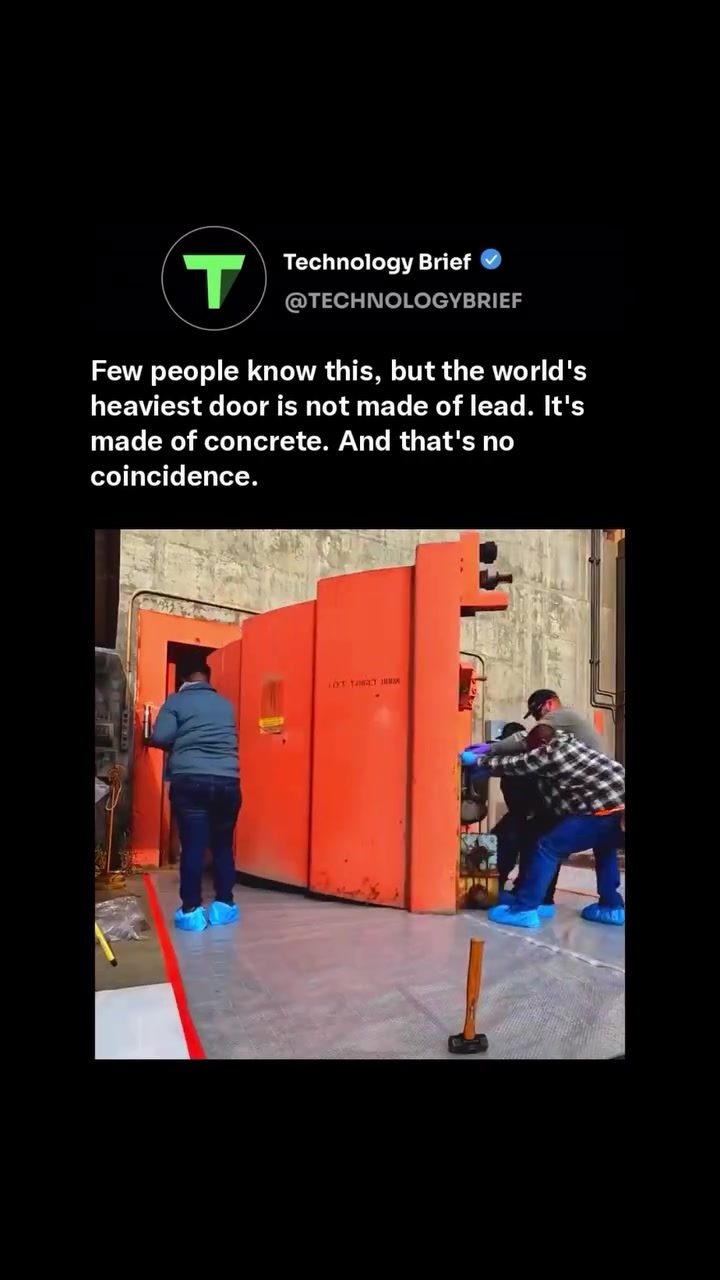
The Heavy Concrete Door at Lawrence Livermore National Laboratory
The world's heaviest hinged door is an engineering marvel. Located at the Lawrence Livermore National Laboratory in California, this door weighs a staggering 97,000 pounds, which is about 44 tons, and it measures 8 feet thick and nearly 12 feet wide. Installed in 1979, the door is designed to shield the RTNS-II, a machine that generates intense fusion neutrons. What sets this door apart from conventional designs isn't its size, but the material it's made from: concrete.
This choice of material might seem unusual, especially since many might assume a door of this significance would be built from a denser material like lead. The reason for using concrete, however, is deeply rooted in the physics of neutron radiation and the challenges posed by nuclear fusion research.
The Science Behind Neutron Radiation
Nuclear fusion is a process where atomic nuclei combine to form heavier nuclei, releasing a tremendous amount of energy. To study this process, scientists need to create conditions similar to those found in the sun. This requires generating a continuous stream of high-energy neutrons, which is precisely what the RTNS-II does.
The challenge with neutron radiation is that it behaves differently from other forms of radiation. Unlike X-rays, which can be stopped by dense materials, neutrons are electrically neutral. This means they can pass through dense materials like lead with little resistance, making lead an ineffective shielding material. To slow down neutrons, scientists need to use a material with light elements, especially hydrogen, which can absorb the impact of neutrons and dissipate the energy.
Concrete, which is mixed with water, is loaded with hydrogen atoms. When neutrons collide with these hydrogen atoms, the impact is absorbed, much like how a billiard ball slows down when it hits another of equal mass. This makes concrete far more effective at blocking neutron radiation than lead, which would allow neutrons to pass through almost unaltered.
The Engineering of the Door
The door's design is another feat of engineering. Despite its immense weight, a special bearing in the hinge allows a single person to open or close it by hand. This design feature is crucial for the safety of the scientists and operators, who need to frequently access the RTNS-II for research and maintenance.
The door was built not to protect what’s inside, but to safeguard everyone on the outside. The RTNS-II generates an intense, continuous storm of neutrons, and the concrete door acts as a massive barrier, absorbing the impact and preventing dangerous radiation from escaping.
The Advanced Research at Lawrence Livermore
The RTNS-II was the world's most intense continuous source of fusion neutrons when it was in operation from 1979 to 1987. During this time, scientists from around the globe used the facility to study how high-energy neutrons affect various materials, particularly metals intended for use inside future fusion reactors. This research is pivotal in advancing our understanding of nuclear fusion and developing materials that can withstand the harsh conditions inside a fusion reactor.
Practical Tips for Nuclear Shielding
While most of us won't have to deal with neutron radiation, understanding the principles behind shielding is valuable in various engineering and scientific applications. Here are a few key takeaways:
-
Material Choice Matters: Not all dense materials are effective for shielding neutron radiation. The choice of material should be based on its ability to absorb and dissipate the energy of the radiation.
-
Hydrogen as a Shielding Material: Concrete's effectiveness in shielding neutron radiation is due to its high hydrogen content. This principle can be applied in other engineering designs where neutron shielding is required.
-
Engineering for Safety: Designing machinery and equipment with safety in mind is crucial. The door at Lawrence Livermore National Laboratory demonstrates how innovative engineering can ensure the safety of workers in high-risk environments.
Conclusion
The heavy concrete door at the Lawrence Livermore National Laboratory is more than just an engineering marvel; it's a testament to the intricate physics behind neutron radiation and the innovative solutions that can be derived from our understanding of these principles. The use of concrete over lead, the design of the door, and the research conducted at the facility all contribute to our knowledge of nuclear fusion and the development of safer, more efficient technology.
Questions readers ask
Why is the world's heaviest concrete door made of concrete instead of a denser material like lead?
Concrete is chosen for its ability to slow down and absorb neutrons, making it an effective shielding material against neutron radiation. While lead is denser, it is not as effective in shielding against neutrons. The specific composition of the concrete used in this door is tailored to optimize its neutron-absorbing properties.
What is the significance of the 97,000-pound concrete door at Lawrence Livermore National Laboratory?
The door is a critical component in shielding the RTNS-II, a fusion neutron generator. Its massive weight and thickness are designed to mitigate the unique challenges posed by neutron radiation, ensuring the safety of the facilities and personnel. It is a testament to the engineering prowess required to manage high-energy physics environments.
How does the concrete door protect against neutron radiation?
The door's concrete composition is rich in elements like hydrogen, which are effective at slowing down neutrons. This process, known as moderation, reduces the energy of the neutrons, making them easier to absorb and contain. The thickness of the door further enhances this protective effect, ensuring that neutrons are effectively shielded.
What are the dimensions of the world's heaviest concrete door?
The door measures 8 feet thick and nearly 12 feet wide. These dimensions are crucial for its functionality, as they provide the necessary mass and surface area to effectively absorb and shield against neutron radiation. The size also ensures that the door can be safely and securely maneuvered in its operational environment.
What is the RTNS-II and why does it require such a heavy door?
The RTNS-II is a fusion neutron generator used for various research purposes. It produces intense neutron radiation, which poses significant safety risks if not properly contained. The 97,000-pound concrete door is essential for shielding this radiation, preventing it from escaping and ensuring the safety of the laboratory and its surroundings.
How does the concrete door's design address the unique challenges of neutron radiation?
The door's design incorporates specific materials and structural elements that are optimized for neutron shielding. The concrete used is enriched with elements that can absorb neutrons, and the massive size of the door ensures that it can handle high doses of radiation, something that many other materials cannot achieve. This specialized design ensures the safety of the facility and its personnel.
Why was the door installed in 1979?
The door was installed in 1979 to accommodate the RTNS-II, which began operations at that time. It was designed to withstand the intense neutron radiation produced by the machine, using the best available technology and materials at the time. The door's installation marked a significant advancement in the field of radiation shielding and remains a critical component of the facility's safety measures.
Related deep dives
Similar reads based on topic and creator.




Recent articles
Fresh deep dives from the latest Reels we unpacked.




Comments
Be the first to comment.