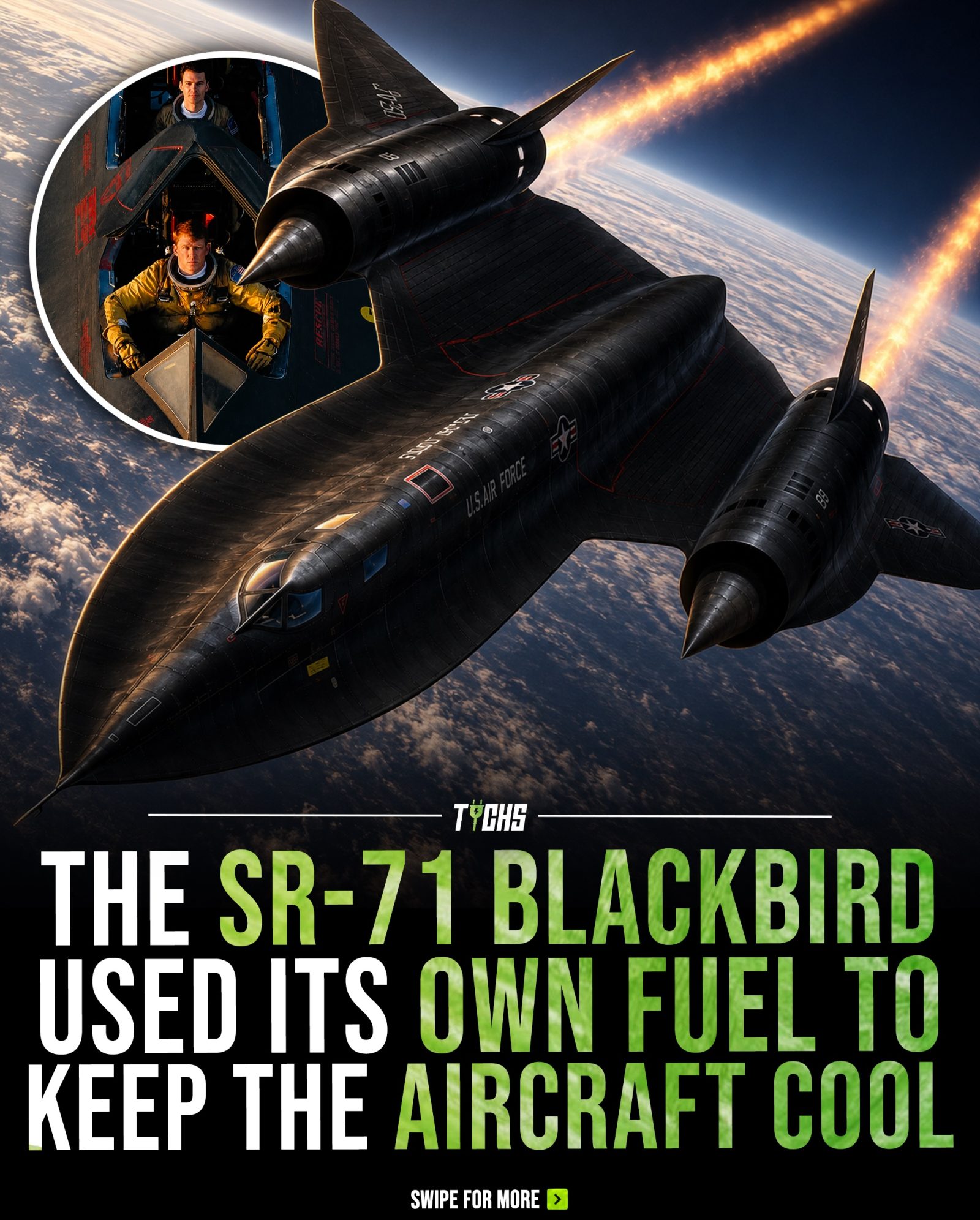
SR-71 Blackbird: The Aerodynamic Marvel
The SR-71 Blackbird stands out as one of the most remarkable aircraft ever built, renowned not just for its incredible speed but also for its innovative engineering solutions. Among its many groundbreaking features, the SR-71's unique cooling system, which utilized its fuel to manage extreme temperatures, is particularly noteworthy.
The Need for Speed and Cooling
Flying at over Mach 3, the SR-71 experienced conditions that few other aircraft have ever encountered. This extraordinary speed generated an immense amount of heat, causing the aircraft's skin to reach temperatures that could have been catastrophic for its critical systems. To counteract this, the SR-71 employed a sophisticated cooling mechanism that leveraged its specially formulated JP-7 fuel.
Fuel as a Coolant
The SR-71's fuel, JP-7, was designed to absorb heat from the aircraft's various systems, including the cockpit, electronics, and engine components. This process involved circulating the fuel through the aircraft before it was burned in the engines, effectively reducing the risk of overheating and protecting critical systems. This ingenious engineering solution allowed the Blackbird to operate in conditions that most aircraft could not survive, making it a true marvel of aviation technology.
Innovative Engineering
The SR-71's use of its own fuel as a coolant was a testament to the innovative engineering of the U.S. Air Force. The aircraft's design incorporated several other advanced features, all aimed at optimizing performance and reliability under extreme conditions. The Blackbird’s high-speed capabilities and heat management systems were pivotal in making it one of the greatest technological achievements in aviation history.
The Cockpit and Pilot Experience
The cockpit of the SR-71 was designed to provide pilots with the necessary tools and comfort to operate the aircraft effectively under extreme conditions. The detailed view of the cockpit interior showcased in the frames highlights the advanced instrumentation and ergonomic design that ensured the pilot could focus on flying the aircraft without being overwhelmed by the harsh conditions.
The Blackbird in Flight
The SR-71's performance in flight was a testament to its exceptional engineering. It was capable of sustained speeds over Mach 3 and could reach altitudes of over 85,000 feet, making it a formidable aircraft in terms of both speed and altitude. The frames depicting the Blackbird in flight over clouds and mountains emphasize its aerodynamic prowess and the unique experience of piloting such an aircraft.
Practical Tips: Aviation Engineering
For those interested in aviation engineering, the SR-71 Blackbird provides several practical tips and insights:
- Heat Management: Understand the importance of effective heat management in high-speed aircraft. The SR-71's use of fuel as a coolant is a prime example of innovative heat management.
- Fuel Efficiency: Consider the role of fuel in not just propulsion but also as a component of the aircraft's cooling system. This dual functionality can be a game-changer in aviation design.
- Material Science: The choice of materials for the aircraft's skin and interior components is crucial. The SR-71's design utilized materials that could withstand extreme temperatures and pressures.
- Ergonomics and Design: The cockpit design and pilot ergonomics are essential for maintaining performance and safety. The SR-71's cockpit was designed with these factors in mind, ensuring that the pilot could operate effectively under extreme conditions.
- Innovative Solutions: Always look for innovative solutions to common problems. The SR-71's use of fuel as a coolant was a novel approach that addressed a critical issue in high-speed flight.
Important Takeaways
- Speed and Heat: High speed generates immense heat, which can be managed through innovative cooling systems. The SR-71's use of its fuel to absorb heat is a prime example.
- Advanced Engineering: The SR-71's design incorporates several advanced engineering features, from its fuel system to its aerodynamic structure. These features collectively make it a remarkable aircraft.
- Pilot Experience: The cockpit design and pilot ergonomics are crucial for maintaining performance and safety. The SR-71's cockpit was designed with these factors in mind, ensuring that the pilot could operate effectively under extreme conditions.
- Historical Significance: The SR-71 Blackbird remains one of the greatest technological achievements in aviation history, showcasing the potential of innovative engineering and design.
Conclusion
The SR-71 Blackbird is a testament to the incredible advancements in aviation engineering. Its unique use of fuel as a coolant, along with other innovative features, allowed it to achieve speeds and altitudes that were unheard of at the time. These engineering solutions highlight the importance of innovative design and material science in the field of aviation.
Questions readers ask
What made the SR-71 Blackbird's speed so groundbreaking?
The SR-71 Blackbird's speed was groundbreaking because it could fly at over Mach 3, which is more than 2,200 miles per hour. This speed was unprecedented for sustained flight, making the SR-71 one of the fastest aircraft ever built.
How did the SR-71 Blackbird manage the extreme heat generated by its high speed?
The SR-71 used a unique cooling system that circulated its fuel through the aircraft's structure. This system absorbed and dissipated the intense heat generated by flying at high speeds, protecting the aircraft's systems from the extreme temperatures.
What role did the SR-71 Blackbird's fuel system play in its design?
The SR-71's fuel system was integral to its design, serving a dual purpose. It not only powered the engines but also acted as a coolant, circulating through the aircraft to manage the extreme heat generated by high-speed flight.
What were some of the key aerodynamics features of the SR-71 Blackbird?
The SR-71 Blackbird featured a unique design with a long, slender fuselage and distinctive wing shape, optimized for high-speed flight. Its aerodynamic innovations allowed it to maintain stability and control at speeds over Mach 3.
How did the SR-71 Blackbird's cockpit design support its high-speed missions?
The SR-71's cockpit was designed to withstand the extreme conditions of high-speed flight, including high G-forces and intense heat. It featured advanced avionics and ergonomics to support the pilots' performance during long, high-speed missions.
What other innovative engineering solutions did the SR-71 Blackbird employ?
In addition to its unique cooling system, the SR-71 employed advanced materials like titanium for its airframe, which could withstand the extreme temperatures of high-speed flight. It also used advanced engine designs and a unique fuel delivery system.
What is the significance of the SR-71 Blackbird in military aviation technology?
The SR-71 Blackbird is significant because it pushed the boundaries of what was thought possible in aviation design. Its innovations in speed, cooling, and materials have influenced subsequent aircraft designs and continue to inspire aerospace engineers.
Related deep dives
Similar reads based on topic and creator.




Recent articles
Fresh deep dives from the latest Reels we unpacked.




Comments
Be the first to comment.