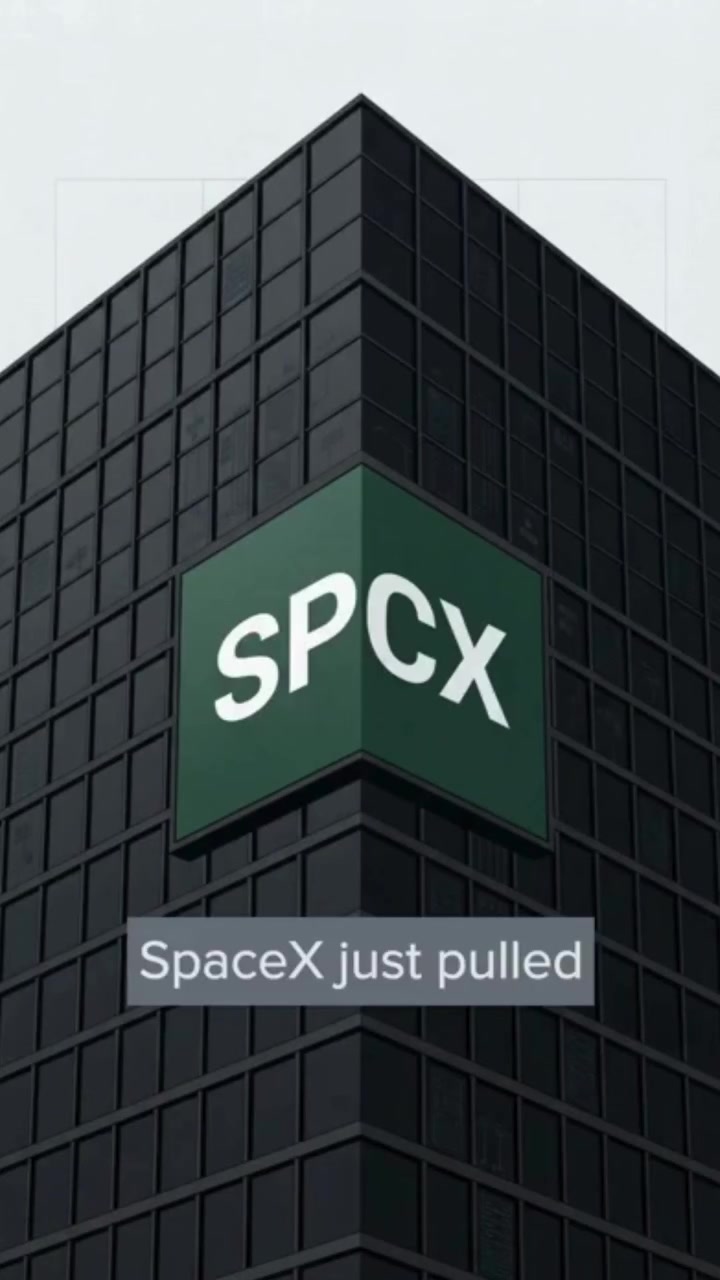
The world's largest IPO in stock market history — just shy of a $2 trillion valuation — is not a rocket company. That’s the surprising revelation from SpaceX's 2026 financial filing. The public knows SpaceX for its iconic rockets, but those aren't where profits bloom. The actual cornerstones of SpaceX’s business model are launching satellites and providing telecommunication and cloud services.
The Two-Tiered Model
To understand how SpaceX makes money, picture this: a two-layered model, with Launch Services anchoring the first tier. It consists of two components: Starlink (Telecom) and SpaceX-AI (Cloud) Launch Services includes developing and maintaining the rockets and spacecraft. But it’s anything but profitable— SpaceX reported a $662 million Q1 operating loss. However, the company’s rockets aren’t laid out to make quick cash. Instead, they act as expensive delivery systems, ferrying expensive satellite internet infrastructure into orbit and deploying AI data centers. The core profit engine doesn't come from making expensive rockets or even flying people to space. It's net profit from Starlink and SpaceX-AI. Satellite internet and AI data centers are the company's cash cows.
SpaceX’s Vertical Expansion
SpaceX’s strategy is driven by an almost infinite appetite for capital. This is an exception to the industry norm. The company has built a vertical expansion, one that combines space-based telecom and AI cloud services into a single business model. The success of the business model boils down to cash burn and buying in. What makes it work is investing funds in developing telecom. They burn billions of dollars in cash just to get massive, multi-billion-dollar server leases with big tech giants. That’s a profit margin. Its $1.75 trillion valuation is not based on a trip to Mars, but a global internet and AI cloud monopoly.
Launches and Losses
SpaceX’s rockets are key to the business. Skyrocketing to Mars or beyond is a costly endeavor. SpaceX balances this by using its rockets to build global satellite infrastructure. When you look at a single launch's hard costs, it’s easy to dismiss SpaceX as a cash-burning company. But that’s the moment after the big reveal: the technology required to bring a rocket to orbit is a delivery layer to deploy telecom and AI data centers. The $1.75 trillion valuation encompasses a much broader vision. This is by design. The rockets themselves are not profit generators; they’re delivery trucks that deploy a network of AI data centers. That’s how SpaceX can pursue a global distribution of digital services without making its rockets profitable. Deliveries drive this business model. The rockets must undergo rigorous maintenance and upgrades almost immediately. The goal is to secure multiple multi-billion-dollar contracts as soon as possible, building deep networks and infrastructure and acquiring key data hubs.
Telecom and Profits
SpaceX's rockets carry data centers to orbit. Once the data centers are established, they offer telecommunication services. Satellite internet services deliver internet and telephony. The data center network also hosts cloud computing services.
AI and Expansion
SpaceX isn’t just competing in the telecom with AI investments. It’s a dual-layered play. Starlink helps SpaceX establish a telecommunications network. SpaceX-AI unlocks the data center network, providing computing services. This gives SpaceX a competitive advantage. Most competitors focus on just one layer or the other. Instead, SpaceX is expanding vertically into adjacent markets.
Slimming Down on Profits
SpaceX’s current business model is purposely structured as a vertical expansion. SpaceX's profitability in telecom is designed to subsidize expensive launches. This subsidy helps fund the rockets’ cost to hide the true profitability of the telecom layer.
Investor Perspective
Understanding SpaceX’s business model in this way is more than just a stock ticker. Its business model is how they’ve pulled off the largest IPO in history. Investors were not buying rocket launches or space tourism, but high-value, high-margin global internet and AI cloud services. To truly understand its future, look past the rocket ships and into SpaceX’s profitability through telecom and AI. Investors should consider if SpaceX can reinvest profits at their most valuable and reinvest profits in the largest value sectors. Understanding SpaceX’s business model means understanding what products generate the most value. The future of the business is more than just rockets.
Questions readers ask
What exactly are the 'Launch Services' that SpaceX provides?
Launch Services' at SpaceX refer to the development, maintenance, and operation of rockets and spacecraft. These services are crucial for transporting satellites and other payloads into orbit, but they’re not particularly profitable on their own. Think of them as the delivery trucks that get SpaceX's more lucrative services—like satellite internet and AI data centers—into space.
How does SpaceX make money if its rockets aren't profitable?
SpaceX's rockets act as delivery systems for more profitable ventures. The real money comes from deploying satellite internet infrastructure through Starlink and AI data centers through SpaceX-AI. These services generate the net profit that drives the company's valuation.
What are the key components of SpaceX's business model?
SpaceX's business model is built on a two-tiered structure. The first tier is Launch Services, which includes developing and maintaining rockets. The second tier is the core profit engine, consisting of Starlink for telecom and SpaceX-AI for cloud services. These telecom and AI services are what generate the majority of SpaceX's profits.
What does SpaceX mean by 'cash burn' and how does it work in their business model?
Cash burn refers to the significant amount of money SpaceX invests in developing its telecom and AI services. By spending billions, they secure massive, multi-billion-dollar server leases with big tech companies. This investment is crucial for building the infrastructure needed to offer global internet and AI cloud services, which ultimately drive the company's valuation.
Why doesn't SpaceX focus on making its rockets profitable?
SpaceX's rockets are designed to be delivery systems rather than profit generators. The company uses these rockets to deploy satellite internet and AI data centers, which are the key profit drivers. By focusing on deliveries, SpaceX can secure multiple multi-billion-dollar contracts and build a global network of digital services.
How does SpaceX's vertical expansion strategy work?
SpaceX's vertical expansion strategy combines space-based telecom and AI cloud services into a single business model. This allows them to create a global internet and AI cloud monopoly, which is a significant part of their $1.75 trillion valuation. The strategy involves investing heavily in developing these services and securing long-term contracts with tech giants.
What is the primary goal of SpaceX's rocket maintenance and upgrades?
The primary goal of SpaceX's rocket maintenance and upgrades is to ensure that the rockets can continue to deploy the company's telecom and AI infrastructure efficiently. This allows SpaceX to secure multiple multi-billion-dollar contracts and build a robust global network of digital services, which are the real profit drivers for the company.
Related deep dives
Similar reads based on topic and creator.




Recent articles
Fresh deep dives from the latest Reels we unpacked.




Comments
Be the first to comment.