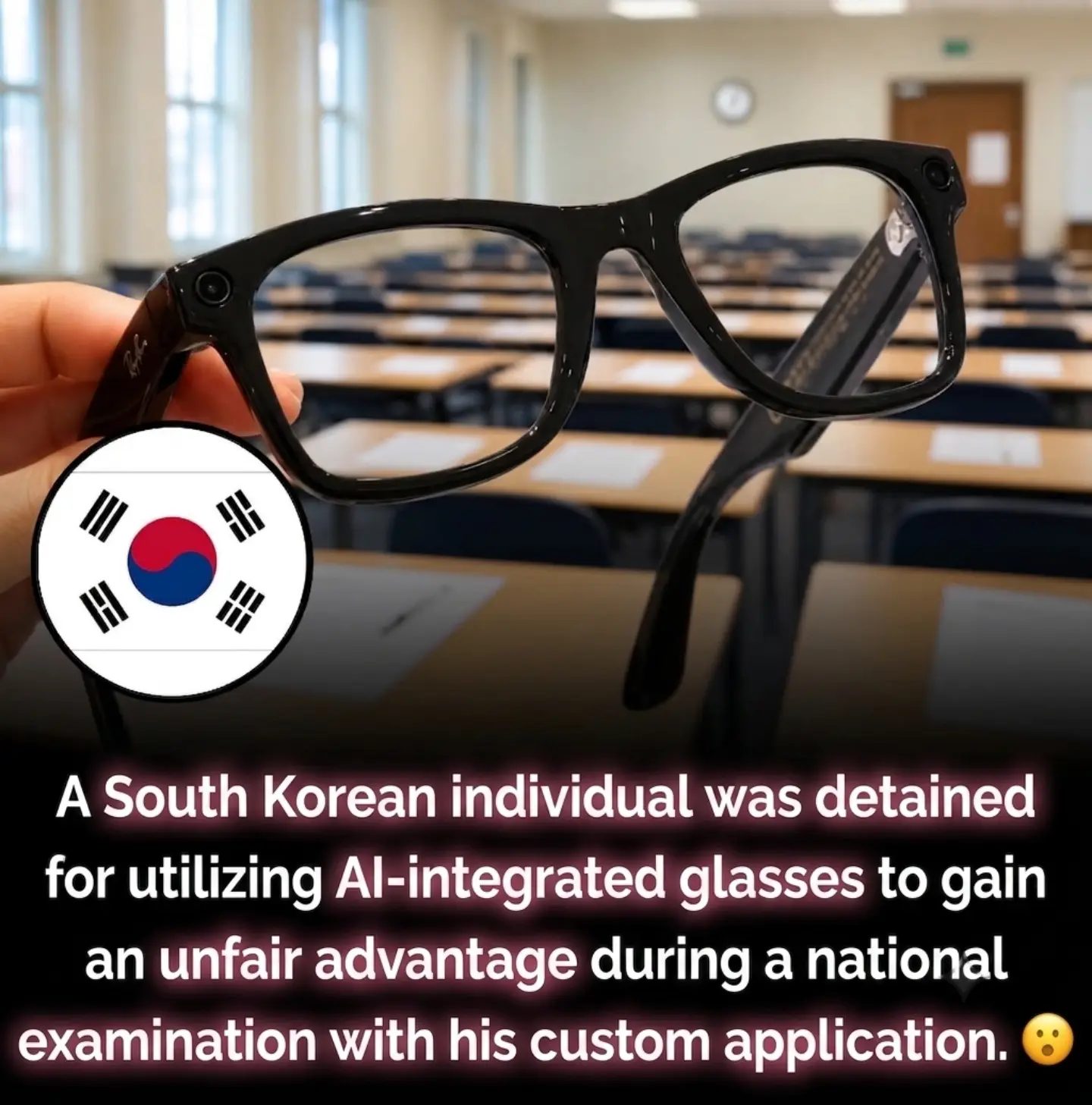
The Rise of AI-Smart Glasses in Academic Dishonesty
In the realm of modern technology, the integration of AI into everyday devices has opened up myriad possibilities. Lately, the focus has shifted to Ray-Ban glasses equipped with AI capabilities. While these glasses are innovative, they have a dark side: their use in cheating during exams.
Why This Matters
The prevalence of smart glasses can provide a unique advantage to those who misuse them. When these AI-integrated glasses are used in an exam setting, it leads to a severe breach of academic integrity. The case of a South Korean man who was detained for using such glasses during a national examination in Gwangju underlines this issue. This incident raises questions about the security of exams and the ethical implications of AI-integrated technology.
The Mechanics of AI-Smart Glasses
How They Work
AI-integrated glasses function by combining several advanced technologies:
- Micro-Lens Camera: A small, hidden lens scans the exam paper, capturing the content in real time.
- Remote AI Processing: The data from the micro-lens is transmitted to a remote AI system. This AI processes the information to solve the questions.
- Heads-Up Display (HUD): The answers are then projected directly onto the lenses, providing the user with real-time solutions that are invisible to others.
The Detection Process
The incident began with a supervisor noticing an unusual reflection on a candidate's lenses. This observation led to the discovery of the covert AI system. The reflective nature of the lenses betrayed their true purpose, highlighting the subtle yet critical aspects of detecting such cheating mechanisms.
The Case of the Man in His 40s
Motivation Behind the Act
The individual who was detained was a man in his 40s. The motive behind his actions was not merely to pass the exam but to see if his creation could infiltrate and beat the system. His confession underscores a deeper curiosity and perhaps a desire to test the limits of his invention, rather than a need for the certification.
This particular case highlights the human element behind the technical capabilities. The man's actions were not driven by a need for academic success but by a desire to prove the capabilities of his creation. This case marks the first-ever criminal prosecution for AI-smart-glass cheating in South Korea.
The Implications for Exam Security
The Dawn of a New Era
The use of AI-integrated glasses in exams poses a significant threat to traditional testing methods. With the advancement of technology, the lines between legitimate use and cheating are becoming increasingly blurred. This case in South Korea is a harbinger of what might become a more widespread issue.
Challenges for Testing Authorities
Testing authorities are now faced with a new challenge: ensuring the security of exams in the age of AI. With the ability to disguise high-tech cheating devices as everyday eyewear, the traditional methods of monitoring and supervision are no longer sufficient. The era of secure, traditional exams is officially over.
Practical Tips for Testing Authorities
Advanced Surveillance
Implementing advanced surveillance systems, including infrared cameras and real-time monitoring, can help detect unusual reflections or movements. These systems can be integrated with AI to flag suspicious activities in real-time, ensuring immediate intervention.
Regular Updates and Training
Regular updates and training for staff on the latest cheating methods and technologies are crucial. This ensures that supervisors are well-equipped to recognize and respond to emerging threats.
Collaboration with Tech Companies
Collaborating with technology companies to develop countermeasures can be beneficial. By working with tech experts, authorities can stay ahead of the curve and develop more effective detection methods.
Important Takeaways
- AI-integrated glasses are a real threat to exam integrity.
- Traditional methods of monitoring and supervision are no longer sufficient.
- Advanced surveillance, regular training, and collaboration with tech companies are essential steps to enhance exam security.
- The case in South Korea serves as a wake-up call for testing authorities worldwide.
Conclusion
The use of AI-integrated glasses in exams represents a significant challenge to academic integrity. As technology continues to advance, it is crucial for authorities to stay vigilant and adapt their methods to maintain the security and fairness of exams. By understanding the mechanics and implications of these devices, we can work towards creating a more secure and equitable testing environment.
Questions readers ask
What are AI-powered smart glasses and how do they work in exam cheating?
AI-powered smart glasses, such as certain Ray-Ban models, are equipped with cameras and heads-up displays that can capture exam questions and send them to remote AI systems. These systems then provide real-time answers, allowing users to cheat during exams by relaying the information back to the wearer. This process happens discreetly, making detection challenging.
What was the South Korean cheating scandal involving AI glasses about?
The scandal involved a man who was arrested for using AI-powered smart glasses to cheat during a national examination in Gwangju, South Korea. He utilized the glasses' capabilities to receive real-time answers, which highlighted the vulnerability of exam integrity in the face of advanced technology.
Which brands are of concern in exam cheating?
The article specifically mentions Ray-Ban models in context of AI glasses, which are equipped with camera and heads-up displays. However, any smart glasses with similar capabilities could potentially be used for cheating. It's essential to be aware of the specific features and models that might pose a risk.
How can AI glasses compromise exam integrity?
AI glasses can compromise exam integrity by providing users with real-time answers to exam questions, thereby giving them an unfair advantage. This undermines the fairness of assessments and can lead to a significant breach of exam rules.
What are the ethical implications of AI glasses cheating?
The use of AI glasses for cheating raises serious ethical concerns, including the misuse of technology, unfair advantage, and the potential devaluation of academic achievements. It also poses questions about the responsibilities of technology companies and exam administrators in preventing such misuse.
What measures can be taken to prevent cheating with AI glasses?
To prevent cheating with AI glasses, exam administrators can implement stricter surveillance, use of anti-cheating software, and enforce rules that prohibit the use of smart devices during exams. Additionally, advancements in AI detection systems and increased awareness can help mitigate the risk of such incidents.
What was the outcome of the South Korean cheating scandal?
As of the article's publication, the South Korean man involved in the cheating scandal was detained. The exact penalties or long-term consequences were not specified, but such actions underscore the severity with which authorities view this type of academic dishonesty.
Related deep dives
Similar reads based on topic and creator.




Recent articles
Fresh deep dives from the latest Reels we unpacked.




Comments
Be the first to comment.