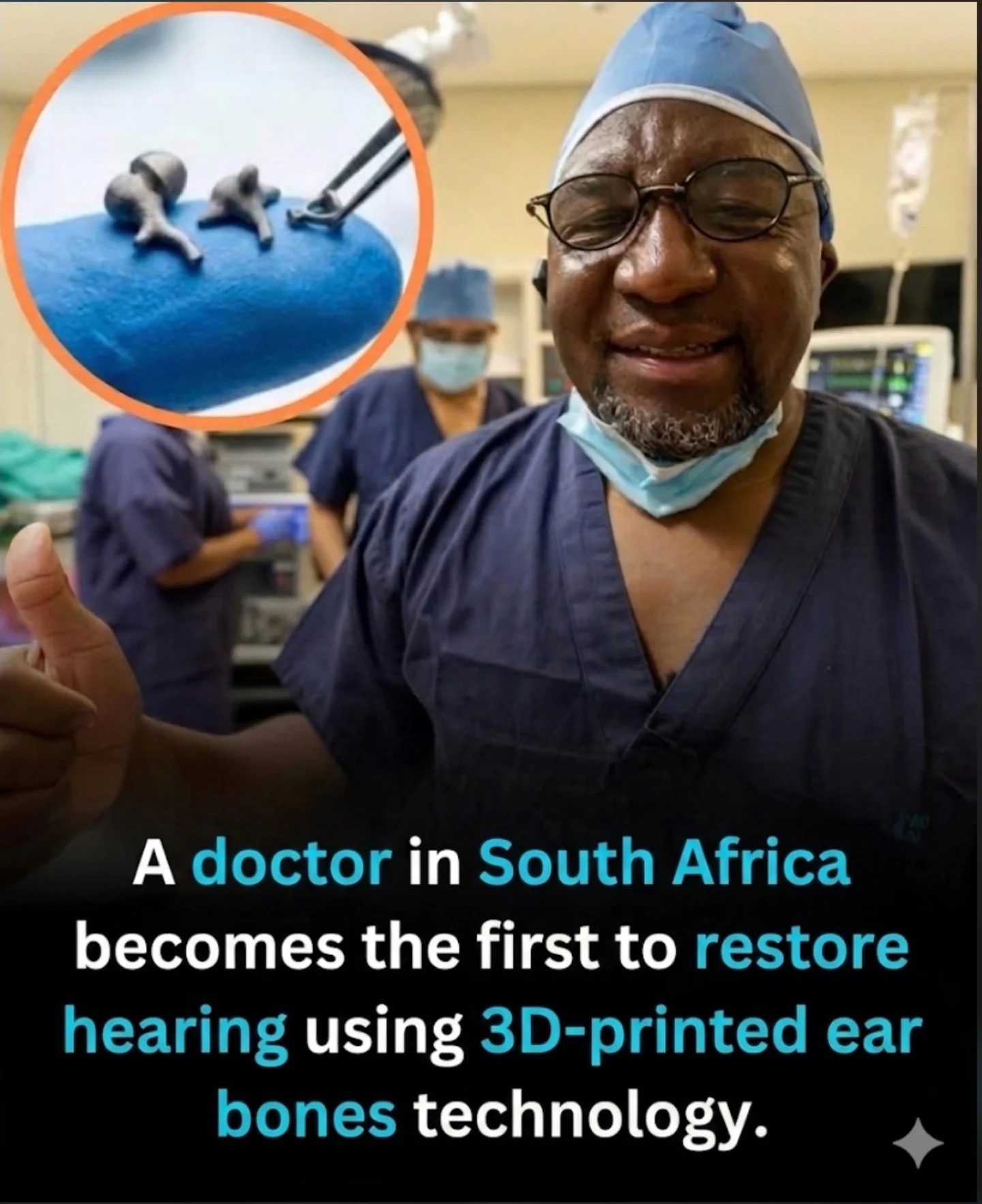
3D-printed ear restoration
3D-printed ear bone technology has revolutionized the treatment of conductive hearing loss, with a landmark procedure performed in South Africa in 2019. Conductive hearing loss occurs when sound is not conducted efficiently through the outer ear canal to the eardrum and the tiny bones of the middle ear. This often results from damage to the middle ear bones, known as ossicles, which include the malleus, incus, and stapes.
Context / Why this matters
Conductive hearing loss affects millions of people worldwide, significantly impacting their quality of life. Traditional treatments, such as reconstructive surgeries, have often been problematic due to the high risk of displacement or failure of the implanted prosthetics. The innovation in 3D-printed ear bones offers a more reliable and customizable solution, potentially transforming the lives of countless patients.
Main discussion
The significance of 3D-printed ear bones
The groundbreaking procedure performed at Steve Biko Academic Hospital in Pretoria, South Africa, marked the world's first successful transplant of 3D-printed middle ear bones. Led by Professor Mashudu Tshifularo and his surgical team from the University of Pretoria, this milestone utilized advanced 3D printing technology to create precise, biocompatible replacements for damaged ear bones.
The process of 3D-printed ear bone transplantation
Professor Tshifularo and his team employed high-resolution Computed Tomography (CT) scans to map the exact dimensions of the patient's missing ear anatomy. This precise mapping allowed for the 3D printing of perfect biometric replacements made from biocompatible titanium. The use of 3D printing technology not only reduces the duration of surgical interventions but also minimizes postoperative risks associated with traditional prosthetics.
The middle ear consists of three tiny bones—the malleus, incus, and stapes—which are crucial for transmitting sound vibrations to the inner ear. When these bones are destroyed by physical trauma or chronic infection, patients experience significant hearing impairment. The 3D-printed ear bones provide a highly customizable, accessible, and long-term solution for patients suffering from ossicular chain damage.
Advantages of 3D-printed ear bones
One of the key advantages of 3D-printed ear bones is their biocompatibility. Titanium, the material used for the 3D-printed replacements, is well-known for its biocompatibility and durability, making it an ideal choice for surgical implants. Additionally, the precision offered by 3D printing ensures that the implants fit perfectly, reducing the risk of displacement or failure.
Another significant benefit is the reduction in surgical intervention time. Traditional reconstructive surgeries often require extensive procedures to fit and secure the prosthetics. With 3D-printed ear bones, the surgery is less invasive and more efficient, leading to quicker recovery times for patients.
Clinical success and patient outcomes
The successful procedure in South Africa demonstrated the efficacy of 3D-printed ear bones in restoring hearing. Patients who underwent this innovative treatment reported significant improvements in their hearing, with many experiencing a full restoration of their auditory function. The procedure's success has paved the way for wider adoption of 3D-printed ear bones in treating conductive hearing loss.
Practical tips
What to expect from 3D-printed ear bone surgery
If you or someone you know is considering 3D-printed ear bone surgery, it's essential to understand the process and what to expect. The surgery typically involves a pre-operative CT scan to map the ear anatomy, followed by the 3D printing of custom ear bones. The actual surgery is minimally invasive, with a shorter recovery time compared to traditional methods.
Finding a qualified surgeon
It's crucial to find a qualified and experienced surgeon who specializes in 3D-printed ear bone surgery. Look for surgeons associated with renowned medical institutions, such as the University of Pretoria, and those who have a proven track record in performing similar procedures. Consulting with multiple specialists can also provide a clearer understanding of the benefits and risks.
Post-operative care
Post-operative care is essential for a successful outcome. Follow your surgeon's instructions carefully, and attend all follow-up appointments. Proper care, including keeping the surgical site clean and avoiding activities that could disrupt the healing process, will help ensure a smooth recovery and the best possible results.
Important takeaways
The successful implementation of 3D-printed ear bones in South Africa highlights the transformative potential of additive manufacturing in medical technology. This innovative approach offers a highly customizable, accessible, and long-term solution for patients suffering from ossicular chain damage. By integrating advanced 3D printing with reconstructive surgery, the procedure provides a targeted and effective treatment for conductive hearing loss, significantly improving patients' quality of life.
Conclusion
The advent of 3D-printed ear bone technology represents a significant leap forward in the treatment of conductive hearing loss. The groundbreaking procedure in South Africa showcases the potential of this innovative approach, offering patients a reliable and long-term solution. As the technology continues to evolve, it is poised to revolutionize the field of reconstructive surgery, providing hope and improved auditory function for millions of people worldwide.
Questions readers ask
What makes the 3D-printed ear bone surgery in South Africa a global first?
The 3D-printed ear bone surgery performed in South Africa in 2019 is considered a global first because it was the initial successful implementation of 3D-printed ear bones to treat conductive hearing loss. The procedure involved replacing the damaged ossicles with precisely 3D-printed equivalents.
What are the advantages of using 3D-printed ear bones in surgery?
3D-printed ear bones offer several advantages. They provide a more precise fit compared to traditional prosthetics, reduce the risk of displacement, and offer a reliable solution for replacing damaged ear bones. This precision can lead to improved surgical outcomes and enhanced patient benefits.
Who was involved in the 3D-printed ear surgery in South Africa and where was it performed?
The groundbreaking 3D-printed ear surgery in South Africa was led by Professor Mashudulu Tshifularo. It was performed at the Steve Biko Academic Hospital in Pretoria, marking a significant milestone in the application of 3D printing in medicine.
How does 3D-printed ear surgery improve the treatment of conductive hearing loss?
3D-printed ear surgery addresses conductive hearing loss by replacing damaged ossicles with custom-made 3D-printed bones. This approach ensures a better fit and functionality, improving sound conduction through the ear and enhancing the patient's hearing abilities.
What are the potential benefits of 3D-printed ear bone implants for patients?
For patients, 3D-printed ear bone implants offer the potential for improved hearing outcomes, reduced risk of complications, and a more reliable long-term solution. This can significantly enhance their quality of life by addressing the challenges associated with conductive hearing loss.
How does 3D printing technology contribute to medical reconstruction?
3D printing in medical reconstruction allows for the creation of custom implants tailored to a patient's specific anatomy. This technology enables precise and reliable replacements for damaged or missing body parts, such as ear bones, improving surgical success rates and patient outcomes.
What is the recovery process like after a 3D-printed ear bone surgery?
The recovery process after a 3D-printed ear bone surgery typically involves a period of rest and follow-up appointments to monitor healing. Patients may experience some discomfort and swelling initially, but the precise fit of the 3D-printed implant can lead to faster recovery and improved hearing outcomes.
Related deep dives
Similar reads based on topic and creator.




Recent articles
Fresh deep dives from the latest Reels we unpacked.




Comments
Be the first to comment.