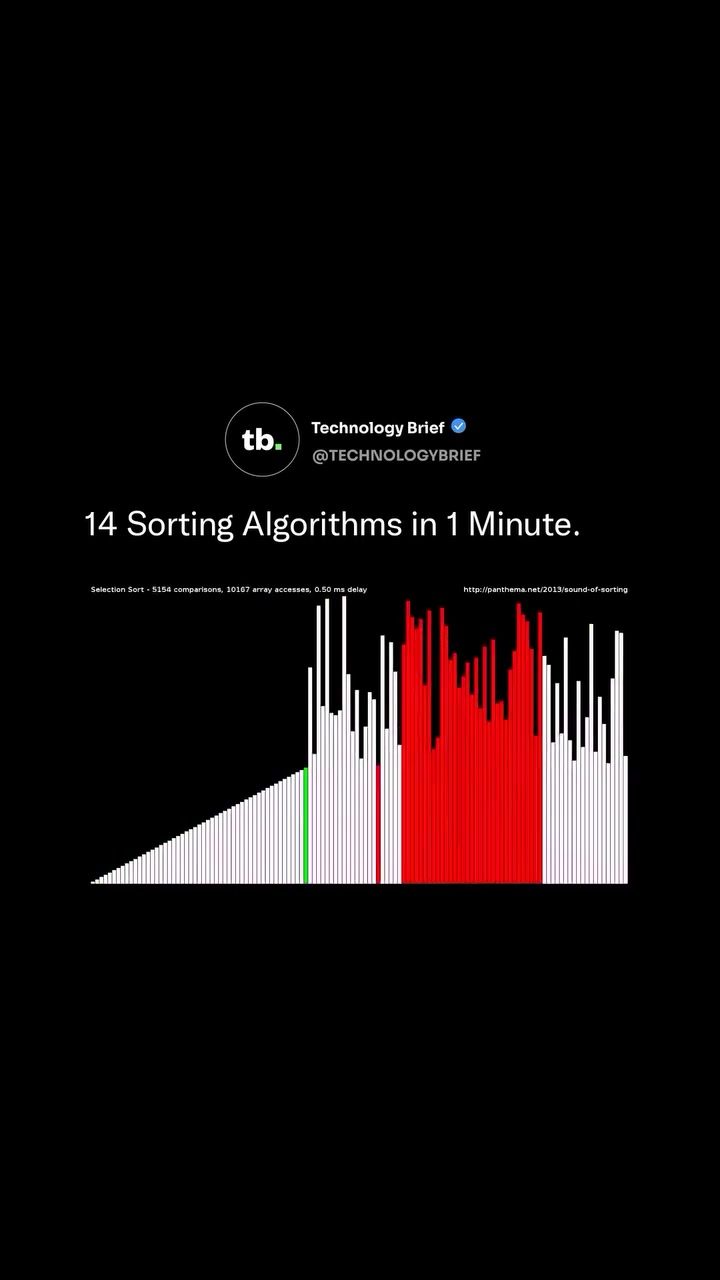
Sorting Algorithms and Their Visualization
When it comes to sorting algorithms, there's more than meets the eye. These algorithms, which are fundamental in computer science, can be visualized and even turned into an audio experience. One standout example is “The Sound of Sorting,” a free demo program created by developer Timo Bingmann in 2013. This program transforms sorting algorithms into both a visual and audio experience, making the complexities of these algorithms understandable and engaging.
Context / Why This Matters
Sorting algorithms are essential in computer science and programming. They underpin many critical operations like database indexing, data retrieval, and even the organization of data in memory. Understanding these algorithms can significantly improve the efficiency and performance of applications and systems. By turning sorting algorithms into a visual and audio experience, one can gain a deeper understanding of how each algorithm works, how they differ, and why some are more efficient than others.
Main Discussion
The Sound of Sorting
“The Sound of Sorting” program by Timo Bingmann is a unique tool that provides a sensory experience of sorting algorithms. Each bar on the screen represents a value in an array. Every time two values are compared, the program plays a tone pitched to match those values, ranging from 120 Hz up to 1,212 Hz. This creates a distinct sound signature for each algorithm as it works through the data.
Key Features of the Program
Several key features make “The Sound of Sorting” a powerful tool for understanding sorting algorithms:
- Visual Representation: Each bar on the screen represents a value in an array. As the sorting algorithm processes the array, the bars move to match the sorted values.
- Audio Feedback: Every time two values are compared, a tone is played. This creates a unique audio fingerprint for each algorithm, making it easier to distinguish between different sorts.
- Real-Time Metrics: The program tracks the exact number of comparisons and array accesses in real time, providing concrete data on the efficiency of each algorithm.
Types of Algorithms Demonstrated
The program showcases 14 different sorting algorithms, each with its unique sound and visual pattern. Some of the algorithms included are:
- Bubble Sort: Known for its simplicity but inefficiency, Bubble Sort makes thousands of repetitive swaps.
- Quick Sort: A more efficient algorithm that uses a divide-and-conquer strategy to sort the array.
- Merge Sort: Another divide-and-conquer algorithm that splits the array into halves, sorts them, and then merges them.
- Heap Sort: Utilizes a binary heap data structure to sort the elements.
- Radix Sort: A non-comparative integer sorting algorithm that sorts numbers by processing individual digits.
- Bitonic Sort: A parallel sorting algorithm that operates on bitonic sequences, which are sequences that monotonically increase and then decrease.
Efficiency Metrics
The program provides detailed metrics for each algorithm, including:
- Comparisons: The number of times the algorithm compares two values.
- Array Accesses: The number of times the algorithm accesses elements in the array.
- Delay: The time taken by the algorithm to sort the array.
Practical Tips
Choosing the Right Algorithm
When selecting a sorting algorithm, it's crucial to consider the specific needs of your application. For example:
- If you need a simple, easy-to-understand algorithm, Bubble Sort might be a good choice, despite its inefficiency.
- For more efficient sorting, especially on large datasets, Quick Sort or Merge Sort are better options.
- If you're dealing with integers and need a non-comparative sort, Radix Sort is a good choice.
Optimizing Performance
To optimize the performance of your sorting algorithms, consider the following tips:
- Understand the Data: Different algorithms work better with different types of data. For example, Radix Sort is efficient for sorting integers.
- Profile Your Algorithm: Use tools like “The Sound of Sorting” to profile your algorithm and identify bottlenecks.
- Choose the Right Data Structure: The choice of data structure can significantly impact the performance of your sorting algorithm. For example, using a binary heap can make Heap Sort more efficient.
Important Takeaways
Understanding sorting algorithms is essential for anyone working in computer science or programming. The visual and audio experience provided by “The Sound of Sorting” can help deepen your understanding of these algorithms and make them more engaging.
Efficiency Matters
Different sorting algorithms have different efficiency levels. Some algorithms, like Bubble Sort, are inefficient and should be avoided for large datasets. Others, like Quick Sort and Merge Sort, are much more efficient and are commonly used in practice.
Real-Time Metrics
Using real-time metrics can help you optimize your sorting algorithms. Tracking comparisons, array accesses, and delay time can provide valuable insights into the performance of your algorithms.
Visual and Audio Feedback
Visual and audio feedback can make sorting algorithms more understandable and engaging. Tools like “The Sound of Sorting” provide a unique way to experience sorting algorithms and can help you gain a deeper understanding of how they work.
Conclusion
Sorting algorithms are a fundamental part of computer science, and understanding them can significantly improve the performance of your applications. Using tools like “The Sound of Sorting” can provide a unique and engaging way to experience these algorithms and gain a deeper understanding of their workings. Whether you're a student, a programmer, or a data scientist, understanding sorting algorithms is essential and can open up new possibilities for optimizing performance and efficiency.
Questions readers ask
What are sorting algorithms and why are they important?
Sorting algorithms are sets of instructions used to arrange items in a specific order. They are crucial in computer science for optimizing operations like database indexing, data retrieval, and memory organization. Understanding these algorithms can help improve the performance of software applications and systems.
How does visualizing sorting algorithms help in understanding them?
Visualizing sorting algorithms provides a clear, step-by-step representation of how data is rearranged. This makes it easier to grasp the logic behind different sorting techniques. Interactive sorting visualizations allow users to see the process unfold, which can make complex algorithms more intuitive to understand.
What is 'The Sound of Sorting' and how does it work?
'The Sound of Sorting' is a free demo program created by developer Timo Bingmann. It transforms sorting algorithms into both visual and audio experiences. The visuals show the data being sorted, while the audio represents the algorithm's actions, making it a unique and engaging way to learn about sorting techniques and their efficiency.
Which sorting algorithms are commonly visualized and compared?
Some of the most commonly visualized sorting algorithms include bitonic sorting, selection sort, and heap sort. Comparing these algorithms visually helps users understand their unique processes and efficiency. Other popular algorithms for visualization include quicksort, mergesort, and bubble sort.
Can I use sorting algorithm visualizations to compare their efficiency?
Yes, visualizations can help compare the efficiency of sorting algorithms. By observing how quickly and efficiently an algorithm sorts data, users can gain insights into its performance. For example, visualizing an algorithm on arrays of different sizes and with different types of data can provide a clear comparison of speed and efficiency.
Are there easy sorting algorithms for beginners to learn?
Yes, there are several easy sorting algorithms suitable for beginners. Selection sort and bubble sort are popular choices because their steps are straightforward and easy to understand. Interactive visualizations of these algorithms can further simplify the learning process and enhance comprehension.
How can audio representations help in understanding sorting algorithms?
Audio representations of sorting algorithms provide an additional sensory layer to the learning process. By listening to the sounds generated by different sorting actions, users can better understand the rhythm and flow of each algorithm. This multimodal approach can make abstract concepts more tangible and memorable.
Related deep dives
Similar reads based on topic and creator.




Recent articles
Fresh deep dives from the latest Reels we unpacked.




Comments
Be the first to comment.