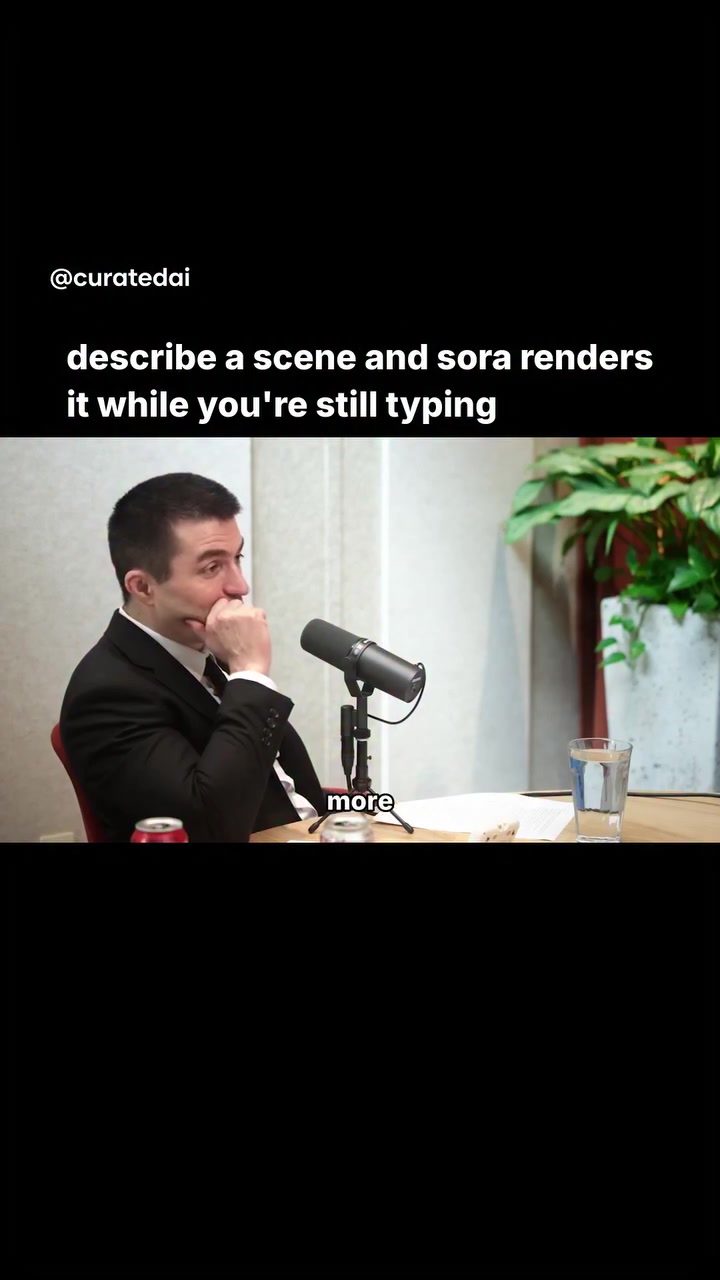
Real-Time AI Rendering with Sora: A Glimpse into the Future
Imagine describing a scene in words and watching it come to life on your screen as you type. This is the exciting promise of AI rendering, exemplified by the AI software Sora. In this process, AI generates visuals based on text descriptions, creating a seamless blend of language and imagery.
Why This Matters
The implications of real-time AI rendering are profound. This technology has the potential to revolutionize industries such as gaming, film, and graphic design. It can enhance productivity, open up new creative possibilities, and even democratize content creation.
Main Discussion
How Real-Time AI Rendering Works
Real-time AI rendering involves converting textual descriptions into visual representations in real-time. This process requires sophisticated algorithms capable of understanding and translating textual information into visual elements. For instance, Sora from CuratedAI offers a practical application of this technology, allowing users to describe scenes and see them rendered immediately.
The process begins with a user typing a detailed description of a scene. As the text is input, the AI software interprets the words and starts generating corresponding visuals. This means that the user can see the scene evolving on the screen simultaneously with their typing, creating an interactive and dynamic experience.
The Magic of LLMs in Visual Data
Large Language Models (LLMs) have shown remarkable capabilities in understanding and generating human language. The question arises: Can the same magic of LLMs be applied to visual data? The short answer is yes, but with significant challenges.
Creating visual representations from textual descriptions involves complex tasks such as understanding context, interpreting nuances, and generating coherent images. While the technology is promising, engineers still have work to do to ensure that the AI can handle these intricacies effectively.
The Dangers and Challenges
Despite the excitement around real-time AI rendering, there are valid concerns to address. One major issue is the potential for the technology to be misused. For example, AI-generated content could be used to create deepfakes or other forms of misinformation. Ensuring the ethical use of AI rendering is crucial.
Another challenge is the efficiency and scalability of the system. Real-time rendering requires significant computational resources, and scaling this technology to meet the demands of a global user base is no small feat. The system must be optimized to deliver the scale and efficiency that users will expect.
Practical Tips
Getting Started with AI Rendering
If you're interested in exploring AI rendering, here are some practical tips to get you started:
- Start Small: Begin with simple descriptions and gradually move to more complex scenes as you become familiar with the technology.
- Use Descriptive Language: The more detailed your descriptions, the better the AI can generate accurate visuals. Pay attention to details like color, texture, and size.
- Experiment with Different Tools: While Sora is a notable example, explore other AI rendering tools to see which one best fits your needs.
Optimizing Performance
To ensure the best performance, consider the following:
- Hardware Requirements: Make sure your computer meets the hardware requirements for the AI software. Real-time rendering can be resource-intensive, so a powerful processor and sufficient RAM are essential.
- Internet Connection: A stable and fast internet connection is crucial, especially if the AI rendering software relies on cloud-based processing.
- Updates and Patches: Keep your software up-to-date with the latest patches and updates. These often include performance improvements and bug fixes.
Important Takeaways
- Real-Time Rendering: AI software like Sora can render visuals in real-time as the user types a description, opening up new creative possibilities.
- Challenges and Concerns: While the technology is exciting, it comes with challenges such as efficiency, scalability, and ethical considerations.
- Practical Applications: AI rendering can revolutionize industries such as gaming, film, and graphic design, making content creation more accessible and dynamic.
Conclusion
The world of AI rendering is at the brink of a breakthrough with tools like Sora from CuratedAI. Real-time rendering of visuals from textual descriptions offers a glimpse into the future of content creation and design. As the technology continues to evolve, it will likely become an integral part of various industries, transforming how we create and consume visual content. Embracing this exciting evolution will require overcoming significant challenges, but the potential rewards are immense.
Questions readers ask
What is Sora AI and how does it work?
Sora AI is a software that transforms written descriptions into live visuals in real-time. It merges language and imagery by generating visuals based on textual descriptions, creating a dynamic and interactive experience as you type.
Which industries can benefit from Sora AI's real-time rendering?
Sora AI's technology has the potential to reshape fields such as gaming, film, and graphic design. It can enhance productivity and creativity by allowing users to visualize their ideas instantly, opening up new possibilities in these industries.
How does real-time AI rendering enhance productivity?
Real-time AI rendering enhances productivity by providing immediate visual feedback as you create. This allows users to see their ideas come to life instantly, enabling quicker iterations and more efficient decision-making processes.
What are the implications of AI visual rendering for content creation?
AI visual rendering can democratize content creation by making it more accessible. Users do not need extensive artistic or technical skills to generate high-quality visuals, as the AI can interpret and visualize their textual descriptions.
Can AI language to image technology be used in gaming?
Yes, AI language to image technology like Sora can significantly impact gaming. It can be used to create dynamic and interactive game environments, characters, and scenes based on descriptions, enhancing the overall gaming experience and development process.
What makes Sora AI's live scene rendering unique?
Sora AI's live scene rendering is unique because it provides an instantaneous and interactive visual experience. As users type their descriptions, the AI generates corresponding visuals in real-time, allowing for immediate feedback and adjustments.
Related deep dives
Similar reads based on topic and creator.



Recent articles
Fresh deep dives from the latest Reels we unpacked.




Comments
Be the first to comment.