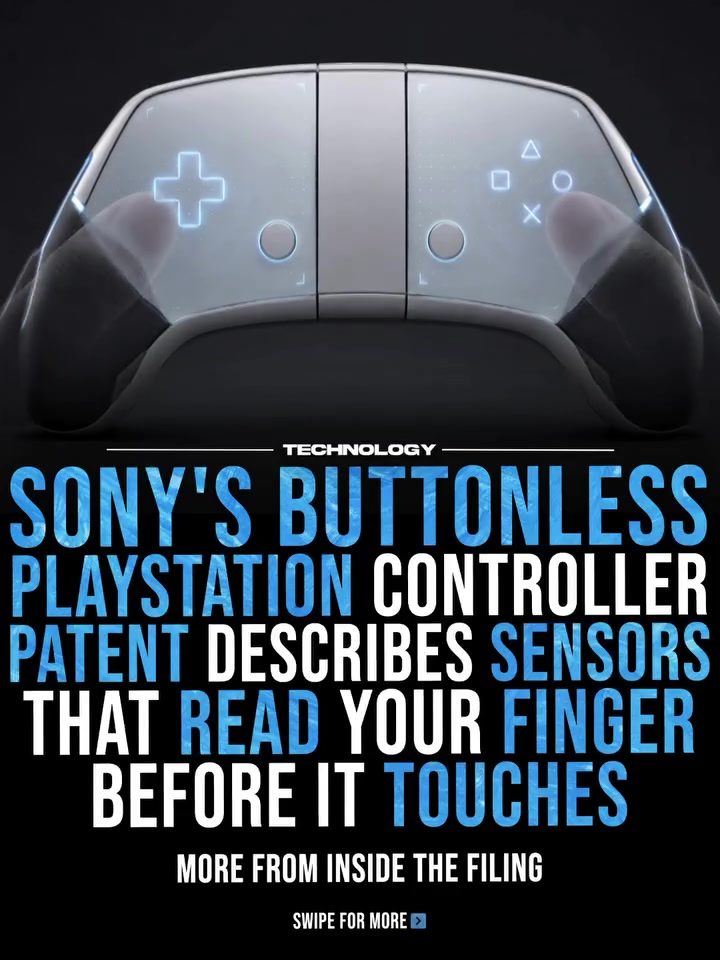
The Future of Gaming: Sony's Buttonless PlayStation Controller Patent
The gaming industry is always on the lookout for the next big innovation, and Sony's recent patent for a buttonless PlayStation controller is generating a lot of buzz. This cutting-edge concept uses hidden optical sensors to detect finger movements before they even touch the surface, potentially revolutionizing how we interact with gaming controls.
Why This Matters
As gaming technology evolves, so do the expectations of gamers. The demand for more intuitive, responsive, and customizable controls is growing. Sony's patent for a buttonless controller addresses these needs by introducing a new way to interact with games. By anticipating user input, this technology could lead to faster, more adaptive gameplay, and even enhance accessibility for players with different needs.
The Technology Behind the Patent
The patent describes a controller with a smooth touch surface equipped with hidden optical sensors. These sensors can detect a variety of finger movements and gestures, including:
- Finger approach and contact: The sensors can sense when a finger is nearing or touching the surface, allowing for input detection before physical contact.
- Pressure and heat: The technology can read the pressure exerted by a finger and the heat emitted, providing a more nuanced understanding of the user's input.
- Swipes, pinches, and other gestures: Beyond traditional button presses, the controller can recognize a wide range of gestures, opening up new possibilities for gameplay.
Customization and Adaptability
One of the most exciting aspects of this patent is the potential for customization. The layout of the controller surface could change instantly to suit different games, providing a tailored experience for each title. Here are a few ways the controller could adapt:
- Game-specific layouts: Different games could have unique control schemes that appear on the surface as needed.
- Left or right-handed use: The layout could mirror itself to accommodate left-handed players, making the controller more inclusive.
- Accessibility features: The controller could simplify gameplay by merging multiple controls into one oversized button, making it easier for players with disabilities to enjoy games.
Future Possibilities
It's important to note that this patent is not a confirmed product. Sony frequently files patents for experimental ideas, many of which never make it to market. However, this concept offers an intriguing glimpse into the future of gaming controls. If realized, it could lead to controllers that are:
- More intuitive: By anticipating user input, the controller could provide a more seamless and natural gaming experience.
- Highly customizable: The adaptable layout could cater to individual preferences and gaming needs.
- Enhanced accessibility: The ability to simplify controls and recognize a wide range of gestures could make gaming more accessible to players with disabilities.
Practical Tips for Gamers
While this technology is still in the patent phase, there are a few things gamers can do to stay informed and prepared for future innovations:
Stay Updated
Keep an eye on gaming news and rumors to stay updated on the latest developments. Follow trusted sources and engage with the gaming community to get the most accurate information.
Provide Feedback
If Sony ever releases a prototype or demo of this technology, don't hesitate to provide feedback. Your input could help shape the future of gaming controls and make them more inclusive and user-friendly.
Experiment with Current Technology
While waiting for future innovations, explore the customization options available in current controllers and gaming setups. This can give you a taste of what's to come and help you appreciate the advancements in gaming technology.
Important Takeaways
Sony's patent for a buttonless PlayStation controller represents a significant step forward in gaming technology. By using optical sensors to detect finger movements before contact, this concept has the potential to revolutionize how we interact with games. Key takeaways include:
- The controller uses hidden optical sensors to read finger movements and gestures.
- The layout can adapt to different games, player preferences, and accessibility needs.
- This patent is not a confirmed product, but it offers a glimpse into the future of gaming controls.
Conclusion
The gaming industry is constantly evolving, and innovations like Sony's buttonless controller patent are at the forefront of that change. While it's too early to say whether this concept will become a reality, it's clear that the future of gaming controls is heading towards greater customization, responsiveness, and adaptability. As gamers, it's exciting to imagine the possibilities and look forward to the next big thing in gaming technology. By staying informed and engaged, we can ensure that our input shapes the future of this dynamic and ever-evolving industry.
Questions readers ask
What is Sony's buttonless PlayStation controller, and how does it work?
Sony's buttonless PlayStation controller is an innovative gaming device that relies on optical sensors hidden beneath a touch surface to detect and anticipate user input. This eliminates the need for physical buttons, allowing for intuitive, gesture-based interactions, potentially enhancing gameplay with faster, more responsive controls.
How does the buttonless controller improve accessibility in gaming?
The buttonless controller can enhance accessibility by offering customizable gestures, potentially making it easier for users with physical disabilities, or those with limited dexterity, to interact with games. The adaptive technology can learn and adjust to a user's unique needs, ensuring a more inclusive gaming experience.
What are the potential benefits of gesture-based gaming interactions?
Gesture-based gaming interactions can make gameplay more immersive and natural, as users can interact with the game world through intuitive movements. This technology can also lead to faster response times, as the controller anticipates user input, and reduces the need for complex button combinations, making games more accessible to a broader audience.
How does Sony's buttonless controller compare to traditional gaming controllers?
Unlike traditional gaming controllers, Sony's buttonless design eliminates physical buttons, using optical sensors to detect gestures. This shift allows for a more intuitive and adaptive gaming experience, as the controller can learn and anticipate user input, offering a unique and potentially more engaging way to interact with games.
What are the possibilities for future advancements in gaming controller technology?
The future of gaming controllers could involve even more advanced sensor technologies, further integrating gesture-based interactions, and offering customized experiences tailored to individual users' preferences and needs. The development of AI and machine learning could also lead to controllers that adapt and evolve based on user behavior, creating a more dynamic gaming experience.
Related deep dives
Similar reads based on topic and creator.




Recent articles
Fresh deep dives from the latest Reels we unpacked.




Comments
Be the first to comment.