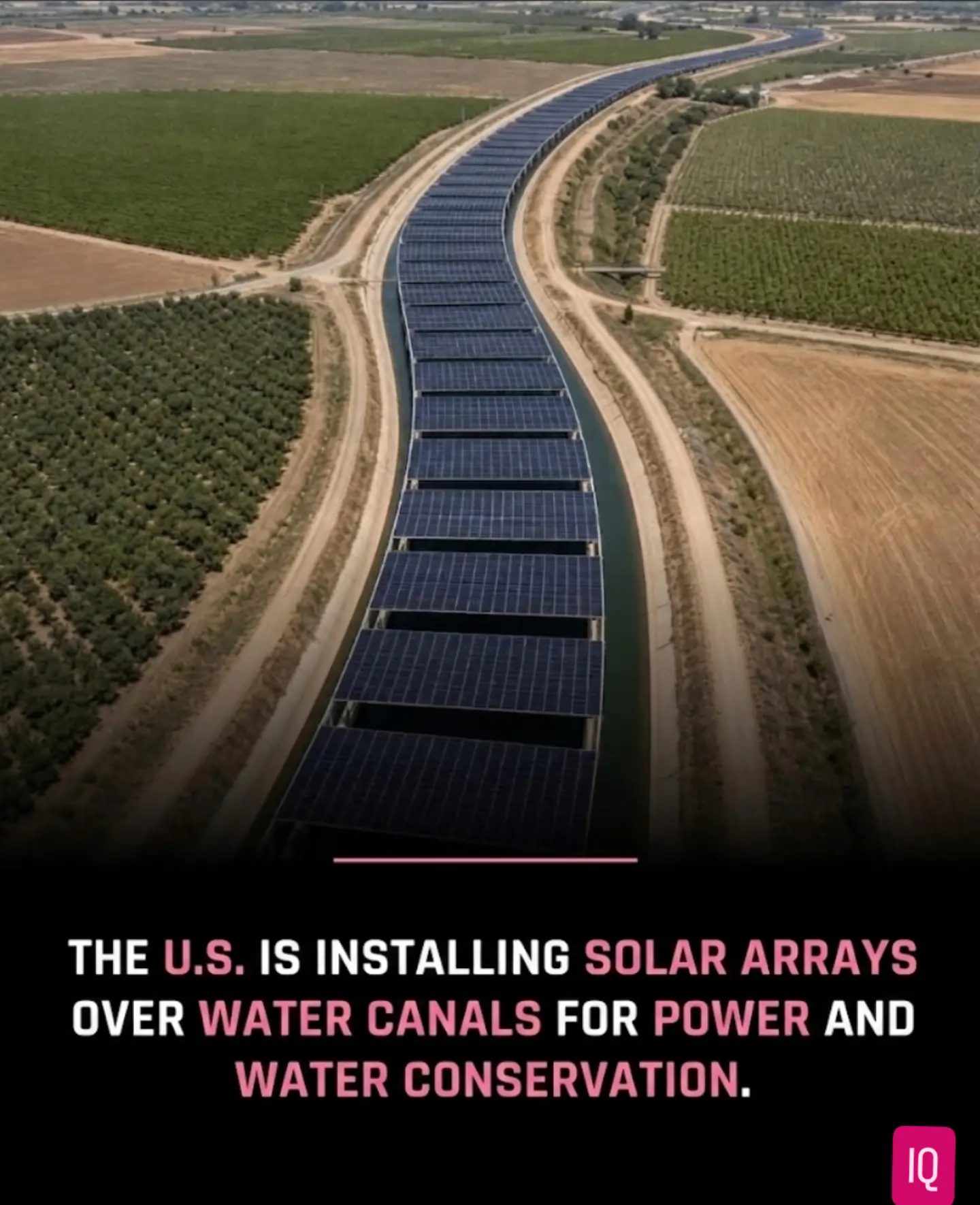
Solar Power Innovation: Generating Energy and Conserving Water through Canal Solar
The installation of solar panels over water canals is an innovative approach to renewable energy generation and water conservation. This concept, known as "canal solar," is gaining traction in the United States, with notable pilot programs like Project Nexus in California's San Joaquin Valley leading the way.
Context / Why this matters
Water and energy are two of the most critical resources for agricultural regions. The canal solar approach addresses both needs by installing photovoltaic (PV) solar panels over existing open water delivery canals. This dual-purpose infrastructure can significantly reduce water evaporation from the canals while generating renewable energy.
Main discussion
The Dual Benefits of Canal Solar
Canal solar offers a unique solution to two pressing issues: renewable energy generation and water conservation. By shading the water, the solar panels reduce evaporation, which is particularly beneficial in drought-prone regions. Simultaneously, the underlying water cools the solar panels, enhancing their efficiency.
How Canal Solar Works
The concept is straightforward: solar panels are installed above water delivery canals, creating a shaded environment that reduces water evaporation. The water beneath the panels also acts as a natural cooling system, improving the panels' energy output. This innovative approach utilizes existing infrastructure, minimizing land-use conflicts for renewable energy development.
Reducing Water Evaporation
In arid regions, water evaporation from canals can be significant. Canal solar mitigates this issue by providing shade, reducing evaporation, and conserving water. This is crucial for regions like California, where water scarcity is a persistent challenge.
Enhancing Solar Panel Efficiency
Solar panels operate more efficiently when they are cool. By positioning the panels above water, the natural cooling effect of the water increases the panels' energy output. This results in more efficient energy generation, making canal solar a highly effective approach to renewable energy.
Pilot Programs and Research
Project Nexus in California's San Joaquin Valley is a prime example of canal solar in action. The project demonstrates the feasibility of this approach and highlights its benefits for both energy generation and water conservation. Research suggests that if this strategy were scaled across California's extensive canal network, it could conserve billions of gallons of water annually and generate a substantial portion of the state's clean electricity.
The Potential for Expansion
The success of pilot programs like Project Nexus indicates a promising future for canal solar. With further development and scaling, this approach could significantly contribute to water conservation and renewable energy generation across the United States. The existing infrastructure of water canals provides an ideal base for expanding canal solar installations, making it a viable and sustainable solution.
Practical Tips
If you're considering canal solar for your region, here are some practical tips to get started:
Assess Existing Infrastructure
Identify the water delivery canals in your area and assess their suitability for solar panel installation. Existing infrastructure can significantly reduce the cost and complexity of the project.
Conduct Feasibility Studies
Before starting any installation, conduct feasibility studies to evaluate the potential benefits and challenges. Consider factors like water evaporation rates, canal dimensions, and local regulations.
Engage with Stakeholders
Collaborate with local water management authorities, agricultural communities, and renewable energy experts. Engaging with stakeholders can help you gather valuable insights and build support for your project.
Pilot Projects
Start with small-scale pilot projects to test the concept and gather data. This approach can help you refine your strategy and build a stronger case for larger-scale installations.
Important takeaways
- Dual Benefits: Canal solar offers the dual benefits of renewable energy generation and water conservation.
- Efficiency: The shady water environment improves panel efficiency and conserves water.
- Existing Infrastructure: Leveraging existing water canals reduces land-use conflicts and installation costs.
- Feasibility: Successful pilot programs like Project Nexus demonstrate the viability of this approach.
- Scalability: Scaling canal solar across extensive canal networks can significantly impact water conservation and energy generation.
Conclusion
The installation of solar panels over water canals is a groundbreaking approach to addressing water scarcity and renewable energy needs. By leveraging existing infrastructure and providing dual benefits, canal solar offers a sustainable solution for regions like California. As pilot programs continue to demonstrate the feasibility and benefits of this approach, the future of canal solar looks promising. It's a model that effectively utilizes existing water conveyance footprints to mitigate land-use conflicts for renewable energy development, offering a pathway toward a more sustainable and resilient future.
Questions readers ask
How does the canal solar initiative help with water conservation?
The canal solar initiative helps conserve water by reducing evaporation from the canals. Solar panels placed over the water block sunlight, slowing the rate at which water evaporates. This is particularly beneficial in drought-prone regions like California, where preserving water is crucial for agriculture.
What is Project Nexus and where is it located?
Project Nexus is a notable pilot program in California's San Joaquin Valley that focuses on installing solar panels over water canals. This initiative aims to test the feasibility and benefits of the canal solar approach in generating renewable energy and conserving water.
How do floating solar panels improve panel efficiency?
Floating solar panels, or those installed over water, can improve efficiency due to the cooling effect of the water. Solar panels operate more efficiently at lower temperatures, and the water beneath the panels helps to dissipate heat, increasing their overall energy output.
What are the benefits of using solar power in agricultural regions?
Using solar power in agricultural regions provides a dual benefit: it generates renewable energy, reducing reliance on fossil fuels, and it conserves water by reducing evaporation from irrigation canals. This is particularly beneficial for California, where both water and energy are in high demand.
How does the canal solar initiative address California's drought issues?
By reducing water evaporation from canals, the canal solar initiative helps to mitigate the impacts of drought. This is particularly important in California, where water scarcity is a significant concern. The initiative ensures that more water is available for agricultural use and other critical needs.
What are the advantages of installing solar panels over water rather than on land?
Installing solar panels over water offers several advantages, including reduced land use, improved panel efficiency due to the cooling effect of water, and reduced water evaporation. This makes it a particularly effective solution in areas where both land and water are precious resources.
Can canal solar initiatives benefit other regions besides California?
Yes, canal solar initiatives can benefit other regions with similar challenges, such as those experiencing water scarcity and high demand for renewable energy. Anywhere with irrigation canals and a need for energy can potentially adopt this innovative approach to conserve water and generate solar power.
Related deep dives
Similar reads based on topic and creator.



Recent articles
Fresh deep dives from the latest Reels we unpacked.




Comments
Be the first to comment.