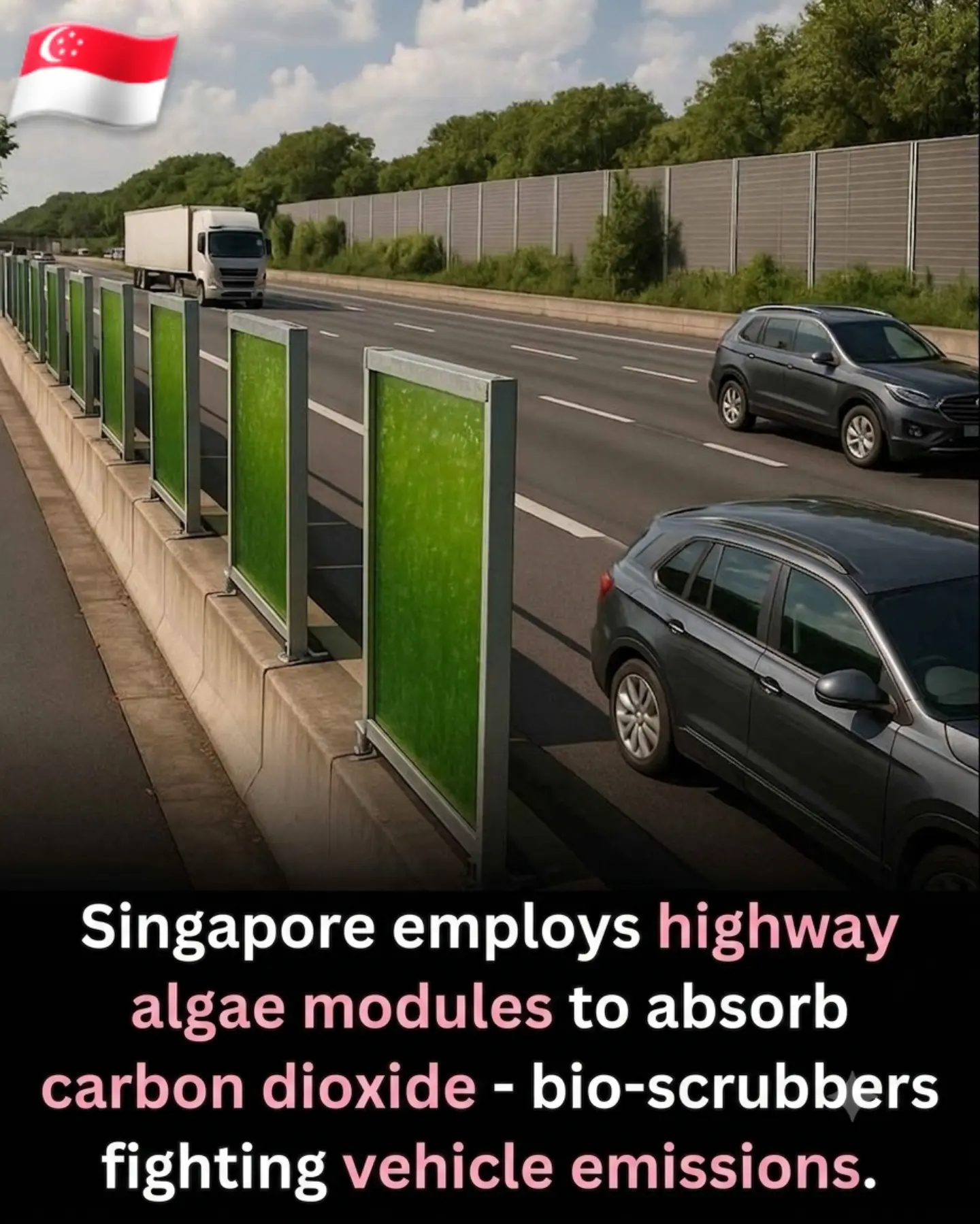
Algae-Based Highway Bioreactors: A Transformative Approach to Urban Air Purification
Highway algae modules are emerging as a groundbreaking solution to combat air pollution and carbon emissions in urban environments. These innovative systems integrate microalgae bioreactors directly into roadway infrastructure, offering a novel approach to localized carbon capture and air purification.
Why This Matters
Urban areas, particularly those with heavy traffic, face significant challenges related to air pollution and greenhouse gas emissions. Traditional methods to mitigate these issues often fall short due to limitations in scalability and efficiency. Algae-based highway bioreactors present a promising alternative, leveraging the natural processes of microalgae to address these environmental concerns directly where they originate.
Main Discussion
The Science Behind Algae-Based Bioreactors
Microalgae are a type of microscopic algae that grow rapidly and have a high photosynthetic efficiency. Unlike terrestrial plants, which convert carbon dioxide into oxygen at a relatively slow pace, microalgae can perform this process up to ten times faster. This makes them highly effective at absorbing carbon dioxide and producing oxygen, even in urban settings with high levels of pollutants.
Algae-based bioreactors are designed to harness this natural capability. These systems consist of transparent, algae-filled panels or tube networks installed along highway dividers and overpasses. The microalgae within these bioreactors consume ambient carbon dioxide and sunlight, generating oxygen and filtering out particulate matter from heavy traffic. This process not only purifies the air but also reduces the concentration of greenhouse gases in the immediate vicinity.
The Circular Economy
Beyond their primary function of air purification, algae-based bioreactors support a circular economy model. As the microalgae mature, they are harvested from the closed-loop systems and converted into a variety of valuable secondary resources. These include biofuels, bioplastics, organic fertilizers, and even cosmetics. This dual-purpose utilization of microalgae ensures that the system is not only environmentally beneficial but also economically viable, contributing to a sustainable future.
Implementation and Scalability
One of the key advantages of algae-based highway bioreactors is their scalability. By utilizing vertical space that is otherwise unproductive, these systems can be easily integrated into existing roadway infrastructure. This makes them a highly scalable and compact solution for dense urban centers, where space is often a premium resource.
Moreover, the modular design of these bioreactors allows for flexible implementation. Cities can start with small-scale pilot projects and gradually expand the system as needed, making it a cost-effective and manageable solution for urban air purification.
Practical Tips
For Urban Planners
When considering the implementation of algae-based highway bioreactors, urban planners should focus on the following factors:
- Site Selection: Choose highways with heavy traffic and limited green spaces nearby to maximize the impact of the bioreactors.
- Design Integration: Ensure that the bioreactors are integrated seamlessly into the existing roadway infrastructure to maintain aesthetics and safety.
- Monitoring and Maintenance: Regularly monitor the health of the microalgae and maintain the bioreactors to ensure optimal performance.
For Environmental Engineers
For environmental engineers working on these projects, key considerations include:
- Algae Species Selection: Choose microalgae species that are highly efficient in carbon capture and can thrive in urban environments.
- System Optimization: Optimize the bioreactor design to maximize sunlight exposure and carbon dioxide absorption.
- Harvesting Techniques: Develop efficient harvesting techniques to ensure that the algae can be converted into valuable secondary resources without disrupting the system's operation.
Important Takeaways
- Efficient Carbon Capture: Algae-based highway bioreactors act as highly efficient "bio-scrubbers," absorbing carbon dioxide and generating oxygen.
- Support for Circular Economy: These systems support a circular economy by converting harvested microalgae into valuable resources.
- Scalable and Compact: The modular design makes them a scalable and compact solution for dense urban centers.
- Direct Impact: By targeting greenhouse gas emissions at their source, these bioreactors offer a direct and effective approach to urban air purification.
Conclusion
Algae-based highway bioreactors represent a transformative approach to urban air purification and carbon capture. By integrating these systems into existing roadway infrastructure, cities can target greenhouse gas emissions directly at their source, contributing to a cleaner and more sustainable urban environment. The scalable and economical nature of these bioreactors makes them a practical and effective solution for addressing the urgent challenges of air pollution and climate change.
Questions readers ask
How do highway algae modules in Singapore help control urban pollution?
Highway algae modules in Singapore combat pollution by using microalgae to capture carbon dioxide emissions from traffic and convert it into oxygen. These modules are integrated into roadways, making them a scalable solution for improving air quality in heavily trafficked urban areas.
What are the key benefits of using algae-based systems for highway pollution control?
Algae-based highway systems offer several key benefits including efficient carbon capture, improved air quality, and the potential for biofuel production. They provide a sustainable and scalable solution to reducing emissions in urban environments, unlike traditional methods.
How do Singapore's urban algae bioreactors contribute to reducing carbon emissions?
Singapore's urban algae bioreactors reduce carbon emissions by harnessing microalgae to absorb carbon dioxide from the air. These bioreactors are designed to be integrated into highway infrastructure, making them an effective tool for localized carbon capture and air purification.
Can algae biofuel production be integrated with these highway pollution fighters?
Yes, the microalgae used in these highway systems can also be harvested to produce biofuel. This dual-purpose application enhances the overall effectiveness of the system, providing both air purification and a renewable energy source.
What makes Singapore's highway algae modules an effective solution for urban air quality improvement?
These modules are effective due to their direct integration into roadways, allowing for efficient carbon capture and air purification. They convert carbon dioxide into oxygen, which can be immediately used by surrounding traffic, improving local air quality.
Are there other cities exploring similar algae-based air pollution control systems?
While Singapore is a pioneer in this area, other cities are also exploring the use of algae-based systems for air pollution control. These systems are gaining attention due to their potential to provide a sustainable and effective solution to urban air quality challenges.
How do the highway algae modules in Singapore compare to other air pollution control systems?
Unlike traditional methods that often struggle with scalability and efficiency, highway algae modules in Singapore offer a more sustainable and effective approach. They directly integrate with road infrastructure, making them a unique and efficient solution for localized air purification in heavily trafficked areas.
Related deep dives
Similar reads based on topic and creator.




Recent articles
Fresh deep dives from the latest Reels we unpacked.




Comments
Be the first to comment.