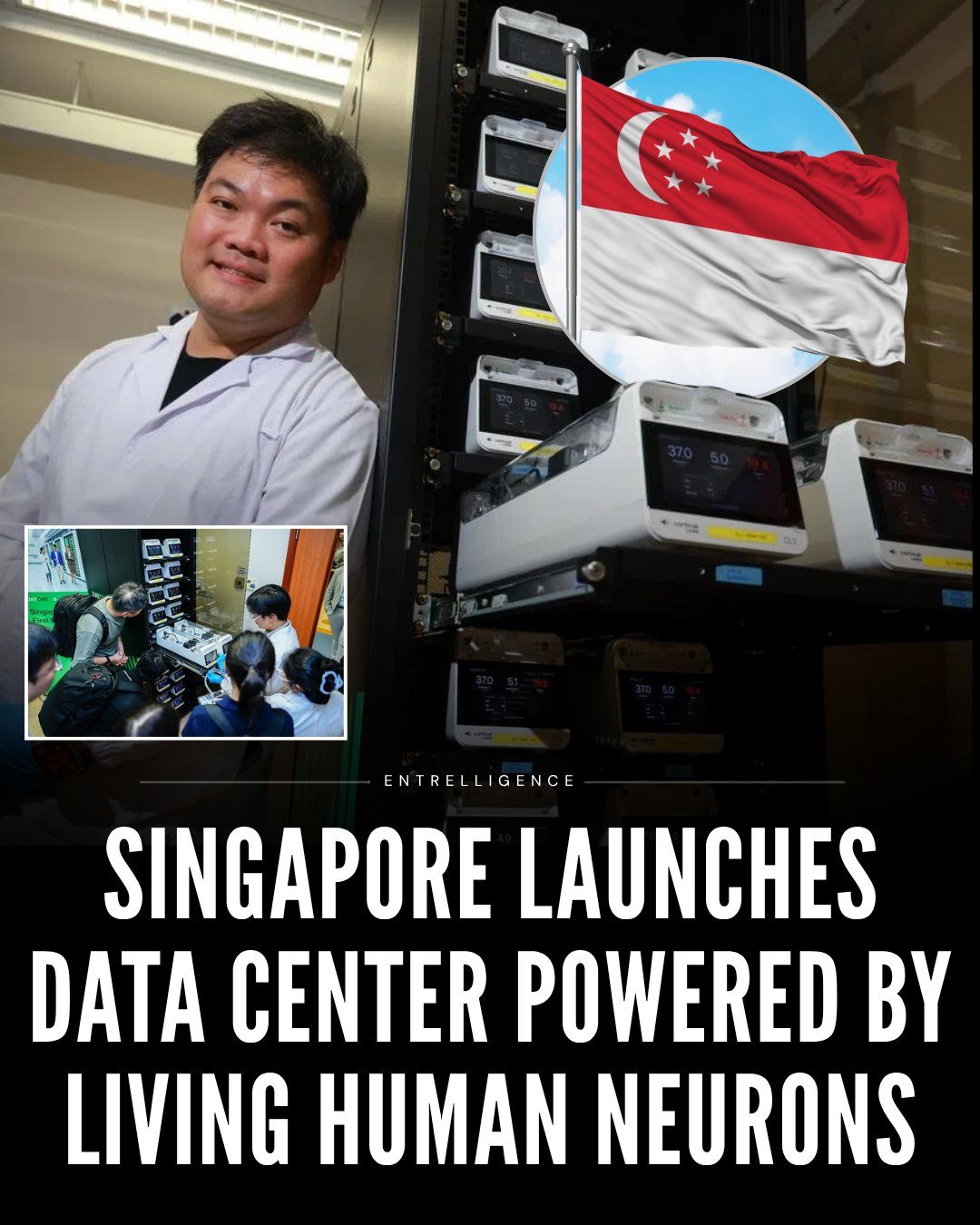
Singapore's Groundbreaking Launch of a Biological Data Center
Singapore has made a significant leap in technology with the launch of its first biological data center prototype. This innovative center replaces conventional silicon processing with 16 million living human neurons connected directly to digital hardware. Built at the National University of Singapore in collaboration with Cortical Labs and Dayone, this system marks a new frontier in computing technology.
Why This Matters
The shift from traditional silicon processors to biological ones represents a paradigm shift in data processing. This new approach leverages the natural efficiency and adaptability of human neurons, offering a more sustainable and potentially more powerful alternative to conventional systems. The implications for fields like artificial intelligence, data analytics, and even everyday computing are profound.
The Technology Behind the Innovation
At the heart of this biological data center are 20 CL1 biological computers. Each of these units contains neurons grown from human stem cells. These neurons receive electrical signals, respond to them, and adapt as they process information. The system's design allows for dynamic learning from sparse information, a feat that conventional AI systems struggle to achieve efficiently.
The Science of Living Neurons
Living neurons require a different kind of care compared to traditional silicon chips. They need continuous nutrients, controlled gases, and ongoing laboratory maintenance to survive. This aspect of the technology poses unique challenges but also opens up new possibilities for research and development.
For instance, the neurons can learn and adapt in ways that traditional processors cannot. They consume dramatically less energy, making them more environmentally friendly. This efficiency is a significant draw for researchers and developers looking to create more sustainable computing solutions.
The Human Element
The collaboration between the National University of Singapore, Cortical Labs, and Dayone highlights the interdisciplinary nature of this project. Scientists and engineers from these organizations have worked together to develop this groundbreaking technology. Their efforts underscore the importance of collaboration in pushing the boundaries of what is possible in technology.
The Future of Computing
While the current prototype is still an experimental research platform, it represents a radically different future for computing. Instead of manufacturing processors, the future may involve growing them. This shift could lead to more adaptable, efficient, and sustainable computing systems.
Main Discussion
The Advantages of Biological Computing
Biological computing, as demonstrated by this data center, offers several advantages over traditional silicon-based systems. The most notable is energy efficiency. Human neurons can process information using far less energy, making them a more sustainable option for large-scale data processing.
Additionally, biological processors can learn and adapt in real-time. This capability allows them to handle complex tasks more efficiently. Traditional systems often require extensive training data to learn effectively, whereas biological systems can learn from sparse information.
The Challenges of Biological Computing
Despite its advantages, biological computing also presents unique challenges. The living neurons require constant care and a controlled environment to survive. This need for ongoing maintenance adds a layer of complexity that traditional systems do not have.
Furthermore, the ethical implications of using living human neurons in technology are significant. Ensuring that this technology is developed responsibly and ethically is crucial as it moves from experimental research to practical applications.
The Role of Collaboration
The success of this project is a testament to the power of collaboration. The partnership between the National University of Singapore, Cortical Labs, and Dayone brought together diverse expertise and resources. This collaboration was essential in developing and launching the biological data center.
The Potential Applications
The potential applications of biological computing are vast. In the field of artificial intelligence, for example, biological processors could lead to more advanced and efficient AI systems. In data analytics, they could handle complex datasets more efficiently, providing deeper insights.
The technology could also revolutionize fields like healthcare, where biological processors could be used to develop more advanced diagnostic tools and treatments. The possibilities are vast, and the future of biological computing is full of potential.
Practical Tips
For Researchers and Developers
For those interested in exploring biological computing, it is essential to start with a solid understanding of both biological and computational principles. Collaborating with experts from both fields can provide the necessary foundation for developing innovative solutions.
For Investors
Investing in biological computing is a long-term play. While the current prototype is still experimental, the potential benefits are significant. Investors should look for partnerships and collaborations that leverage both biological and computational expertise.
For Policy Makers
Policy makers play a crucial role in ensuring that biological computing is developed responsibly. Developing guidelines and regulations that address the ethical implications of using living human neurons in technology is essential.
Important Takeaways
The launch of Singapore's biological data center prototype represents a significant milestone in technology. The use of living human neurons in computing offers numerous advantages, including energy efficiency and the ability to learn from sparse information. However, it also presents unique challenges, such as the need for constant care and ethical considerations.
Collaboration between scientific and engineering disciplines is essential for the continued development of this technology. The potential applications of biological computing are vast, and the future of this field is full of possibilities.
Conclusion
Singapore's biological data center prototype is a groundbreaking innovation that could change the future of computing. By leveraging the natural efficiency and adaptability of human neurons, this technology offers a more sustainable and powerful alternative to traditional silicon processors. As research and development continue, the potential applications and benefits of biological computing are vast. The future of computing is poised for a radical transformation, and Singapore is at the forefront of this exciting journey.
Questions readers ask
What makes Singapore's biological data center unique compared to traditional data centers?
Singapore's biological data center stands out because it uses 16 million living human neurons instead of traditional silicon processors. This approach is novel because it harnesses the natural efficiency and adaptability of human neurons, making it a more sustainable and potentially more powerful computing solution.
Who were the key collaborators in developing Singapore's biological data center?
The biological data center was developed through a collaboration between the National University of Singapore, Cortical Labs, and Dayone. These partners worked together to create the first prototype of this groundbreaking technology.
How does biological computing contribute to sustainability?
Biological computing, as seen in Singapore's data center, is more environmentally friendly because it uses living neurons instead of energy-intensive silicon processors. This shift reduces the carbon footprint associated with traditional data centers, making it a more sustainable solution for data processing.
What advantages does using human neurons in computing offer?
Human neurons provide natural efficiency and adaptability, which are crucial for advanced data processing and AI development. These neurons can handle complex tasks more efficiently than traditional silicon processors, offering a more powerful and flexible computing solution.
What is the significance of Singapore launching the first biological data center prototype?
This launch signifies a major advancement in computing technology. It marks the beginning of a new era where biological computing could become a standard, revolutionizing how data is processed and paving the way for more sustainable and adaptable systems.
How does the biological data center integrate living neurons with digital hardware?
The biological data center directly connects 16 million living human neurons to digital hardware. This integration allows the neurons to process data in a way that leverages their natural computational capabilities, providing a seamless and efficient link between biological and digital systems.
What are the potential implications of this technology for AI development?
The use of human neurons in computing offers a more adaptable and efficient approach to AI development. This technology could lead to significant advancements in AI, allowing for more sophisticated and intelligent systems that can handle complex tasks with greater ease.
Related deep dives
Similar reads based on topic and creator.




Recent articles
Fresh deep dives from the latest Reels we unpacked.




Comments
Be the first to comment.