Project Monsoon: A Colorful Transformation of Seoul's Streets
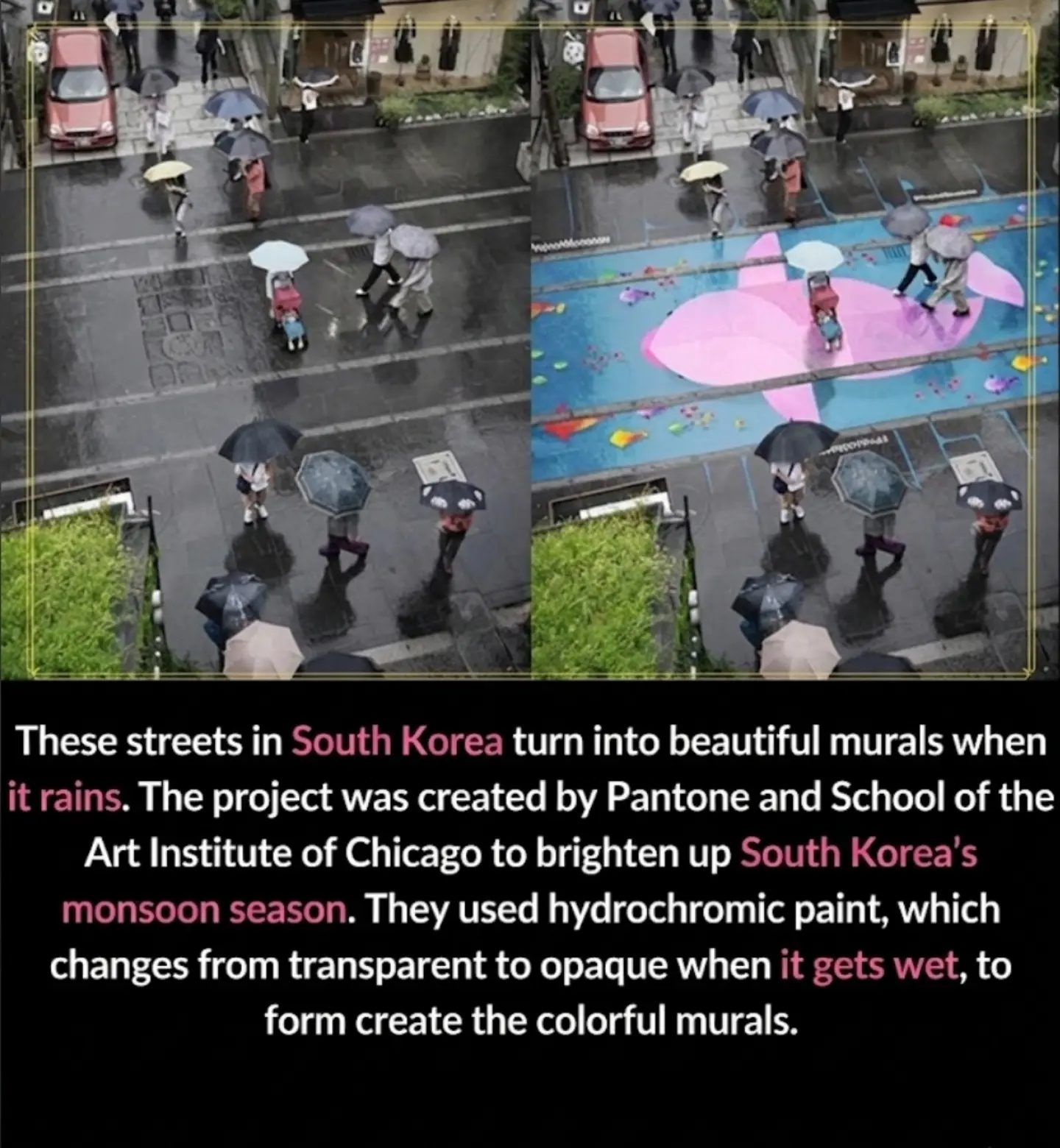
When it rains in Seoul, South Korea, something extraordinary happens. The city's streets come alive with vibrant murals, transforming into an outdoor art gallery. This unique phenomenon is part of Project Monsoon, a collaborative effort between the Art Institute of Chicago and Pantone. The project aims to bring color and joy to the dreary monsoon season through the use of hydrochromic paint.
Context: The Magic of Hydrochromic Paint
Hydrochromic paint is a specialized type of paint that changes its appearance when it comes into contact with water. When dry, the paint is transparent and blends seamlessly with the surface it is applied to. However, when wet, the paint becomes opaque and reveals a vibrant, colorful design. This unique property makes hydrochromic paint an ideal medium for creating interactive and dynamic art installations, especially in areas with frequent rainfall.
Pantone, a renowned color authority, played a key role in this project. The collaboration with the Art Institute of Chicago led to the creation of murals that not only brighten up the streets but also tell a story. The designs feature swimming whales and sea life, adding a playful and imaginative element to the urban landscape.
The Artistic Vision
Showcasing South Korea's Cultural Heritage
The murals created for Project Monsoon are not just visually stunning; they also carry a deeper meaning. The imagery of whales and sea life pays homage to South Korea's rich cultural heritage and its connection to the sea. Whales, in particular, hold significant symbolic importance in Korean mythology and folklore, making them a fitting choice for this public art project.
Interactive Street Art
One of the most remarkable aspects of Project Monsoon is its interactive nature. The murals are designed to be revealed only when it rains, turning a typically gloomy day into a vibrant and joyful experience. This interplay between the environment and the art creates a unique and memorable encounter for passersby, encouraging them to appreciate the beauty of the rain in a new light.
The Artistic Process
Collaboration and Innovation
The collaboration between the Art Institute of Chicago and Pantone brought together a team of talented designers and artists who worked tirelessly to bring this vision to life. The process involved meticulous planning and execution, from selecting the right locations for the murals to ensuring the hydrochromic paint would perform as expected.
The streets of Seoul were carefully chosen for their high visibility and pedestrian traffic, ensuring that the maximum number of people could experience the magic of the murals. The designs were then painted onto the streets using hydrochromic paint, which, when dry, becomes almost invisible. This transparency allows the murals to remain hidden until the first drops of rain reveal their vibrant hues.
The Science Behind Hydrochromic Paint
To create the murals, designers relied on the unique properties of hydrochromic paint. This specialized paint contains microscopic capsules that break open when exposed to water, releasing colored dyes that make the design visible. The effect is striking and can last for several rainy seasons, making it a cost-effective and durable solution for public art installations.
Practical Tips for Creating Your Own Hydrochromic Art
Materials Needed
To create your own hydrochromic art, you will need:
- Hydrochromic paint
- A surface to paint on (e.g., pavement, canvas, or any porous material)
- A design or pattern to follow
- Paintbrushes or spray equipment
Step-by-Step Process
- Prepare Your Surface: Ensure that the surface you will be painting on is clean and dry. For outdoor projects, consider the weather and plan accordingly.
- Plan Your Design: Sketch out your design on paper first. This will help you visualize the final product and make any necessary adjustments before painting.
- Paint the Design: Using your chosen design, apply the hydrochromic paint to the surface. Be sure to follow the manufacturer's instructions for the best results.
- Dry the Paint: Allow the paint to dry completely. This may take several hours, depending on the weather and humidity.
- Activate the Art: Once the paint is dry, wait for the rain to reveal your masterpiece. The hydrophobic properties of the paint will ensure that the design remains hidden until it gets wet.
Important Takeaways
Project Monsoon serves as a testament to the power of interactive and environmentally responsive art. By using hydrochromic paint, designers and artists have created a unique and engaging experience that transforms the urban landscape during the rainy season. This innovative approach not only brightens up the streets but also encourages people to appreciate the beauty of the rain in a new and exciting way.
The project highlights the potential for collaboration between institutions and corporations, demonstrating how art and science can come together to create something truly magical. Whether you are an artist, designer, or simply someone who appreciates beautiful and innovative art, Project Monsoon is a shining example of what can be achieved with a bit of creativity and the right tools.
Conclusion
Project Monsoon in Seoul, South Korea, is more than just an art project; it is a celebration of creativity, innovation, and the beauty of the natural world. Through the use of hydrochromic paint and a collaboration between the Art Institute of Chicago and Pantone, the streets of Seoul have been transformed into a vibrant and dynamic outdoor art gallery. This unique initiative not only brightens up the rainy season but also encourages people to see the world in a new light, turning a typically gloomy day into a colorful and joyful experience.
Questions readers ask
What is Project Monsoon and how does it work?
Project Monsoon is a collaborative initiative between the Art Institute of Chicago and Pantone that transforms Seoul's streets into a vibrant outdoor art gallery during the monsoon season. It utilizes hydrochromic paint, which remains transparent when dry and reveals colorful designs when it rains, turning gloomy days into visually exciting events.
Where can I find these hydrochromic murals in Seoul?
The hydrochromic murals are located throughout Seoul's streets. While specific locations may vary each year, you can typically find these vibrant displays in public spaces, sidewalks, and other areas that can be safely painted and viewed by the public. Keeping an eye on local announcements or the project's official updates can help you pinpoint exact locations.
What cultural elements are featured in the murals?
The murals showcase various aspects of South Korean cultural heritage, including traditional motifs, historical landmarks, and contemporary cultural elements. This integration of local culture adds a layer of meaning to the art, making it not just visually appealing but also a reflection of Seoul's rich heritage.
How long does the paint last and how often is it refreshed?
The longevity of the hydrochromic paint depends on various factors such as weather conditions and foot traffic. Typically, the murals are designed to last through the monsoon season, which runs from June to September. After this period, the paint may begin to fade, and new designs are usually applied for the following year, ensuring a fresh experience each monsoon season.
Can I participate in the creation of these murals?
While the primary creators are professional artists, public involvement can vary. Some projects may open up opportunities for community engagement, such as workshops or collaborative events. Checking the official Project Monsoon channels or local art community boards for updates and announcements about participation opportunities is recommended.
Are there other similar projects in the world?
While Project Monsoon is unique in its scale and integration with the monsoon season, there are other initiatives around the world that use hydrochromic paint and similar technologies. These projects often aim to bring art to urban spaces in innovative ways, utilizing weather elements or environmental triggers to reveal or change artworks.
Related deep dives
Similar reads based on topic and creator.




Recent articles
Fresh deep dives from the latest Reels we unpacked.


Comments
Be the first to comment.