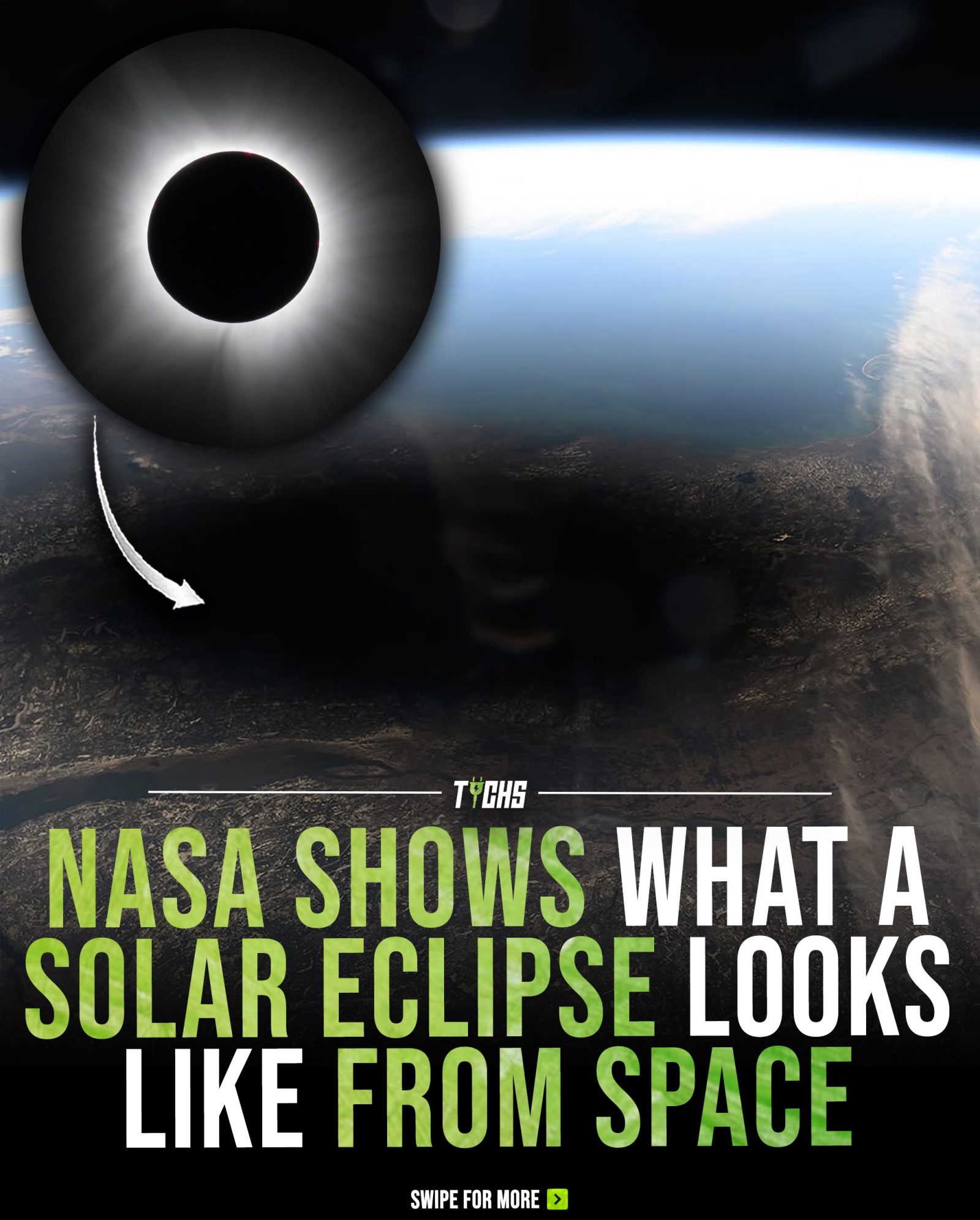
The Astonishing View of a Solar Eclipse from Space
The perspectives from Earth pale in comparison to the breathtaking view of a solar eclipse seen from space. On April 8, 2024, astronauts aboard the International Space Station (ISS) had the unique opportunity to witness and capture the Moon’s shadow sweeping across the surface of our planet during a total solar eclipse. This event provided a perspective that is not only awe-inspiring but also scientifically informative.
Why This Matters
Understanding solar eclipses from different vantage points—whether from Earth or from space—enhances our knowledge of celestial mechanics and the intricate dance between the Sun, Moon, and Earth. The unique perspective from space offers a comprehensive view of the Moon’s shadow, known as the umbra, as it moves across the Earth’s surface. This view, which astronauts witnessed from the ISS, reveals the sheer scale and beauty of a celestial event that is often experienced differently from the ground.
The Eclipse From Space
The Unique Perspective
The view of a solar eclipse from space is dramatically different from what is seen from Earth. On the ground, observers watch as the Moon gradually covers the Sun, casting the environment into a brief period of twilight. From space, however, the phenomenon is revealed in a broader context. The ISS, orbiting approximately 260 miles above the planet, provided astronauts with a front-row seat to observe the Moon’s umbra as it raced across the Earth’s surface. This perspective showcases the enormous scale of the eclipse, highlighting the shadow's movement across different regions.
Observing the Umbra
From the ISS, the umbra appears as a vast, dark region moving swiftly across the Earth. This shadow is the same one that observers on the ground experience as the Moon completely blocks the Sun, casting a path of totality. The umbra's movement is a direct result of the Moon’s orbit and its alignment with the Sun and Earth, creating a striking visual contrast against the planet’s surface.
The Eclipse's Path
The shadow of the eclipse moved across parts of North America, offering a rare glimpse into the mechanics of a celestial event that is often viewed with a sense of wonder and mystery. This event underscores the importance of studying space phenomena from multiple vantage points.
Practical Tips for Viewing Solar Eclipses
While the view of a solar eclipse from the ISS is a unique and rare perspective, there are several tips for ground-based observers to enhance their experience and safety:
Safety First
Never look directly at the Sun without proper eye protection. Use certified eclipse glasses or solar filters on telescopes and cameras. Safety during a solar eclipse is paramount, as the Sun’s rays can cause permanent eye damage.
Choose the Right Location
Select a location within the path of totality for the best viewing experience. The path of totality is the narrow region where the Moon completely covers the Sun, offering a brief period of darkness and revealing the Sun’s corona. Locations within this path provide the most dramatic views.
Use Binoculars and Telescopes
For a closer look, use binoculars or telescopes equipped with solar filters. These tools can reveal details of the Sun’s surface, such as sunspots and prominences, during the partial phases of the eclipse.
Capture the Moment
Photographing a solar eclipse requires careful preparation. Use a solar filter over your camera lens and practice capturing the Sun’s image beforehand. Tripods and remote shutters can help achieve the best results.
Important Takeaways
Watching a solar eclipse from space offers a unique and awe-inspiring perspective. Astronauts aboard the ISS witnessed the Moon’s umbra moving across the Earth, revealing the scale and beauty of the eclipse in a way that ground-based observers cannot experience. This view provides a broader understanding of celestial mechanics and the interplay between the Sun, Moon, and Earth.
The experience of a solar eclipse, whether from space or from Earth, highlights the importance of celestial events in our understanding of the universe. These events offer valuable opportunities for scientific observation and public engagement, fostering a deeper appreciation for the wonders of the cosmos.
Conclusion
The view of a solar eclipse from space, as captured by astronauts aboard the International Space Station, provides a unique and breathtaking perspective on this celestial phenomenon. The enormous scale of the Moon’s umbra moving across the Earth’s surface reveals the intricate mechanics of an eclipse and underscores the importance of studying space from multiple vantage points. Whether from space or from Earth, the solar eclipse offers a profound and awe-inspiring experience, one that continues to captivate and inspire us.
Questions readers ask
How does viewing a solar eclipse from space differ from viewing it from Earth?
Viewing a solar eclipse from space, such as from the International Space Station (ISS), offers a unique perspective that shows the Moon's shadow sweeping across the Earth's surface. This provides a broader view of the eclipse's path and the alignment of the Sun, Moon, and Earth, unlike the limited ground view, which is typically confined to the narrow path of totality.
What did astronauts aboard the ISS observe during the April 8, 2024 solar eclipse?
Astronauts aboard the ISS observed the Moon's shadow, known as the umbra, moving across the Earth's surface during the total solar eclipse on April 8, 2024. This provided a comprehensive view of the eclipse mechanics and the interaction between the Sun, Moon, and Earth.
Why is the view of a solar eclipse from space scientifically significant?
The view of a solar eclipse from space is scientifically significant because it provides a global perspective on the eclipse's path and the dynamics of the Moon's shadow. This information can enhance our understanding of celestial mechanics and the alignment of the Sun, Moon, and Earth during an eclipse.
What is the 'umbra' and why is it visible from space during a solar eclipse?
The 'umbra' is the dark, inner part of the Moon's shadow where the Sun is completely blocked. It is visible from space during a solar eclipse as a dark spot moving across the Earth's surface, providing a clear indication of the eclipse's path and the alignment of the celestial bodies.
How do astronauts on the ISS capture images of a solar eclipse?
Astronauts on the ISS use specialized cameras and equipment to capture images of a solar eclipse. These images are not only visually stunning but also provide valuable data for scientists studying the Sun, Moon, and Earth. The ISS's unique vantage point allows for a continuous view of the eclipse as it sweeps across the Earth.
What can we learn about the Sun, Moon, and Earth from viewing a solar eclipse from space?
Viewing a solar eclipse from space offers a comprehensive view of the celestial mechanics involved in the alignment of the Sun, Moon, and Earth. It allows us to observe the Moon's shadow moving across the Earth, providing insights into the relative positions and movements of these celestial bodies. This enhances our understanding of the intricate dance between them.
Recent articles
Fresh deep dives from the latest Reels we unpacked.




Comments
Be the first to comment.