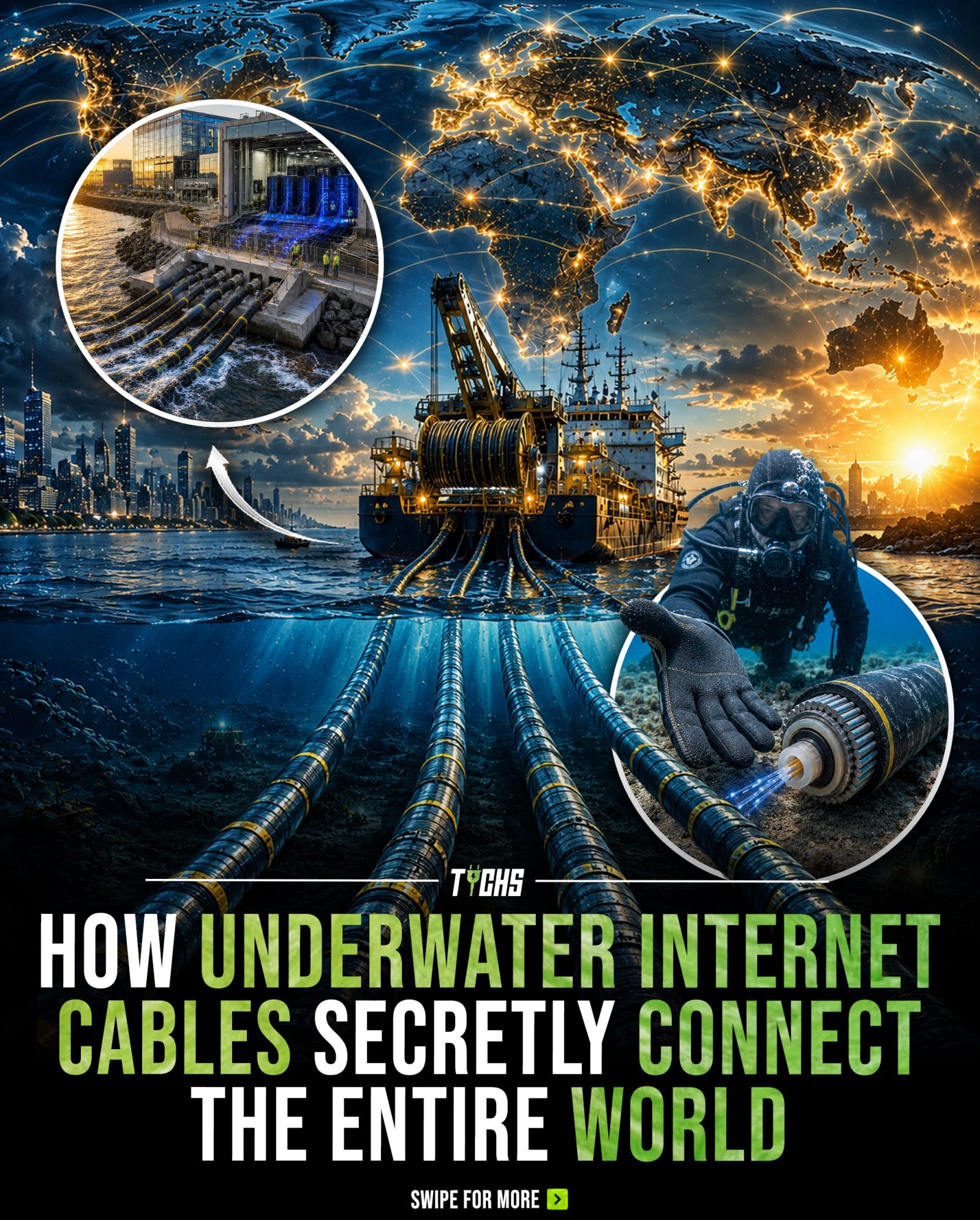
Underwater Internet Cables
Underwater internet cables are the backbone of global connectivity. They are the lifelines that ensure seamless data transfer across continents, powering everything from banking and cloud computing to AI and streaming services. More than 600 submarine cables, spanning over 1.4 million kilometers, connect continents worldwide.
Why This Matters
Submarine internet cables are critical for global communication. They transfer data through light signals at hundreds of terabits per second, ensuring that the internet remains operational. This infrastructure is essential for various industries, including banking, cloud computing, AI, and streaming services. Understanding how these cables work can provide insight into the technological marvels that enable our interconnected world.
Main Discussion
The Infrastructure
Underwater internet cables are installed by specialized ships and are capable of reaching depths of thousands of meters. These cables are made of thin fiber optic lines that carry data at incredible speeds. The installation process involves laying the cables along the ocean floor, ensuring they are secure and protected from potential damage.
Data Transfer
Modern submarine cables transfer massive amounts of data, with some handling over 200+ terabits per second. They use light signals to transmit data across vast distances, allowing for high-speed internet access around the world. These cables are capable of carrying an enormous amount of data, making them essential for global communication and connectivity.
Signal Boosters
Signal boosters, also known as underwater repeaters, are crucial components of the submarine cable network. These devices, located every 50-100 kilometers, amplify the signals to ensure data integrity and speed. By using these repeaters, the cables can maintain a consistent signal across vast distances, ensuring reliable data transmission.
Reliability and Backup Systems
Despite their importance, submarine cables are regularly damaged by natural events like earthquakes or human activities such as fishing and anchoring. Fortunately, these networks are designed with redundancy in mind. When a cable is damaged, the internet systems automatically reroute traffic through backup connections, ensuring minimal disruption to service.
Practical Tips
Understanding the Technology
Getting a grasp of how underwater cables function can help appreciate the technological advancements that power the internet. Knowing about fiber optic lines, light signals, and signal boosters can provide a better understanding of the infrastructure that keeps the world connected.
Importance of Maintenance
Maintenance of these underwater cables is crucial for their longevity and reliability. By understanding the challenges these cables face, such as damage from natural events and human activities, one can appreciate the efforts required to keep them operational.
Global Connectivity
Recognizing the role of these cables in global communication can foster an appreciation for the interconnected nature of the world. They are the hidden systems running the internet daily, and their importance cannot be overstated.
Important Takeaways
Underwater internet cables are the foundation of global connectivity, powering various industries and services. They rely on advanced technology to transfer data efficiently and are designed with redundancy to ensure reliability. These cables are an essential aspect of the modern world, enabling seamless communication and data transfer across continents.
Conclusion
Underwater internet cables are a marvel of modern engineering, enabling seamless global connectivity. From their installation to the technology that powers them, these cables play a crucial role in our interconnected world. Understanding their function and importance can provide a deeper appreciation for the technological advancements that make our daily lives possible.
Questions readers ask
What are submarine cables made of?
Submarine cables are typically composed of several layers, including a central core of optical fibers for data transmission, surrounded by protective layers of copper or aluminum, and finally an outer sheathing to protect against water pressure and marine life. The materials used ensure durability and reliability in harsh underwater conditions.
How do submarine cables transmit data?
Submarine cables transmit data using light signals through optical fibers. These fibers can carry vast amounts of data at high speeds, often reaching hundreds of terabits per second. To maintain signal strength over long distances, cable repeaters are used at intervals to amplify the signals.
Why are underwater cables crucial for global internet connectivity?
Underwater cables are essential because they facilitate high-speed data transfer across vast ocean distances, connecting continents and enabling global communication. This infrastructure supports a wide range of industries, from banking to streaming services, ensuring the reliability and speed of the modern internet.
What are the main challenges faced by underwater cable systems?
Underwater cable systems face numerous challenges, including damage from natural disasters, anchoring by ships, and interference from marine life. They are also vulnerable to environmental factors like deep-sea currents and sediment movement. Regular maintenance and monitoring are crucial to mitigate these risks and maintain connectivity.
How do cable repeaters work and why are they necessary?
Cable repeaters are devices placed at intervals along the submarine cable to amplify and regenerate the light signals, ensuring they maintain strength over long distances. They are necessary because the optical fibers' signals degrade over time and distance, and repeaters help to prevent data loss and maintain high-speed data transfer.
What is the role of underwater cables in supporting AI and cloud computing?
Underwater cables play a pivotal role in supporting AI and cloud computing by providing the high-speed data transfer required for these technologies. They enable the seamless exchange of large amounts of data between data centers and users, which is crucial for the functionality of AI algorithms and cloud-based services.
Related deep dives
Similar reads based on topic and creator.




Recent articles
Fresh deep dives from the latest Reels we unpacked.




Comments
Be the first to comment.