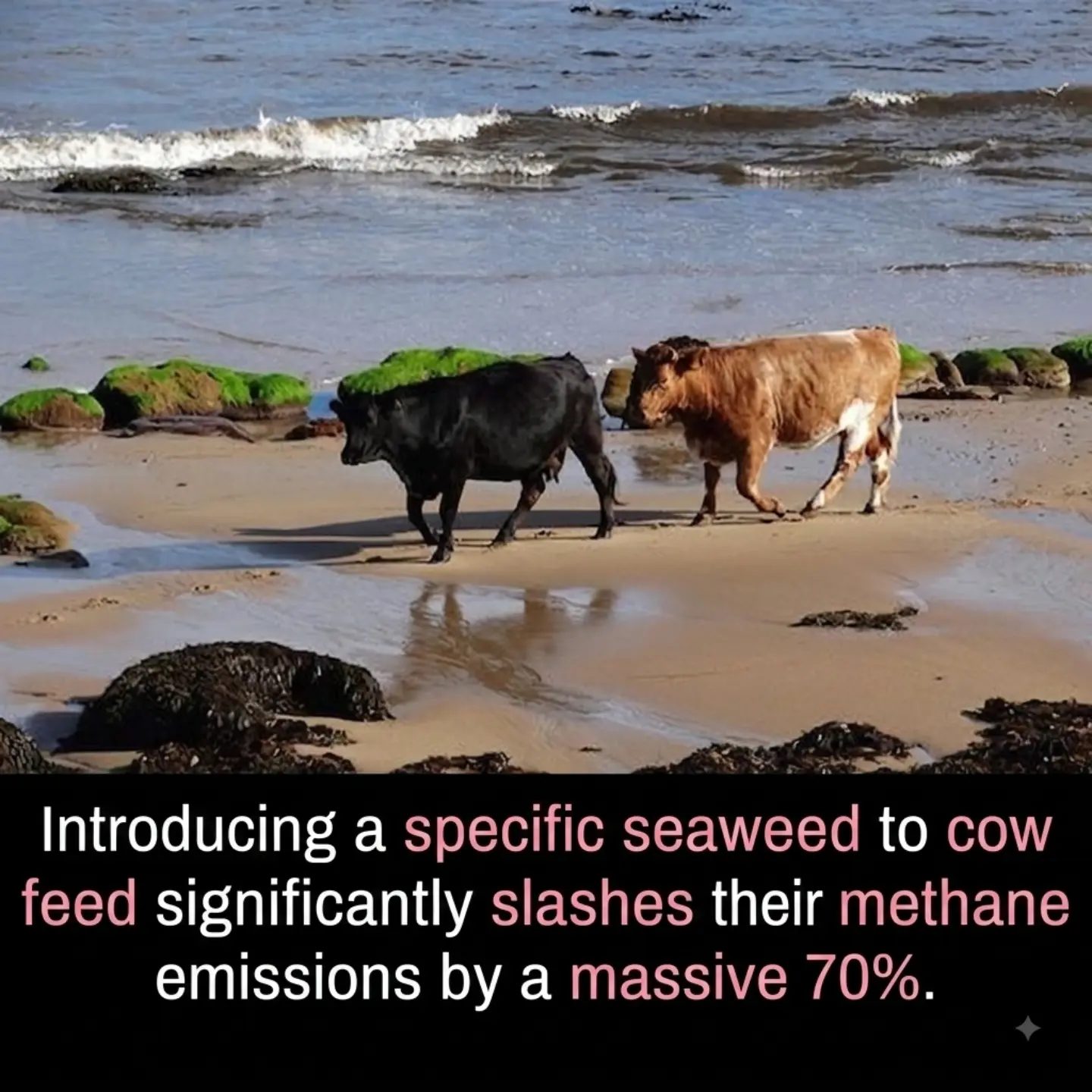
Cow Feed and Methane Emissions
Many people are aware of the environmental impact of livestock, particularly in terms of methane emissions from cows. This greenhouse gas is a significant contributor to global warming, and cows produce a lot of it during digestion. However, recent scientific discoveries offer a promising solution to this problem: incorporating a specific type of seaweed into cow feed.
Why This Matters
Methane is a potent greenhouse gas, approximately 25 times more effective at trapping heat in the atmosphere than carbon dioxide over a 100-year period. Livestock, particularly cows, are a major source of methane emissions. Cows produce methane through a process called enteric fermentation, which occurs in their digestive system. This process converts carbohydrates into energy, and methane is a byproduct. The sheer number of cows in the dairy and beef industries means that their collective methane emissions have a significant impact on the environment.
The Role of Seaweed in Cow Feed
Recent studies have shown that adding a specific type of red seaweed to cow feed can significantly reduce methane emissions. The seaweed in question is often from the genus called Asparagopsis. When incorporated into a cow's diet, even in small amounts, this seaweed can inhibit the enzyme that produces methane in their stomach. The result is a drastic reduction in methane production.
How It Works
The mechanism behind this reduction is relatively straightforward. The enzyme in a cow's stomach that produces methane is called methyl-coenzyme M reductase. The specific red seaweed contains compounds that inhibit this enzyme, effectively reducing the amount of methane that cows emit. This is a groundbreaking discovery because it provides a natural, dietary solution to a complex environmental problem.
Scientific Evidence
Current studies have shown that this seaweed can reduce methane emissions by anywhere from 60% to over 90%, depending on the cattle's setting. The text overlay from the visual summary claims a 70% reduction, but the potential is even higher. This range in effectiveness is due to various factors, including the dosage of seaweed, the specific diet of the cows, and their environmental conditions.
Benefits and Challenges
The benefits of using this seaweed in cow feed are clear. Reducing methane emissions from livestock can have a significant impact on global warming. However, there are still hurdles to overcome. One of the main challenges is scaling the farming of this specific seaweed. Seaweed farming is not as widespread or efficient as traditional agriculture, so increasing production to meet the demand for cow feed is a significant logistical challenge.
Another challenge is delivering the seaweed to grazing cattle. Cows that graze in pastures may not have access to the seaweed-added feed, making it difficult to implement this solution on a large scale. Innovative solutions, such as developing seaweed supplements or finding alternative delivery methods, are necessary to make this approach more practical.
Practical Tips
If you're interested in exploring this solution further, here are some practical tips:
Research and Experimentation
Conduct research to understand the specific seaweed species and their properties. Experiment with different dosages to see how much is needed to achieve a significant reduction in methane emissions. Collaborate with agricultural scientists to develop effective and scalable methods.
Consult with Livestock Experts
Engage with livestock experts and farmers to understand the practical challenges and opportunities. They can provide insights into the farming practices and the logistics of feeding seaweed to grazing cattle.
Collaboration with Researchers
Collaborate with researchers studying seaweed farming. They can offer valuable insights into cultivating and scaling the production of this specific seaweed.
Important Takeaways
The discovery that a specific type of red seaweed can significantly reduce methane emissions from cows is a promising development. This natural, dietary solution offers a way to mitigate the environmental impact of livestock farming. However, there are challenges to overcome, particularly in scaling the production of the seaweed and delivering it to grazing cattle. Despite these hurdles, the potential benefits make this an exciting area of research and development.
Conclusion
The incorporation of seaweed into cow feed represents a significant step forward in reducing methane emissions from livestock. While there are practical challenges to address, the potential benefits for the environment are substantial. By continuing to research and develop this solution, we can move closer to a more sustainable future for agriculture and the environment.
Questions readers ask
What type of seaweed is effective in reducing methane emissions from cows?
The specific type of red seaweed known as Aspartagopsis taxiformis has been shown to be particularly effective in reducing methane emissions when added to cow feed. This seaweed contains compounds that inhibit the production of methane during the cows' digestive process.
How exactly does seaweed help to reduce methane emissions in cows?
Seaweed contains natural compounds, such as bromoform, that interfere with the microbes in a cow's rumen, which is the first chamber of their stomach. These microbes are responsible for producing methane during digestion, so inhibiting them can significantly reduce the amount of methane released.
What are the benefits of using seaweed in cow feed beyond reducing methane emissions?
In addition to reducing methane emissions, incorporating seaweed into cow feed can offer other benefits such as improved feed efficiency, enhanced animal health, and potential increases in milk or meat production. It also promotes sustainable farming practices by providing a natural solution to a significant environmental issue.
How much seaweed is needed to achieve a 70% reduction in methane emissions?
Studies have shown that adding a relatively small amount of seaweed to cow feed can achieve a significant reduction in methane emissions. Typically, just a small percentage of the cow's diet—around 1-2%—needed to be comprised of the specific type of red seaweed to achieve a 70% reduction in methane emissions.
Can seaweed be integrated into existing cattle feed systems, or is special equipment needed?
Seaweed can be integrated into existing cattle feed systems without the need for special equipment. It can be mixed with other feed ingredients and administered through standard feeding practices, making it a practical and accessible solution for farmers.
Are there any potential drawbacks or considerations when using seaweed in cow feed?
While the benefits are promising, there are some considerations, such as the availability and cost of seaweed, as well as the need for further research to ensure long-term effects and scalability. Additionally, it's important to monitor cow health and adjust feeding practices as needed to ensure optimal results.
What role does seaweed play in the future of sustainable cattle farming?
Seaweed has the potential to play a significant role in the future of sustainable cattle farming by providing a natural and effective way to reduce methane emissions. As more research is conducted and best practices are developed, incorporating seaweed into cow feed could become a standard practice in promoting environmental sustainability and reducing the carbon footprint of livestock production.
Related deep dives
Similar reads based on topic and creator.




Recent articles
Fresh deep dives from the latest Reels we unpacked.




Comments
Be the first to comment.