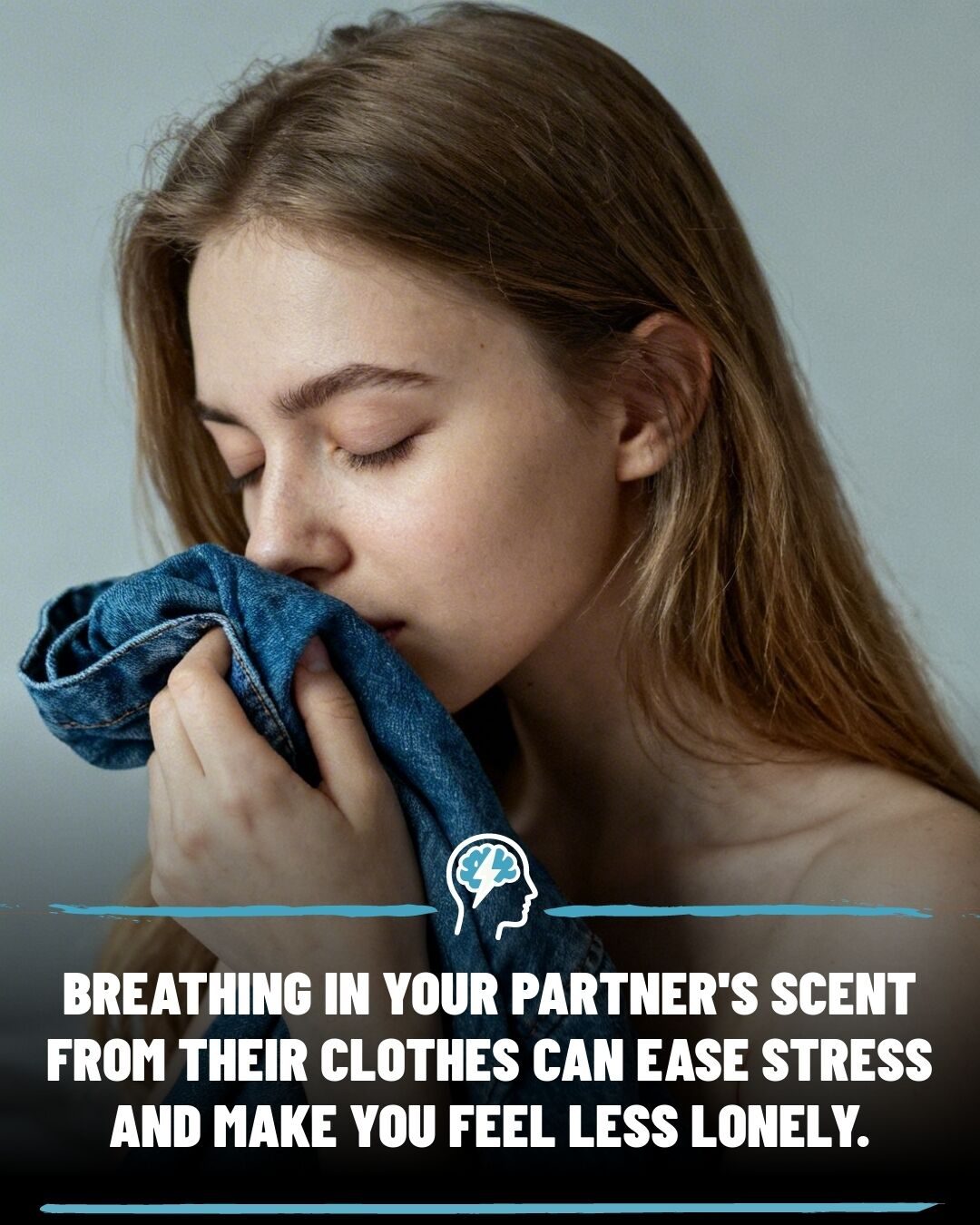
The Science Behind Partner Scents and Stress Relief
Inhaling the scent of a partner's clothing can have a surprisingly significant impact on stress levels. This phenomenon, grounded in psychological and physiological responses, has been the subject of scientific inquiry, yielding intriguing results.
Context / Why this Matters
Understanding how smells, particularly from a romantic partner, can influence stress levels is important for several reasons. First, it highlights the power of sensory cues in our emotional and physiological well-being. Second, it underscores the significance of personal and psychological associations in stress management. Lastly, it provides a deeper appreciation of the complex interplay between the mind and body in response to environmental stimuli.
Main Discussion
The Role of Scent Recognition
A 2018 study from the University of British Columbia delved into the effects of familiar scents on stress levels. The study revealed that women who smelled their partner's worn shirt exhibited lower cortisol levels and reported feeling less stressed. However, this calming effect was contingent on the participants accurately identifying the scent as belonging to their partner. When they failed to recognize the scent, the stress-reducing benefits vanished.
Varying Responses to Partner Scents
Interestingly, a 2026 study from the University of Freiburg presented contrasting findings. This research indicated that exposure to a partner's scent could actually increase subjective stress and heart rate in some participants, especially when they found the scent sexually attractive. Unlike the earlier study, this one found no significant differences in cortisol levels between the partner's scent and control conditions. These divergent results underscore the complexity of how individuals respond to familiar scents, suggesting that the psychological context and personal associations play a crucial role.
The Oxytocin Factor
Oxytocin, often referred to as the "love hormone," is well-documented for its stress-reducing properties. However, research has not yet confirmed that smelling a partner's shirt triggers the release of oxytocin. This disconnect indicates that the calming effect, when it occurs, may be more about psychological interpretation and less about a straightforward biological response. The brain's interpretation of the scent seems to be a key factor in determining its stress-relieving potential.
Practical Tips
-
Leverage Familiar Scents: If you find comfort in the scent of a loved one's clothing, use it intentionally. Wearing a scarf or holding a shirt can provide a sense of comfort, especially when feeling anxious or stressed.
-
Create Positive Associations: If you're using scents to manage stress, it's essential to create positive associations. Ensure that the scent is linked to positive memories and feelings, as this can enhance its stress-relieving effects.
-
Personalize Your Approach: Recognize that the effectiveness of scent-based stress relief is highly individual. What works for one person may not work for another. Experiment with different scents and see what resonates with you.
-
Combine with Other Techniques: While familiar scents can be a useful tool, they should not replace evidence-based stress management strategies. Combine scent therapy with other techniques like deep breathing, exercise, or mindfulness for a more comprehensive approach to stress relief.
Important Takeaways
The potential stress-relieving benefits of a partner's scent are real but nuanced. The calming effect, when it occurs, seems to depend heavily on conscious recognition and psychological associations. The lack of uniform results across studies highlights the importance of individual experiences and the need for personalized approaches to stress management.
Conclusion
The scent of a partner's clothing can indeed have a calming effect, but it's not a one-size-fits-all solution. The complexity of individual responses to scents underscores the importance of understanding personal psychological associations and leveraging them effectively. Whether it's through the scent of a partner's shirt or another familiar aroma, using this sensory cue mindfully can provide an additional layer of comfort in stressful times.
Questions readers ask
How does smelling a partner's scent affect cortisol levels?
Studies have shown that inhaling a partner's scent can lead to a decrease in cortisol levels, which is a hormone associated with stress. This suggests that familiar scents can have a calming effect on the body's physiological stress response.
Can a partner's scent increase heart rate?
Some research indicates that exposure to a partner's scent can actually increase heart rate. This variability in response highlights the complex nature of how scents interact with our physiological systems.
What was the key finding of the 2018 scent study?
The 2018 scent study revealed that the psychological and physiological responses to a partner's scent vary widely among individuals. This underscores the intricate relationship between the mind and body in processing sensory information.
Why is understanding the effects of a partner's scent important?
Comprehending how partner scents influence stress levels helps us appreciate the significance of sensory cues in our emotional and physical well-being. It also emphasizes the role of personal associations in managing stress and the body's response to environmental stimuli.
How does the mind and body respond to a partner's scent?
The mind and body respond to a partner's scent through a mix of psychological and physiological processes. This can result in either a reduction in stress hormones like cortisol or an increase in physiological markers like heart rate, depending on the individual's personal associations and experiences.
What are the implications of the complex interplay between scent and stress levels?
The complex interplay between scent and stress levels suggests that our emotional states and physical responses are intricately linked. This understanding can inform various strategies for stress management and emotional regulation, leveraging the power of sensory experiences.
How can inhaling a partner's scent help with stress management?
Inhaling a partner's scent can be an effective tool for stress management by triggering a psychological response that can lead to physiological changes. For instance, it can decrease cortisol levels, promoting a sense of calm and reducing stress.
Related deep dives
Similar reads based on topic and creator.




Recent articles
Fresh deep dives from the latest Reels we unpacked.




Comments
Be the first to comment.