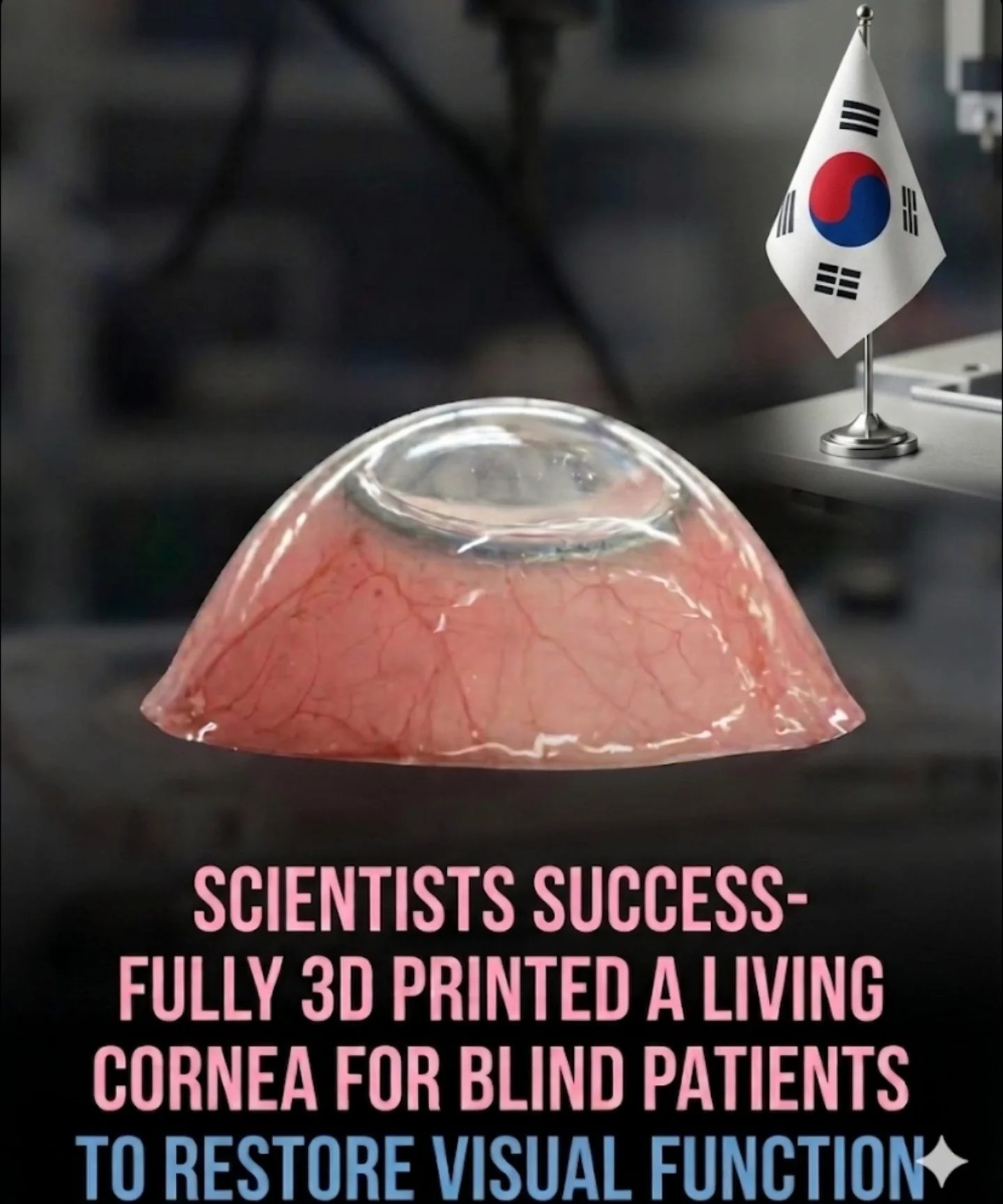
3D-Printed Corneas: A Breakthrough in Restoring Sight
3D-printed corneas represent a groundbreaking advancement in regenerative medicine, particularly for addressing corneal blindness. By leveraging the precision of 3D-printing technology and the biological properties of human corneal stem cells and collagen, scientists in South Korea have successfully developed living corneas that can restore visual function.
Why This Matters
Corneal blindness is a significant global health issue, affecting millions of people worldwide. The primary treatment for corneal blindness has traditionally been corneal transplantation, which relies on donor corneas. However, the availability of donor corneas is severely limited, with only one cornea available for every seventy patients in need. This shortage has driven the search for alternative solutions, and 3D-printed corneas offer a promising and scalable solution.
The Process and Technology
The process of 3D-printing corneas involves several key components and steps:
Bioprinting and Bio-Ink
Scientists use a specialized bio-ink composed of human corneal stem cells and collagen. This bio-ink is essential because it provides the biological foundation for the printed cornea. It mimics the natural structure of the human cornea, allowing for seamless integration with the patient’s eye. The bio-ink ensures that the printed cornea is not only structurally sound but also biologically compatible with the human body.
Precision and Customization
3D-printing technology allows for precise and customized production of corneas. This precision is crucial because it enables the creation of corneas that closely mimic the natural structure of the human eye. The 3D-printer can produce transparent, custom-fitted implants tailored to the specific needs of each patient. This level of customization ensures that the implant will fit perfectly and function effectively, restoring visual function.
Regenerative Medicine
The use of human corneal stem cells in the bio-ink is a significant advancement in regenerative medicine. These stem cells have the ability to differentiate into various types of corneal cells, which helps in the regeneration of the corneal tissue. This regenerative capability is what makes 3D-printed corneas a viable solution for restoring sight in patients with corneal blindness.
Practical Tips for Patients and Medical Professionals
For patients and medical professionals, the advent of 3D-printed corneas presents new opportunities and considerations:
Patient Considerations
Patients considering 3D-printed corneas should be aware of the following:
- Eligibility: Determine if you are a suitable candidate for the procedure. Medical professionals will assess your eye condition and overall health to ensure that a 3D-printed cornea is the right solution for you.
- Expectations: Understand that while 3D-printed corneas offer a promising solution, the procedure is still in the early stages of human trials. Be prepared for ongoing monitoring and follow-up care to ensure the best outcomes.
Medical Professional Considerations
Medical professionals should consider the following:
- Training: Undergo specialized training to perform the procedure and understand the intricacies of 3D-printed corneas. This training will ensure that you can effectively integrate this new technology into your practice.
- Equipment: Invest in the necessary 3D-printing equipment and bio-ink materials to produce high-quality, custom-fitted corneas. Ensure that your facility is equipped to handle the unique requirements of this procedure.
Important Takeaways
The development of 3D-printed corneas represents a significant step forward in the field of regenerative medicine. This technology has the potential to address the global donor shortage and provide a scalable, effective solution for millions of patients suffering from corneal blindness. Here are the key takeaways:
- Precision and Customization: 3D-printing technology allows for the production of transparent, custom-fitted implants that closely mimic the natural structure of the human eye.
- Regenerative Capabilities: The use of human corneal stem cells in the bio-ink enables the regeneration of corneal tissue, providing a biologically compatible solution.
- Scalability: 3D-printed corneas offer a scalable solution to the global donor shortage, making it possible to produce corneas on demand.
- Ongoing Research: While the technology shows great promise, ongoing research and human trials are essential to ensure its safety and effectiveness.
Conclusion
The successful 3D-printing of living corneas is a game-changer in the field of regenerative medicine. This breakthrough directly addresses the global donor shortage and offers a promising solution for patients suffering from corneal blindness. As the technology advances and more human trials are conducted, 3D-printed corneas could become a standard treatment option, providing a scalable and effective way to restore visual function for millions of people worldwide.
Questions readers ask
What are 3D-printed corneas and how do they work?
3D-printed corneas are bioengineered tissues created using 3D-printing technology and human corneal stem cells. They work by replicating the structure and function of natural corneas, helping to restore visual function in patients with corneal blindness. The process involves printing a precise corneal shape using collagen and stem cells, which can then be implanted into the eye to replace damaged tissue.
How does this breakthrough address the issue of corneal blindness?
3D-printed corneas offer a solution to the limited supply of donor corneas, which are the current standard treatment for corneal blindness. By using a patient's own stem cells, the risk of rejection is reduced, and the process can be tailored to the individual’s needs. This approach has the potential to significantly increase the availability of corneal replacements, benefiting millions of people worldwide.
Who developed the 3D-printed corneas and where was this research conducted?
The 3D-printed corneas were developed by a team of scientists in South Korea. This research highlights the country's advancements in regenerative medicine and 3D-printing technology, offering a promising solution to a global health issue.
What makes 3D-printing technology suitable for creating living corneas?
3D-printing technology allows for high precision in creating the complex structure of the cornea. It enables the layer-by-layer construction of the tissue using bio-inks that contain living cells, such as human corneal stem cells, and biological materials like collagen. This precision ensures that the printed corneas closely mimic the natural tissue, enhancing the likelihood of successful transplantation and visual restoration.
What are the benefits of using living tissue implants for corneal blindness treatment?
Living tissue implants, such as 3D-printed corneas, offer several benefits. They can be customized to the individual patient, reducing the risk of immune rejection. Additionally, they provide a potential solution to the shortage of donor corneas, making treatment more accessible for those in need. These implants also have the potential to integrate more seamlessly with the body, promoting better healing and visual outcomes.
Are there any risks associated with 3D-printed living cornea transplants?
Like any medical procedure, there are potential risks involved. These may include infection, inflammation, and potential rejection, although the use of the patient's own stem cells can mitigate some of these risks. Ongoing research and clinical trials are essential to fully understand and minimize these risks, ensuring the safety and efficacy of 3D-printed cornea transplants.
Related deep dives
Similar reads based on topic and creator.




Recent articles
Fresh deep dives from the latest Reels we unpacked.




Comments
Be the first to comment.