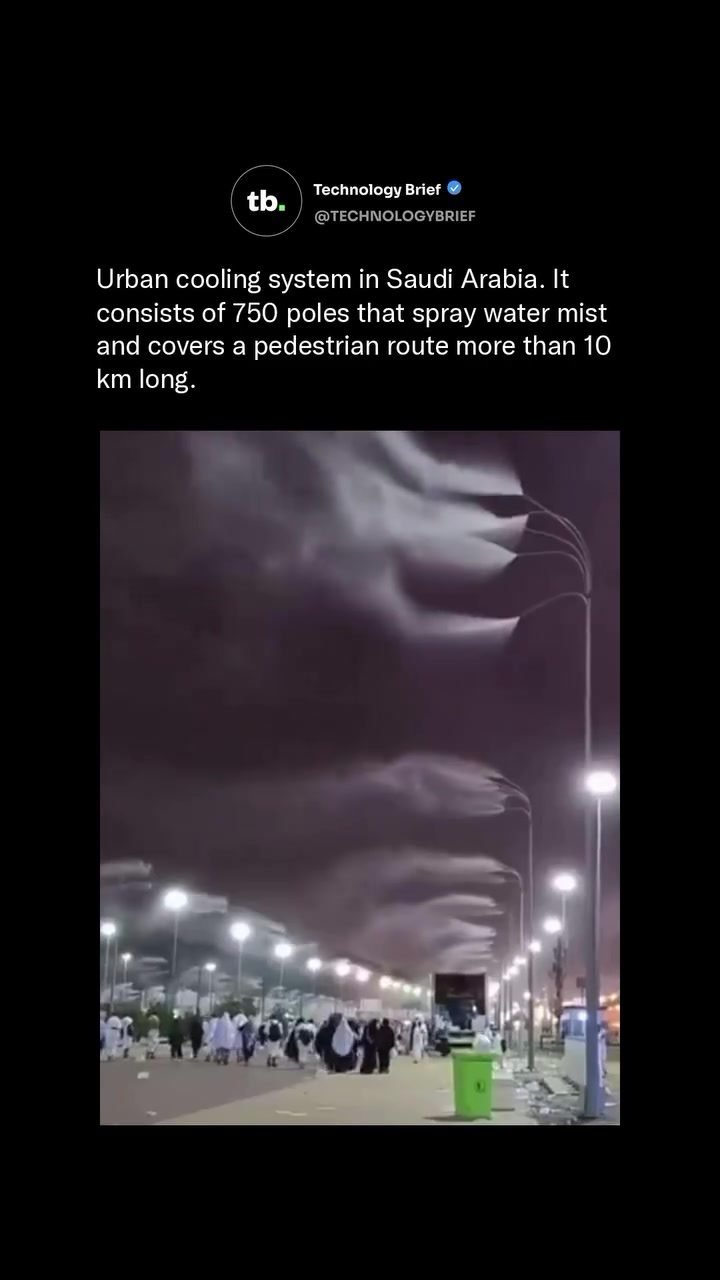
Urban Cooling System in Makkah
In the heart of Saudi Arabia, a cutting-edge urban cooling system has been implemented along a pedestrian route in Makkah, a city that hosts millions of pilgrims annually during the Hajj pilgrimage. The system, which spans over 10 kilometers, comprises 750 poles that continuously spray fine water mist into the air. This innovative cooling mechanism is designed to combat the intense summer heat, which often soars above 40°C, making heat management a critical issue for the region.
Why This Matters
Heat management in urban environments, especially in regions with extreme temperatures, is essential for public health and comfort. The urban cooling system in Makkah is a prime example of how infrastructure can be adapted to mitigate the effects of high temperatures, particularly in areas with high pedestrian traffic, such as religious and cultural sites.
Main Discussion
Evaporative Cooling Technology
The urban cooling system in Makkah operates on the principle of evaporative cooling. When tiny water droplets evaporate, they absorb heat from the surrounding air, leading to a noticeable drop in temperature at ground level. This process is highly effective in reducing the ambient temperature, making the pedestrian route more comfortable for pilgrims, especially during the hot summer months.
Scale and Design
The system is designed to cover more than 10 kilometers of walkway, making it one of the most extensive urban cooling projects in the world. The 750 poles are strategically placed along the pedestrian route, ensuring that the mist is evenly distributed. This design not only enhances the cooling effect but also creates a visually striking landscape, with clouds of mist drifting above the streets, especially at night when the system runs at full capacity.
Nighttime Cooling
At night, the system operates at its maximum capacity, creating a low-lying fog that rolls across the walkways. This nocturnal cooling is particularly beneficial as it helps to pre-cool the environment, making the area more comfortable for early morning activities and ensuring that the day starts with a lower ambient temperature.
Road Cooling Initiatives
In addition to the urban cooling system, Saudi Arabia has been expanding its cooled road surfaces, particularly in the Arafat area. Over 84,000 square meters of road surfaces are now covered in reflective, recycled materials. These materials can reduce road temperatures by around 12°C, significantly enhancing the overall cooling effect and making the area more comfortable for both pilgrims and residents.
Grand Mosque Cooling
The Grand Mosque in Makkah is equipped with one of the world's largest internal cooling systems, designed to maintain indoor temperatures between 22°C and 24°C, even during peak summer heat. This is a testament to Saudi Arabia's commitment to investing in infrastructure that ensures the comfort and safety of pilgrims, despite the extreme climactic conditions.
Practical Tips
The urban cooling system in Makkah offers several practical insights that can be applied to urban planning and heat management in other regions:
Water Management
Efficient water management is crucial for the operation of such systems. The continuous spraying of fine water mist requires a steady supply of water, which can be managed through sustainable water sources or recycling systems.
Strategic Placement
The strategic placement of cooling poles along pedestrian routes ensures maximum coverage and effectiveness. This approach can be replicated in other urban areas to enhance comfort and safety, especially in high-traffic zones.
Nighttime Operation
Running the system at full capacity during the night can pre-cool the environment, making it more comfortable during the day. This strategy can be particularly effective in regions with significant temperature fluctuations between day and night.
Important Takeaways
Importance of Heat Management
Heat management is a critical aspect of urban planning, especially in regions with extreme temperatures. Effective cooling systems can significantly enhance the comfort and safety of residents and visitors.
Innovative Cooling Solutions
The urban cooling system in Makkah demonstrates the potential of innovative cooling solutions in mitigating the effects of high temperatures. These solutions can be adapted and implemented in other urban environments to improve overall comfort and safety.
Sustainable Practices
Sustainable practices, such as the use of reflective, recycled materials for road surfaces and efficient water management, are essential for the long-term success of cooling systems. These practices not only enhance the effectiveness of the systems but also contribute to environmental sustainability.
Conclusion
The urban cooling system in Makkah is a remarkable example of how advanced technology and innovative design can be leveraged to combat extreme temperatures in urban environments. By implementing a large-scale mist cooling system, Saudi Arabia has significantly improved the comfort and safety of pilgrims, particularly during the hot summer months. The success of this initiative underscores the importance of investing in infrastructure that addresses the unique challenges posed by extreme climatic conditions, ensuring a better quality of life for all.
Questions readers ask
How does the 10km urban cooler in Makkah function?
The urban cooling system in Makkah operates by using 750 strategically placed poles that release a fine water mist. This mist helps to lower the ambient temperature along the 10km pedestrian route, providing much-needed relief to pilgrims during the Hajj, especially during the intense summer heat.
Why was this cooling system implemented in Makkah?
The cooling system was implemented to address the extreme summer temperatures in Makkah, which can exceed 40°C. The goal is to ensure the comfort and safety of the millions of pilgrims who visit the city annually during the Hajj pilgrimage, making the journey more bearable in the hot climate.
What is the significance of the 10km urban cooler for Hajj pilgrims?
The 10km urban cooler is crucial for Hajj pilgrims as it helps to mitigate the intense heat, which can pose serious health risks during the pilgrimage. The misting system provides a comfortable environment, allowing pilgrims to complete their journey with reduced risk of heat-related discomforts.
How many cooling poles are part of the urban cooling system in Makkah?
The urban cooling system in Makkah comprises 750 cooling poles. These poles are evenly distributed along the 10km route to ensure comprehensive coverage and effective cooling for all pilgrims.
Can this misting system be used in other cities with similar climates?
While the effectiveness of a misting system will depend on various factors, the technology used in Makkah can certainly inspire other cities with similar climates. Any city looking to implement a similar system should consider local weather patterns, infrastructure, and the specific needs of its residents.
What are the benefits of using a water mist system for urban cooling?
A water mist system, like the one in Makkah, offers several benefits. It effectively lowers the ambient temperature by evaporative cooling, is relatively easy to maintain, and provides a natural, non-polluting solution for heat management in urban environments.
Related deep dives
Similar reads based on topic and creator.




Recent articles
Fresh deep dives from the latest Reels we unpacked.



Comments
Be the first to comment.