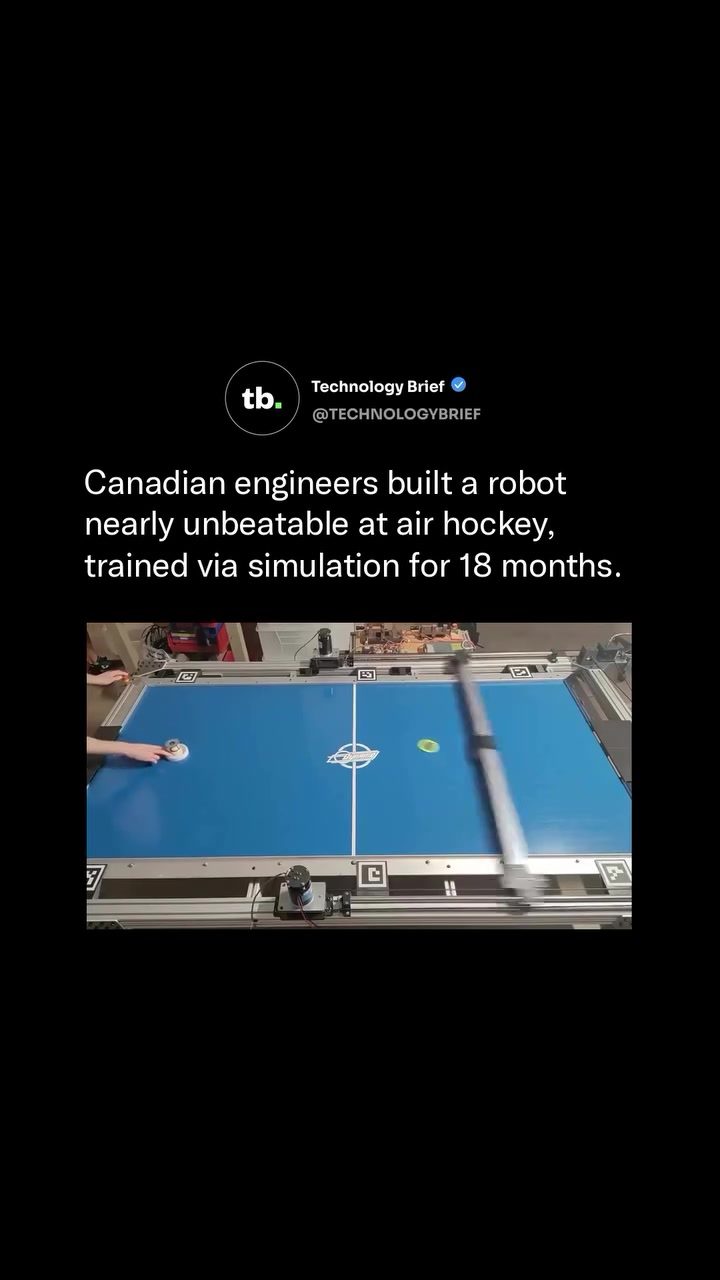
Air Hockey Robot: Mastering the Game Through Simulation
A robotic arm built by engineering students at the University of British Columbia has mastered the game of air hockey without ever playing a real-world match during its training. This remarkable achievement highlights the potential of simulation-based learning for robotics.
Innovation in robotics is often marked by groundbreaking applications of AI and simulation. These advances are changing the landscape of industries ranging from manufacturing to autonomous vehicles. This robot showcases one of the latest milestones in this field. The robot was trained entirely within a custom simulator, playing millions of virtual games at a vastly accelerated speed. This approach allowed the AI to develop its skills without the constraints of physical limitations or time.
Context / Why This Matters
The development of this air hockey-playing robot underscores the importance of simulation in robotics. By training in a simulated environment, the robot can learn to handle a wide range of unpredictable variables, such as uneven rails, inconsistent bounces, and power fluctuations. This not only speeds up the training process but also makes the robot more adaptable to real-world conditions. The implications of this technology extend beyond air hockey, potentially revolutionizing the training of drones, self-driving vehicles, and factory robots.
Main Discussion
The Training Process
The robot's training process was meticulously designed to ensure it could handle the unpredictable nature of real-world air hockey. The team at UBC built a custom physics engine from scratch, which allowed them to simulate a variety of game conditions. This engine was used to randomize unpredictable variables, teaching the AI to predict a range of possible puck positions rather than relying on a single exact path.
Simulation to Reality
One of the most impressive aspects of this project is the seamless transition from simulation to reality. Once the AI was trained in the virtual environment, it was loaded onto a physical robot. The robot, equipped with a 120-frames-per-second overhead camera and reflective tape on the puck, was able to track the puck's movement with remarkable accuracy. This allowed the robot to challenge human players immediately, with no additional tuning required.
Real-Time Tracking
The real-time tracking system is a critical component of the robot's success. The overhead camera and reflective tape setup provide the robot with precise data on the puck's position, allowing it to respond quickly and accurately to its opponent's moves. This high-speed tracking system ensures that the robot can maintain its competitive edge, even in the dynamic and fast-paced game of air hockey.
Practical Tips
Building a Custom Physics Engine
For those interested in developing similar robotic systems, building a custom physics engine is a crucial step. This engine should be capable of simulating a wide range of conditions and variables, allowing the AI to learn adaptability. By randomizing unpredictable factors, the AI can develop a more robust and versatile skill set.
Using High-Speed Cameras
High-speed cameras are essential for real-time tracking in dynamic environments. The setup used in this project, with a 120-frames-per-second overhead camera and reflective tape on the puck, provides accurate and reliable tracking. This ensures that the robot can respond quickly and effectively to its opponent's actions.
Transitioning from Simulation to Reality
The seamless transition from simulation to reality is a testament to the effectiveness of the training process. By ensuring that the AI is well-prepared for the real world, the team was able to deploy the robot without the need for additional tuning. This highlights the importance of thorough and adaptable training methods.
Important Takeaways
The development of this air hockey-playing robot demonstrates the significant potential of simulation-based training in robotics. By leveraging advanced simulation techniques, robots can be trained to handle a wide range of real-world conditions, making them more adaptable and effective. This approach not only speeds up the training process but also ensures that the robots are well-prepared for real-world challenges.
Conclusion
The air hockey-playing robot developed by engineering students at the University of British Columbia is a remarkable achievement in the field of robotics. By training the AI entirely within a custom simulator, the team has demonstrated the potential of simulation-based learning. This groundbreaking work could pave the way for similar advancements in other areas, from drones and autonomous vehicles to factory robots. The future of robotics looks increasingly promising, with simulation playing a pivotal role in its development.
Questions readers ask
How does the UBC robotics team's air hockey robot differ from traditional robot training methods?
Traditional robot training methods often involve real-world trial and error, but the UBC robotics team's air hockey robot was trained entirely through simulation. This allows for accelerated learning and eliminates the need for physical interaction during the training phase.
What is the significance of the robot's ability to play air hockey without real-world training?
The robot's mastery of air hockey through simulation underscores the effectiveness of simulation-based learning in robotics. This breakthrough could inspire more efficient training methods for robots in various fields, from manufacturing to autonomous driving.
How was the UBC robotics team able to accelerate the learning process for the air hockey robot?
The team used a custom simulator to train the robot, allowing it to play millions of virtual games at an accelerated pace. This high-speed virtual practice enabled the AI to develop its skills rapidly and more efficiently.
What are the potential benefits of using simulation for robotics training?
Simulation-based learning can offer robots the ability to learn in a safe, controllable environment, reducing the risk of damage to the robot or its surroundings. This method also allows for faster training and can help robots learn complex tasks more efficiently.
How might the use of AI and simulation impact the future of robotics?
The use of AI and simulation in robotics, as demonstrated by the air hockey robot, could lead to more advanced and capable robots. These technologies can enable robots to learn and adapt more quickly, opening up new possibilities in various industries.
What challenges might arise when transitioning from simulation to real-world robotics?
While simulation provides a controlled environment for learning, robots may face challenges when transitioning to real-world scenarios. These can include differences in physics, sensors, and environmental factors, which may require additional training to ensure the robot performs as expected.
How can the method used to train the air hockey robot be applied to other robotics projects?
The process of using simulation for robot training can be applied to other projects, including those involving autonomous vehicles, manufacturing, and assembly tasks. By creating custom simulators for specific tasks, developers can help robots learn complex skills more efficiently and effectively, reducing the need for extensive real-world testing.
Related deep dives
Similar reads based on topic and creator.




Recent articles
Fresh deep dives from the latest Reels we unpacked.




Comments
Be the first to comment.