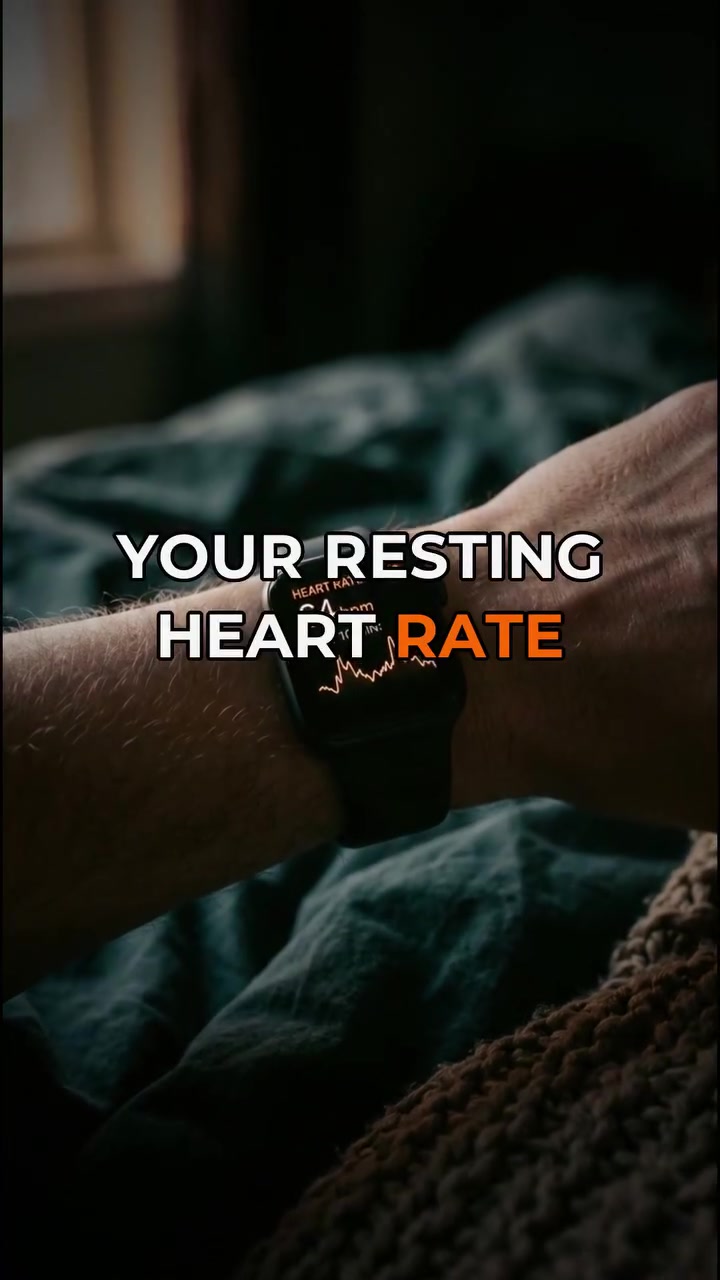
The Silent Measurement: Your Morning Heart Rate
If your smartphone or watch tracks your resting heart rate, it's seen a place in your bedroom. What it shows matters to your health. Recent studies show a resting heart rate above 70 bpm increases the risk of early death by 16%. While a healthy range is typically 60 to 100 bpm, it's better for overall health to maintain it on the lower end of that spectrum. This is due to your heart being able to pump more blood with less effort when it beats less frequently.
The Sleeping Indicator: What Resting Heart Rate Is
Your resting heart rate is the number of heartbeats per minute (bpm) when you're sleeping or otherwise completely at rest. It's one of the many vital signs that doctors use to assess your health. Unlike your blood pressure or cholesterol, which require a trip to the clinic, your resting heart rate is measured automatically by many smartwatches and fitness trackers. This makes it an accessible and continuous indicator of your health. It is measured from one beat to the next, pulse point to pulse point. The rising or declining numbers reveal valuable information on your health status. For those who have not checked their resting heart rate, now is a great moment to begin monitoring it. Many fitness trackers and smartwatches can monitor your heart rate during sleep and while you are conscious — making it simple to keep track of your heart rate throughout the day. It is one of the most trainable numbers in our body.
The Early Warning System: Inflamation, Overstrain, and Dehydration
Your morning heart rate is not just a number. Anything that raises your body’s stress levels can affect it. In particular, inflammation and overstrain may cause your heart to beat faster. It's essentially an early warning system that signals when something in your body needs attention. The Copenhagen Heart Study, one of the largest cardiovascular cohort studies ever run, found that a consistently elevated resting heart rate is linked to an increased risk of early death — this underscores the importance of monitoring and understanding its fluctuations.
4 factors impacting heart rate
The Misery of Underrecovered Training
If you're pushing yourself too hard during exercise, your body will need longer to recuperate. If your resting heart rate is climbing week on week, it's a distress signal. Your body is telling you to stop. This could take three weeks to reset. Morning sodium and water before coffee, caffeine off at noon, and swapping one hard session for a zone two walk. A zone two walk is a low to moderate-intensity workout that should elicit a slight rise in your heart rate then fall to a rate that is 85 to 90% of your maximum heart rate. That could be walking for a slow pace.
What's Dehydration Got to do with It?
Mild dehydration is a silent, often overlooked factor. Even 1% fluid loss bumps your resting heart rate by 5 to 10 beats. It's more likely than you might think. Most people wake up in this zone. By the time you feel thirsty, this is already happening.
Caffeine's Counterproductive Effect
If you are drinking coffee throughout the day, you could be keeping it elevated. That final cup of coffee in the late afternoon or evening can cause elevated resting heart rate. Some studies have shown caffeine can increase heart rate by as much as 30% and make your heart work up to 10% harder. If you drink a cup of coffee every day, consider swapping to a cup of water to see how your morning heart rate changes.
The Nervous System’s Role
Your nervous system plays a crucial role. It can elevate well into your sleep window, and your morning number pays for it. If you are nervous, your body produces more adrenaline which exerts pressure on your heart to push more blood. It's possible that the stress that comes with the adrenaline rush is elevating the heart rate. If experiencing nervousness and are physically active at the same time, the elevated heart rate could stay higher for a longer period of time.
Impact of Age
Your resting heart rate decreases with age. Children tend to have a faster heart rate, as well as highly trained athletes. Training for your sport can produce a heart rate in the 30s, which is low compared to a resting rate that is in the 60s. Resting heart rate tends to increase as we age. This is a natural sign of our body's ability to adapt and restore itself.
Check Your Heart Rate Tonight
Before you go to bed, grab your phone. Take a look at your watch. Start tracking your resting heart rate. Watching for trends and changes in the morning heart rate can give you a heads up when it comes to your health. It's one of the simplest things you can do to stay healthy. If you don't currently have a fitness tracker, keep an eye out for strong deals. If you already have one, you're halfway there.
Questions readers ask
What exactly is considered a normal resting heart rate?
A normal resting heart rate typically ranges from 60 to 100 beats per minute (bpm). However, it's generally better for overall health to maintain it on the lower end of this spectrum, ideally around 60 bpm. This is because a lower heart rate means your heart is more efficient at pumping blood.
How accurate are smartwatches in measuring resting heart rate?
Smartwatches and fitness trackers are generally quite accurate in measuring resting heart rate, especially when compared to manual methods. They use optical sensors to detect pulse points which is more or less how doctors measure it. They are good enough to identify trends and spikes, but for precise medical diagnosis, a clinical setting is still recommended.
Can an elevated resting heart rate be a sign of something serious?
Yes, an elevated resting heart rate can be an early warning sign of various health issues, including inflammation, overstrain, and even dehydration. Consistently high resting heart rates have been linked to an increased risk of early death, as shown in studies like the Copenhagen Heart Study.
What should I do if my smartwatch detects an unusually high resting heart rate?
If your smartwatch detects an unusually high resting heart rate, it's important to take it seriously. First, check for obvious causes like dehydration or over-exertion. If the high heart rate persists, consult a healthcare professional for a thorough evaluation. It could be a sign of an underlying condition that needs medical attention.
How does caffeine affect your resting heart rate?
Caffeine can elevate your resting heart rate by stimulating your nervous system. If you consume caffeine throughout the day, it might keep your heart rate elevated, which can interfere with accurate readings and overall heart health. It's often recommended to avoid caffeine after noon to minimize its impact on your resting heart rate.
What is a zone two walk and how does it help with heart rate?
A zone two walk is a low to moderate-intensity workout that raises your heart rate slightly but keeps it within a range that is 85 to 90% of your maximum heart rate. This type of exercise helps to lower your resting heart rate over time by improving your cardiovascular fitness and allowing your body to recover from more intense workouts.
Can monitoring my resting heart rate help me avoid overtraining?
Yes, monitoring your resting heart rate can be a valuable tool in avoiding overtraining. If your resting heart rate is consistently high or climbing week on week, it's a sign that your body needs more rest and recovery. This can help you adjust your training regimen to prevent burnout and potential health issues.
Related deep dives
Similar reads based on topic and creator.




Recent articles
Fresh deep dives from the latest Reels we unpacked.




Comments
Be the first to comment.